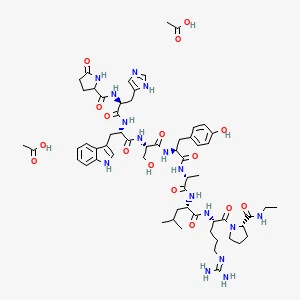
Hangzhou Leap Chem Co., Ltd. is one of the most professional manufacturers and suppliers of terlipressin丨cas 14636-12-5 in China. Welcome to wholesale bulk high quality chemical products at competitive price from our factory. If you have any enquiry about custom service, please feel free to email us.
Specifications
| Appearance | White or almost white fluffy powder, hygroscopic |
| Solubility | Soluble in water and acetic acid |
| Specific Optical Rotation | -88° to -103° |
| Water Content (Karl Fischer) | 8% max |
| Acetic Acid (By HPLC) | 8% to 10.5% |
| Peptide Purity (By HPLC) | 98.5% min |
| Total Impurity | 1.5% max |
| Largest Single Impurity | 0.5% max |
| Acetonitrile | 0.041% max |
| Dichloromethane | 0.06% max |
| N,N-Dimethylformamide | 0.088% max |
Applications
Terlipressin (CAS 14636-12-5) is a synthetic vasopressin analogue widely used in clinical medicine, particularly in the management of conditions requiring vasoconstriction. It is primarily applied for treating bleeding esophageal varices by reducing portal venous pressure and improving hemostasis. In addition, it is employed in the treatment of hepatorenal syndrome, septic shock, and other conditions associated with severe hypotension where vasopressor support is critical. Its longer half-life compared to vasopressin allows for more sustained therapeutic effects, making it valuable in both emergency and intensive care settings. Research also explores its potential applications in reducing complications related to cirrhosis and liver failure.
Benefits
The benefits of terlipressin stem from its pharmacological profile and clinical utility. Its potent vasoconstrictive action provides rapid control of variceal bleeding, reducing the risk of mortality and complications in patients with advanced liver disease. The extended duration of action compared to vasopressin minimizes the need for continuous infusion, simplifying administration and improving patient management. Terlipressin also demonstrates renal-protective effects by enhancing renal perfusion in hepatorenal syndrome, offering therapeutic value where few alternatives exist. Its safety and efficacy in critical care make it a preferred option in managing life-threatening conditions related to vascular tone and portal hypertension.
Conclusion
In summary, terlipressin is a clinically significant vasopressin analogue with established applications in controlling variceal bleeding, supporting renal function, and managing circulatory failure in critical care. Its benefits include sustained vasoconstrictive action, improved treatment convenience, and therapeutic value in conditions with limited options. As research into liver and renal complications progresses, terlipressin continues to play an essential role in emergency and intensive care medicine.