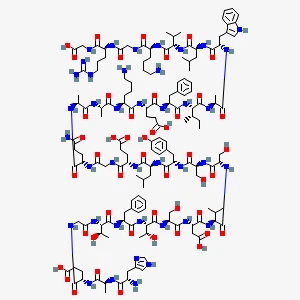
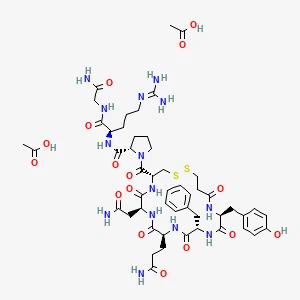
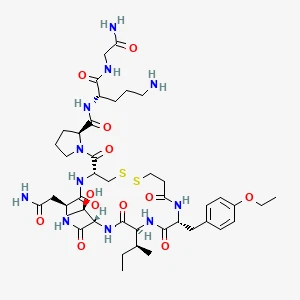
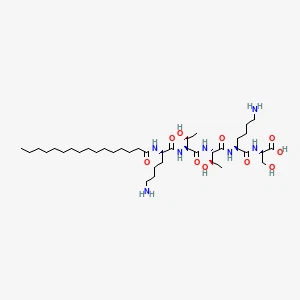
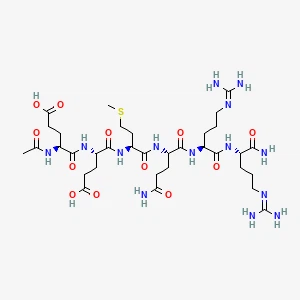
Hangzhou Leap Chem Co., Ltd. is one of the most professional manufacturers and suppliers of oxtocin丨cas 50-56-6 in China. Welcome to wholesale bulk high quality chemical products at competitive price from our factory. If you have any enquiry about custom service, please feel free to email us.
Specifications
| Grade: | EP11 | ||||||||||||||
| Characteristic: | White or almost white powder | ||||||||||||||
| Identification: |
|
||||||||||||||
| Related substances (HPLC): |
|
||||||||||||||
| Acetic acid (HPLC): | 6.0% - 10.0% | ||||||||||||||
| Water (KF): | 5.0% max | ||||||||||||||
| Bacterial endotoxins: | 300 IU/mg max | ||||||||||||||
| AcN (GC): | 0.041% max | ||||||||||||||
| MeOH (GC): | 0.3% max | ||||||||||||||
| Triethylamine (GC): | 0.032% max | ||||||||||||||
| TAMC: | 10³ cfu/g max | ||||||||||||||
| TYMC: | 10² cfu/g max | ||||||||||||||
| Assay: | Calculated with reference to anhydrous, acetic acid free substance 95.0% - 102.0% On powder: 85.0% min 510 IU/mg min |
Transport Information
|
Parameter |
Specification |
|
UN Number |
|
|
Class |
|
|
Packing Group |
|
|
H.S. Code |
2937190099 |
|
Stability & Reactivity |
The product is chemically stable under standard ambient conditions. |
|
Storage |
Keep container tightly closed in a dry and well-ventilated place. Recommended storage temperature 2 - 8 °C. |
|
Condition to Avoid |
|
|
Package |
Manufacturing Information
|
Parameter |
Specification |
|
Capacity |
30-40kg/month |
|
Frequency |
|
|
Main Export Countries |
|
|
Capacity/Batch |
|
|
Experience |
Production since 2021 |
|
Stock |
Applications
1. Obstetrics
Used to induce or augment labor by stimulating uterine contractions.
Helps in controlling postpartum hemorrhage by promoting uterine muscle contraction.
Administered intravenously or intramuscularly during and after delivery.
2. Lactation
Facilitates milk ejection (let-down reflex) during breastfeeding.
Sometimes used to support breastfeeding in mothers experiencing difficulties with milk flow.
3. Research in Neuroscience and Psychiatry
Investigated for roles in social bonding, trust, and behavior.
Explored as a potential treatment in disorders such as autism spectrum disorder, anxiety, and social dysfunction.
4. Other Medical Uses
Occasionally studied for effects on wound healing and stress regulation.
Experimental uses in managing certain psychological conditions.
Benefits
Effective Labor Induction: Safely stimulates uterine contractions to facilitate childbirth.
Hemorrhage Control: Reduces postpartum bleeding risk by contracting uterine muscles.
Enhances Lactation: Promotes efficient milk ejection, aiding infant feeding.
Neurobehavioral Effects: Shows promise in modulating social and emotional behavior.
Natural Hormone: Biocompatible with well-understood physiological effects.
Conclusion
Oxytocin (CAS 50-56-6) is a vital hormone for childbirth and lactation, widely used in obstetrics to induce labor and prevent postpartum hemorrhage. Beyond its reproductive roles, oxytocin is increasingly studied for its effects on social behaviors and potential therapeutic uses in neuropsychiatric disorders. Its safety and efficacy make it indispensable in medical practice related to maternal health.