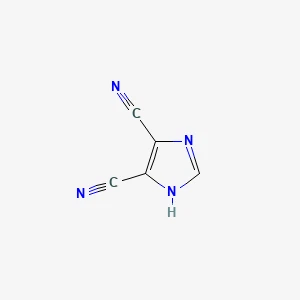
Hangzhou Leap Chem Co., Ltd. is one of the most professional manufacturers and suppliers of cytidine-5-diphosphate disodium salt丨cas 54394-90-0 in China. Welcome to wholesale bulk high quality chemical products at competitive price from our factory. If you have any enquiry about custom service, please feel free to email us.
Specifications
| Appearance | White to off-white powder |
| Purity | 90% min |
| pH | 3.0–5.0 |
| Loss on drying | 10% max |
| Solution clarity test | Clear |
| Identification | Largest absorption at 278–282 nm wavelength |
| A250/A260 | 0.41–0.51 |
| A280/A260 | 1.95–2.15 |
Applications
Cytidine-5-diphosphate disodium salt is widely used in biochemical research, pharmaceutical development, and nucleotide-related studies as an activated nucleotide intermediate. It plays an important role in investigations of phospholipid biosynthesis, glycosylation pathways, and nucleotide metabolism, where cytidine diphosphate acts as a key cofactor or substrate. The compound is commonly applied in enzymatic assays, metabolic pathway modeling, and studies involving membrane lipid formation, including the synthesis of CDP-linked intermediates. In research and development environments, it is also used as a reference material for analytical method validation, nucleotide quantification, and quality control testing. Additionally, it serves as a raw material in the preparation of nucleotide-based reagents and experimental formulations used in molecular biology and biochemical research.
Benefits
Cytidine-5-diphosphate disodium salt offers several advantages due to its high purity, defined structure, and water solubility. The disodium salt form enhances stability and allows easy preparation of aqueous solutions with precise concentration control, which is critical for enzymatic and analytical applications. Its predictable behavior in biochemical systems supports reproducible experimental outcomes and reliable data generation. The compound is compatible with a wide range of buffer systems and laboratory conditions, simplifying integration into existing research protocols. Its role as an activated nucleotide intermediate reduces the need for in situ synthesis, saving time and improving efficiency in experimental workflows. These characteristics make it a dependable tool for detailed studies of nucleotide-dependent biochemical processes.
Conclusion
Cytidine-5-diphosphate disodium salt is a valuable nucleotide compound used extensively in biochemical research and analytical applications. Its involvement in metabolic pathway studies, enzymatic assays, and reference testing, combined with benefits such as solubility, stability, and reproducibility, make it an essential material for laboratories working with nucleotide chemistry and metabolism. The compound supports precise investigation of complex biochemical systems and contributes to efficient research and development activities.

![D-[UL-13C6]Mannitol丨CAS 287112-34-9](/uploads/42644/small/d-ul-13c6-mannitol-cas-287112-34-908fd4.png)