

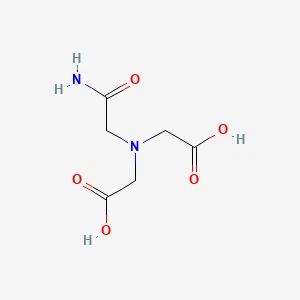
Hangzhou Leap Chem Co., Ltd. is one of the most professional manufacturers and suppliers of n-(2-acetamido)iminodiacetic acid丨cas 26239-55-4 in China. Welcome to wholesale custom made chemical products at competitive price from our factory. For more cheap products, contact us now.
Specifications
| Appearance | White crystalline powder |
| Assay | 99.0% to 101.0% |
| Water Content | 0.5% max |
| Loss on drying | 1% max |
| Melt point | 209 to 218℃ |
| pH (0.01M H2O) | 1.5 to 3.0 |
| Solubility (9% in 1M NaOH) | Colorless, clear |
| Heavy metal (Pb) | 0.0005% max |
| Ultraviolet absorbance (300nm, 9% in 1M NaOH) | 0.08 max |
| Ultraviolet absorbance (260nm, 0.05M in H2O heat) | 0.20 max |
| Ultraviolet absorbance (280nm, 0.05M in H2O heat) | 0.05 max |
Applications
1. Chelating Agent
Functions similarly to other aminopolycarboxylic acids (like EDTA), forming stable complexes with metal ions such as Ca²⁺, Mg²⁺, Fe³⁺, and Cu²⁺.
Used in:
Metal ion sequestration in analytical and industrial chemistry
Water treatment to reduce hardness or remove trace metals
Soil and agriculture to enhance micronutrient availability
2. Medical and Diagnostic Use
Utilized as a chelating moiety in the synthesis of radiopharmaceutical agents, especially for:
Diagnostic imaging (e.g., MRI contrast agents)
Radiolabeled compounds in nuclear medicine
Offers improved biocompatibility and target specificity due to the presence of the acetamido group.
3. Analytical Chemistry
Employed in titration and complexometric analysis to determine metal concentrations in water, soil, food, and biological samples.
4. Pharmaceutical and Biochemical Research
May serve as a chelating scaffold or ligand in the development of:
Metal-dependent enzyme inhibitors
Drug delivery vehicles involving metal complexes
Benefits
1. Strong Metal Binding Capability
Coordinates with a broad range of metal ions, enhancing solubility, stability, and bioavailability of metal complexes.
2. Selective Chelation
The acetamido group introduces additional hydrogen bonding potential and electronic modulation, allowing more controlled binding in complex environments.
3. Improved Biocompatibility
The molecular structure offers low toxicity and enhanced biodegradability compared to some traditional chelators.
4. Versatile Reactivity
Amenable to derivatization and conjugation with other bioactive or functional molecules for custom applications in medical imaging or therapy.
5. Useful in Controlled Metal Delivery
Helps control the release of essential metal ions (like iron or zinc) in nutritional, pharmaceutical, or agronomic applications.
Conclusion
N-(2-Acetamido)iminodiacetic acid (CAS 26239-55-4) is a specialized chelating agent with applications in radiopharmaceuticals, diagnostics, environmental analysis, and metal ion management. Its ability to form stable, selective complexes, combined with its biocompatible structure, makes it a valuable alternative to conventional chelators like EDTA in both research and applied sciences.


