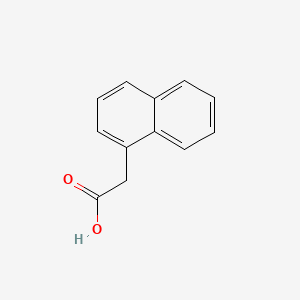

Hangzhou Leap Chem Co., Ltd. is one of the most professional manufacturers and suppliers of caps丨cas 1135-40-6 in China. Welcome to wholesale bulk high quality chemical products at competitive price from our factory. If you have any enquiry about custom service, please feel free to email us.
Specifications of CAPS丨1135-40-6
|
Property |
Specification |
|
Appearance |
White powder |
|
Assay |
99% to 101% |
|
Water Content |
0.5%min |
|
Solubility (1M aq.) |
Clear, colorless solution |
|
Loss on drying |
1% max |
|
Melting point (MP) |
300°C |
|
pH (1% aq.) |
5 to 6 |
|
Heavy metal (Pb) |
0.0005% max |
|
Ultraviolet absorbance / 260nm (0.5M aq.) |
0.05 max |
|
Ultraviolet absorbance / 280nm (0.5M aq.) |
0.03 max |
Transport Information of CAPS丨1135-40-6
|
Parameter |
Specification |
|
UN Number |
|
|
Class |
|
|
Packing Group |
|
|
H.S. Code |
2904100000302 |
|
Stability & Reactivity |
Stable |
|
Storage |
Store in a closed, dry, ventilated place |
|
Condition to Avoid |
|
|
Package |
Introduction of CAPS丨1135-40-6
CAPS (also known as N-cyclohexyl-3-aminopropanesulfonic acid), with the Chemical Abstracts Service (CAS) number 1135-40-6, is an organic compound that is often used as a buffering agent in biochemical and pharmaceutical applications. CAPS is part of a family of aminosulfonic acid derivatives, and it is widely utilized due to its ability to maintain a stable pH in biological systems, especially in research environments.
Applications of CAPS丨1135-40-6
1. Buffer in Biological and Biochemical Research
CAPS丨1135-40-6 is widely used as a buffer in a variety of biological and biochemical applications. It is frequently utilized in electrophoresis and other laboratory procedures where precise pH control is necessary.
Electrophoresis: CAPS is commonly used in protein electrophoresis (particularly for native PAGE or agarose gel electrophoresis) because of its ability to provide a stable pH environment during the separation of proteins or nucleic acids based on size and charge.
Cell Culture: CAPS is used in cell culture media to stabilize pH levels and maintain optimal conditions for cell growth, particularly in in vitro cell experiments.
Enzyme Assays: CAPS is used in enzyme activity studies to maintain a constant pH, especially for enzymes that function in slightly alkaline conditions. Its buffer capacity is highly useful for maintaining reaction stability in kinetic assays.
2. Protein Purification and Separation
In protein purification, CAPS is used to maintain the stability of proteins during various stages of chromatography or dialysis. It ensures that the proteins remain in their active form by preventing changes in pH that might lead to denaturation.
Chromatography Buffers: CAPS is employed as a component in ion-exchange chromatography buffers, which separate proteins based on their charge. It is useful for proteins that have an alkaline pH optimum.
Protein Folding Studies: CAPS helps stabilize proteins during studies of protein folding and unfolding, providing an optimal pH environment for analysis.
3. Biological and Pharmaceutical Applications
CAPS丨1135-40-6 is important in the pharmaceutical industry for creating stable formulations, particularly in oral or injectable drug formulations. It is sometimes incorporated into formulations to maintain a stable pH that can preserve the efficacy and stability of active pharmaceutical ingredients (APIs).
Formulation of Injectable Drugs: CAPS can be used in drug formulations to stabilize the pH of solutions, ensuring that drugs remain effective without causing irritation when administered.
Stabilization of Biologicals: The compound plays a role in the stabilization of biologics, such as monoclonal antibodies, which require precise pH conditions to prevent aggregation or degradation.
4. pH Stabilization in Industrial Processes
In industrial applications where biological systems are involved, such as fermentation or bioreactor processes, CAPS can be used to maintain the pH of the system to ensure optimal conditions for microbial growth or product production. Its mild buffering capacity makes it suitable for situations where strong buffering agents might be too aggressive.
5. Cosmetic and Personal Care Formulations
CAPS is occasionally used in cosmetic formulations, particularly in hair care products or skin creams, where maintaining a balanced pH is crucial for the efficacy and comfort of the product. By controlling pH, CAPS can enhance the performance and stability of active ingredients like vitamins, enzymes, and antioxidants in personal care formulations.
Benefits of CAPS丨1135-40-6
1. Precise pH Control
The primary benefit of CAPS丨1135-40-6 is its ability to provide precise pH control in biochemical systems, particularly in situations where slightly alkaline conditions are required. It is particularly useful in experiments where maintaining the activity of proteins, enzymes, and nucleic acids is crucial. Its buffering range (typically pH 9.7) makes it suitable for alkaline processes, especially in applications like electrophoresis and protein separation.
2. Minimal Ionic Interference
Unlike some other buffering agents, CAPS provides minimal ionic interference, which makes it ideal for sensitive applications. This characteristic allows researchers to conduct experiments without worrying about the interference of the buffer with the experimental system.
Low Conductivity: Its low ionic strength ensures that it does not affect the conductivity of the system, which is especially important for applications like electrophoresis and electroblotting.
3. Stability Over Time
CAPS is highly stable in aqueous solutions, making it reliable for long-term use in various experiments. Unlike some other buffers that may degrade over time or shift in pH, CAPS ensures consistent performance and buffer capacity for extended periods.
4. Biocompatibility
As a biocompatible buffer, CAPS does not interfere with cellular systems and can be used in in vitro experiments without affecting cell viability or function. This is particularly beneficial for researchers studying cell cultures or conducting assays involving living cells.
5. Compatibility with Biological Molecules
CAPS does not significantly interact with biological molecules, such as proteins, nucleic acids, or lipids, allowing these molecules to function properly without any risk of degradation or denaturation due to the buffer.
6. Environmental and Safety Considerations
CAPS丨1135-40-6 is considered to have low toxicity and is relatively safe for handling in laboratory environments. It is non-hazardous when used in typical laboratory concentrations, making it preferable over some more aggressive buffering agents that may present safety concerns.
Conclusion
CAPS丨1135-40-6 is an important buffering agent used in a wide range of biological, biochemical, and industrial applications. Its ability to provide precise pH control, especially in slightly alkaline environments, makes it invaluable in fields like electrophoresis, protein purification, cell culture, and enzyme assays. Furthermore, its low ionic strength and stability make it ideal for sensitive biochemical assays and pharmaceutical formulations.