


Hey there! As a surfactant supplier, I've been diving deep into the world of surfactants for quite some time. One of the most fascinating aspects of surfactants is micelle formation. So, today, I'm gonna share with you the factors that influence micelle formation in surfactants.
What are Micelles and Surfactants?
First off, let's quickly go over what micelles and surfactants are. Surfactants are molecules that have a unique structure. They have a hydrophilic (water - loving) head and a hydrophobic (water - hating) tail. When you put surfactants in a solution, at low concentrations, they tend to float around individually. But when the concentration reaches a certain point, they start to form these little clusters called micelles. In a micelle, the hydrophobic tails bunch up in the center, away from the water, and the hydrophilic heads face outwards, interacting with the water.
Critical Micelle Concentration (CMC)
The Critical Micelle Concentration is like the magic number for micelle formation. It's the concentration at which surfactants start to form micelles. A whole bunch of factors can affect the CMC, and in turn, influence micelle formation.
Structure of the Surfactant
The structure of the surfactant molecule is a major player here. The length of the hydrophobic tail is super important. Longer tails mean more hydrophobicity. Surfactants with longer tails have a lower CMC. That's because the longer tails really don't like being in water, so they're more eager to form micelles to get away from it. For example, if you compare a surfactant with a short - chain hydrophobic tail to one with a long - chain tail, the one with the long tail will form micelles at a lower concentration.
The nature of the hydrophilic head also matters. Ionic surfactants, which have charged hydrophilic heads, have different CMC values compared to non - ionic surfactants. Ionic surfactants usually have a higher CMC because the charged heads repel each other to some extent. This repulsion makes it a bit harder for them to come together and form micelles. Non - ionic surfactants, on the other hand, don't have this repulsion issue, so they can form micelles at lower concentrations.
Temperature
Temperature can have a big impact on micelle formation. In general, for most non - ionic surfactants, as the temperature goes up, the CMC decreases. This is because at higher temperatures, the water molecules have more energy and are moving around more. This makes it easier for the hydrophobic tails to break away from the water and form micelles.
But for ionic surfactants, it's a bit more complicated. Increasing the temperature can increase the solubility of the surfactant, which might increase the CMC in some cases. It can also affect the hydration of the hydrophilic heads. Higher temperatures can reduce the hydration, which can either increase or decrease the CMC depending on the specific surfactant.
Presence of Additives
Additives can really mess with micelle formation. Salts are a common additive. When you add salts to a solution of ionic surfactants, the salt ions can screen the charges on the hydrophilic heads of the surfactants. This reduces the repulsion between the surfactant molecules, making it easier for them to form micelles. So, adding salts usually decreases the CMC of ionic surfactants.
Organic additives can also have an effect. Some organic compounds can dissolve in the hydrophobic core of the micelles. This can change the size and shape of the micelles and also affect the CMC. For example, adding a small amount of an alcohol can decrease the CMC of a surfactant solution.
pH
The pH of the solution is another factor. For surfactants with pH - sensitive groups on their hydrophilic heads, the pH can change the charge of the head. For example, if a surfactant has an acidic group on its head, at low pH, the group might be protonated and neutral. At high pH, it might be deprotonated and negatively charged. This change in charge can affect the repulsion between surfactant molecules and thus influence micelle formation.
Examples of Surfactants and Their Micelle Formation
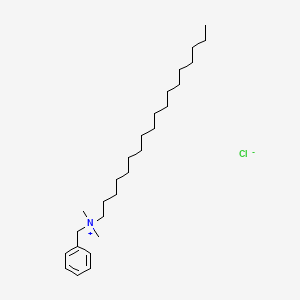
Let's take a look at some specific surfactants. Stearyldimethylbenzylammonium Chloride丨CAS 122 - 19 - 0 is an ionic surfactant. Its long hydrophobic tail and positively charged hydrophilic head make it interesting in terms of micelle formation. The long tail drives it towards micelle formation at a relatively low concentration, but the positive charge on the head causes some repulsion.
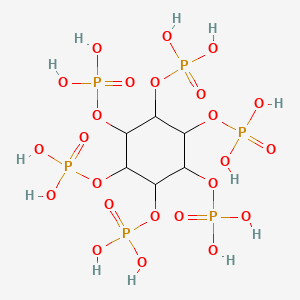
Phytic Acid丨CAS 83 - 86 - 3 is a bit different. It has multiple phosphate groups, which are hydrophilic. The structure of phytic acid can lead to unique micelle - like aggregates under certain conditions. The presence of these multiple hydrophilic groups and their interaction with the surrounding environment can affect how it forms clusters.
Dimethyldioctylammonium Chloride丨CAS 5538 - 94 - 3 is also an ionic surfactant. Its two octyl chains give it a significant hydrophobic character. This makes it more likely to form micelles at lower concentrations compared to surfactants with shorter chains.
Why Does Micelle Formation Matter?
Micelle formation is crucial in a lot of applications. In the cleaning industry, micelles can trap dirt and oil particles in their hydrophobic cores and then wash them away with water. In the pharmaceutical industry, micelles can be used to deliver drugs. They can solubilize hydrophobic drugs in water - based solutions, making it easier to administer the drugs.
Wanna Learn More or Make a Purchase?
If you're interested in learning more about surfactants and micelle formation or if you're looking to purchase high - quality surfactants for your business, don't hesitate to reach out. We're here to help you understand the best surfactants for your specific needs and guide you through the purchasing process. Whether you're working on a small - scale experiment or a large - scale industrial application, we've got the right surfactants for you.
References
- Rosen, M. J., & Kunjappu, J. T. (2012). Surfactants and Interfacial Phenomena. Wiley.
- Myers, D. (2006). Surfactant Science and Technology. Wiley.


