

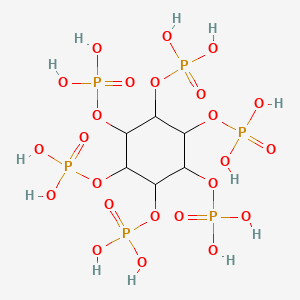
Hangzhou Leap Chem Co., Ltd. is one of the most professional manufacturers and suppliers of phytic acid丨cas 83-86-3 in China. Welcome to wholesale bulk high quality chemical products at competitive price from our factory. If you have any enquiry about custom service, please feel free to email us.
Specifications of Phytic acid丨83-86-3
|
Property |
Value |
|
Appearance |
Colorless to pale yellow or light brown viscous liquid |
|
Content |
50±2% |
|
Sulfate |
0.02% max |
|
Calcium Salt |
0.02% max |
|
Arsenic |
0.0005% max |
|
Heavy metal |
0.003% max |
Transport Information of Phytic acid丨83-86-3
|
Parameter |
Specification |
|
UN Number |
3265 |
|
Class |
|
|
Packing Group |
|
|
H.S. Code |
2919900090122 |
|
Stability & Reactivity |
Stable |
|
Storage |
Tightly closed. 2-8 ℃ |
|
Condition to Avoid |
Heat |
|
Package |
Introduction
Phytic acid丨83-86-3, chemically known as inositol hexakisphosphate (IP6), is a naturally occurring compound found predominantly in seeds, grains, legumes, and some nuts. It's known for its role in phosphorus storage in plants and has gained attention for its various applications and potential health benefits. Below are some key applications and benefits of phytic acid.
Applications of Phytic acid丨83-86-3
1.Food Industry Phytic acid is commonly found in food products, especially in whole grains, legumes, and seeds. In addition to its nutritional role, it is also used in the food industry for several purposes:
oAntioxidant: It can act as a natural antioxidant, which helps to protect the food from oxidation and extends shelf life.
oChelating Agent: Phytic acid has the ability to chelate, or bind, with minerals like iron, zinc, and calcium. This property is beneficial in controlling mineral content in foods, although it can also interfere with the bioavailability of these minerals when consumed in excess.
2.Agriculture Phytic acid丨83-86-3 is used as a phosphorus source in certain agricultural formulations. Since it contains a large amount of phosphorus, it can be utilized in fertilizers. Some researchers are investigating ways to convert phytic acid into bioavailable forms of phosphorus that plants can absorb more easily, which would improve the efficiency of phosphorus use in agriculture.
3.Cosmetics and Skincare In cosmetics, phytic acid is utilized for its antioxidant properties, which help in protecting the skin from oxidative stress and reducing the appearance of aging signs. It's also found in some skin care products because of its ability to act as a gentle exfoliant. Phytic acid can help remove dead skin cells, making it useful for improving skin texture and radiance. It is often included in products for sensitive or acne-prone skin due to its less abrasive nature compared to other exfoliants.
4.Biomedical Research Phytic acid丨83-86-3 has shown promise in biomedical research due to its chelating properties. Researchers are studying its potential to help prevent heavy metal toxicity, as it can bind to harmful metals and prevent them from being absorbed into the body. Phytic acid is also being explored for its potential use in cancer prevention due to its ability to inhibit cancer cell growth, although more research is required to fully establish its effectiveness in this area.
5.Pharmaceuticals In the pharmaceutical industry, phytic acid has been investigated for its potential as a drug delivery system. Due to its unique chemical properties, it can be used as a carrier for drug molecules. The ability to bind to metal ions allows phytic acid to form complexes with certain drugs, which can be beneficial in the controlled release of therapeutic agents.
Health Benefits of Phytic acid丨83-86-3
1.Antioxidant Effects Phytic acid丨83-86-3 exhibits antioxidant properties that can help reduce oxidative stress in the body. Oxidative stress is linked to numerous chronic conditions, including cardiovascular diseases, neurodegenerative diseases, and cancer. By neutralizing free radicals, phytic acid may reduce the risk of these conditions.
2.Cancer Prevention Some studies have suggested that phytic acid may have anticancer properties. It has been shown to reduce the growth of certain types of cancer cells in vitro and inhibit the spread of tumors in animal models. While promising, more clinical trials are needed to confirm its role in cancer prevention and treatment in humans.
3.Bone Health Phytic acid's role in bone health is a topic of debate, mainly because it can bind with calcium and reduce its bioavailability. However, some research indicates that when consumed as part of a balanced diet, the effect on calcium absorption is minimal and may not significantly affect bone mineral density. In fact, phytic acid may even promote bone health in certain contexts, particularly when it helps balance the absorption of other essential minerals.
4.Diabetes Management Phytic acid丨83-86-3 may assist in blood sugar regulation. Some studies suggest that it has an effect on insulin sensitivity, potentially helping to manage blood glucose levels. This is especially relevant for individuals with type 2 diabetes or those at risk for developing the condition. While phytic acid shows promise in this area, its exact mechanisms and long-term effects need more investigation.
5.Anti-inflammatory Effects Phytic acid also has anti-inflammatory properties that may help in reducing inflammation within the body. Chronic inflammation is a key driver of many diseases, including autoimmune disorders, heart disease, and diabetes. By modulating inflammatory pathways, phytic acid could potentially aid in managing these conditions.
6.Gut Health Phytic acid may also play a role in promoting gut health. By acting as a prebiotic, it could stimulate the growth of beneficial gut bacteria, thereby contributing to a healthier microbiome. A balanced gut microbiome is essential for digestive health and overall well-being.
7.Chelation of Toxic Metals Phytic acid's ability to chelate metal ions has been proposed as a means to mitigate the toxic effects of heavy metals like lead, mercury, and cadmium. By binding to these metals, phytic acid can prevent their absorption in the gastrointestinal tract and support detoxification processes in the body.
Conclusion
In summary, Phytic acid丨83-86-3 has diverse applications ranging from food preservation to potential health benefits like antioxidant effects, cancer prevention, and bone health support. However, its role in mineral absorption should be considered, and balanced consumption is key to reaping its benefits while minimizing any risks.


