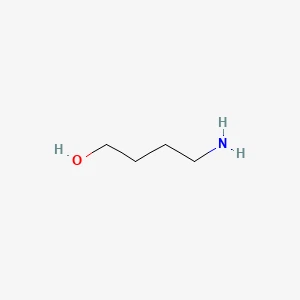

Hangzhou Leap Chem Co., Ltd. is one of the most professional manufacturers and suppliers of 2-(4-bromophenyl)-1-phenylnaphthalene丨cas 1533415-48-3 in China. Welcome to wholesale bulk high quality chemical products at competitive price from our factory. If you have any enquiry about custom service, please feel free to email us.
Specifications
| Appearance | White solid |
| Purity | 98% min |
Applications
2-(4-Bromophenyl)-1-phenylnaphthalene (CAS 1533415-48-3) is a brominated polycyclic aromatic compound used primarily as an intermediate in organic synthesis, materials science, and medicinal chemistry. Its bromophenyl and naphthalene moieties make it suitable for cross-coupling reactions such as Suzuki, Heck, and Sonogashira couplings, enabling the construction of larger π-conjugated systems. In materials research, it is applied in the synthesis of organic semiconductors, light-emitting materials, and photonic devices due to its rigid aromatic structure and extended conjugation. In medicinal chemistry, it can serve as a building block for designing bioactive molecules and molecular probes where planar aromatic frameworks enhance stacking interactions and binding affinity.
Benefits
The benefits of 2-(4-bromophenyl)-1-phenylnaphthalene lie in its chemical versatility, structural rigidity, and electronic properties. The bromine atom acts as a reactive site for selective substitution and cross-coupling, allowing precise functionalization. Its fused naphthalene and phenyl system provides a stable, planar aromatic core that contributes to π–π interactions, thermal stability, and electronic delocalization in materials and molecular design. The combination of reactivity and structural stability makes it a valuable intermediate for constructing complex aromatic frameworks, facilitating efficient synthesis of advanced materials and bioactive compounds.
Conclusion
In summary, 2-(4-bromophenyl)-1-phenylnaphthalene is a multifunctional intermediate used in organic synthesis, materials science, and medicinal chemistry. Its applications include cross-coupling reactions, organic semiconductors, and bioactive molecule design, while its benefits come from selective reactivity, rigid planar structure, and favorable electronic properties. With these characteristics, it remains a key building block for developing high-performance materials and complex aromatic compounds.