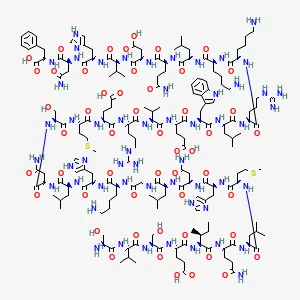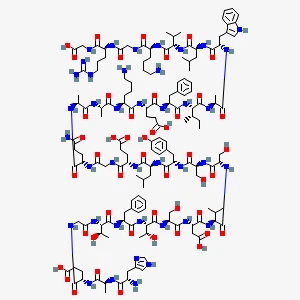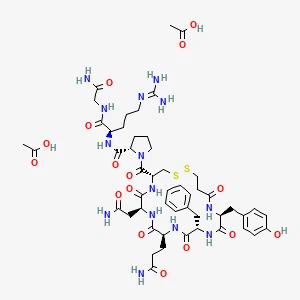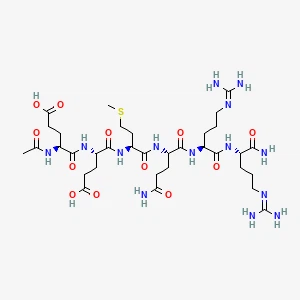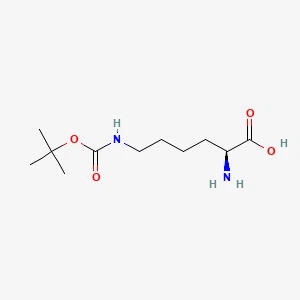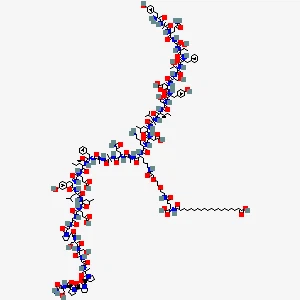
Hangzhou Leap Chem Co., Ltd. is one of the most professional manufacturers and suppliers of cas 2381089-83-2 in China. Welcome to wholesale bulk high quality chemical products at competitive price from our factory. If you have any enquiry about custom service, please feel free to email us.
Specifications
| Appearance: | White to off white powder or loose lump |
| Solubility: | Soluble in water |
| HPLC: | The principal peak in the chromatogram obtained with the test solution is similar in retention time and size to the principal peak in the chromatogram obtained with reference solution |
| Mass Spectrum: | 4731.33+1.0 |
| Clarity and color of solution: | Clear and colorless |
| pH: | 6.0~9.0 |
| Acetic acid: | 0.5% max |
| Trifluoacetate ion: | 0.1% max |
| Water: | 10.0% max |
| Sodium ion: | 3.0% max |
| Related Substances (HPLC): | |
| Any individual impurity: | 1.0% max |
| Total impurity: | 2.0% max |
| Purity: | 98% min |
| Bacterial endotoxin: | 10 EU/mg max |
| Residual solvents: | |
| Methanol: | 0.3% max |
| Isopropanol: | 0.5% max |
| Acetonitrile: | 0.041% max |
| Methylene chloride: | 0.06% max |
| N,N-Dimethylformamide: | 0.088% max |
| Triethylamine: | 0.032% max |
| Tert-butyl methyl ether: | 0.5% max |
| Peptide Assay: | 80.0% min |
Applications
Retatrutide is primarily being developed for the treatment of obesity and overweight-related metabolic disorders. In clinical trials, it has demonstrated the ability to induce substantial weight loss over periods of several months, with some participants achieving reductions of more than 20 percent of their body weight. Beyond weight management, Retatrutide is being evaluated for its potential to improve liver health, particularly in patients with metabolic dysfunction-associated steatotic liver disease, and to regulate blood glucose levels, making it potentially useful in prediabetic and insulin-resistant populations. The peptide's multi-target mechanism allows it to influence satiety signals, slow gastric emptying, and enhance energy expenditure, which contributes to both weight loss and improved metabolic outcomes. Retatrutide may also find applications in research settings, where it serves as a model compound for studying the combined effects of GIP, GLP-1, and glucagon receptor activation on energy balance and metabolic homeostasis.
Benefits
The benefits of Retatrutide stem from its triple-receptor agonist activity, which produces more pronounced effects than single or dual agonists. It has been shown to significantly reduce body weight while simultaneously improving markers of metabolic health, including liver fat content, insulin sensitivity, and glycemic control. This integrated approach may reduce the need for multiple medications in patients with obesity and related metabolic disorders. Its weekly dosing regimen enhances patient compliance, and the peptide's high specificity minimizes off-target effects. The compound's impact on liver health, glucose metabolism, and appetite regulation positions it as a potential therapy that addresses the root causes of metabolic dysfunction rather than just the symptoms. Additionally, early clinical data suggest that Retatrutide may have a durable effect on weight and metabolic parameters, which could translate into long-term health benefits for patients struggling with obesity-related conditions.
Conclusion
In summary, Retatrutide is an innovative triple-agonist peptide with significant potential in the management of obesity and associated metabolic disorders. Its multi-receptor mechanism targets appetite, energy expenditure, and glucose metabolism simultaneously, producing substantial weight loss and improvements in metabolic health. While still under clinical investigation, its weekly dosing, strong efficacy, and broad impact on metabolic parameters suggest it could become an important therapeutic option in the future. Continued studies are needed to evaluate its long-term safety, efficacy across diverse populations, and potential role in combination with other treatments for obesity and metabolic disease.