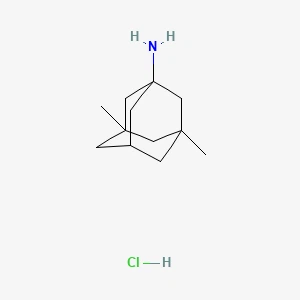
Hangzhou Leap Chem Co., Ltd. is one of the most professional manufacturers and suppliers of thiabendazole丨cas 148-79-8 in China. Welcome to wholesale bulk high quality chemical products at competitive price from our factory. If you have any enquiry about custom service, please feel free to email us.
Specifications of Thiabendazole丨148-79-8
|
Property |
Value |
|
Grade |
USP35 |
|
Appearance |
Almost white crystalline powder |
|
Assay |
98% min |
|
Identification |
A, B, C, D Conform |
|
Melting Range |
296-303°C |
|
Solubility in H2O |
0.03 mg/ml (pH: 5-12, 25°C) |
|
Selenium |
0.003% max |
|
Chromatographic Purity |
Each one: 0.5% max, Total impurity: 1% max |
|
Water |
0.5% max |
|
Residue on Ignition |
0.2% max |
|
Heavy Metals |
0.001% max |
Transport Information of Thiabendazole丨148-79-8
|
Parameter |
Specification |
|
UN Number |
3077 |
|
Class |
9 |
|
Packing Group |
III |
|
H.S. Code |
2933290090999 |
|
Stability & Reactivity |
Stable |
|
Storage |
Tightly closed. Store in a closed, dry, ventilated place |
|
Condition to Avoid |
water, air and high temperature |
|
Package |
Introduction
Thiabendazole丨148-79-8 is an organic compound that is primarily used as a fungicide and an anthelmintic agent. It belongs to the class of benzimidazole derivatives and is widely utilized in agriculture, veterinary medicine, and food safety.
Uses of Thiabendazole丨148-79-8
Fungicide:
Thiabendazole is primarily used in agriculture as a fungicide. It is effective against a wide range of fungal diseases, especially those that affect fruits, vegetables, and grains.
It is used to protect crops from storage rots and post-harvest fungal infections. For example, it is applied to bananas and citrus fruits to prevent fungal contamination during storage and transportation.
Thiabendazole is also used on grain crops to protect them from fungal spoilage during processing and storage.
Anthelmintic Agent:
In veterinary medicine, thiabendazole is used as an anthelmintic, particularly for treating infections caused by intestinal worms and other parasitic helminths in animals, such as roundworms and hookworms.
It works by interfering with the microtubule formation in the parasitic cells, which ultimately disrupts the parasite's ability to reproduce and maintain its structure.
It is commonly used in livestock, including cattle, sheep, horses, and poultry, for the control of parasitic infections.
Food Safety and Post-Harvest Treatment:
Thiabendazole丨148-79-8 is used as a fungicide to treat various fruits and vegetables after harvest to prevent spoilage and extend shelf life.
It is applied to apples, citrus fruits, and other produce to prevent the growth of fungi that can cause rotting and decay.
It is also used to prevent fungal contamination in grains, particularly in the storage process.
Medical Applications:
Thiabendazole has been studied for its antifungal properties, particularly for treating skin infections caused by fungi. It has been used in the treatment of dermatophytosis (fungal infections of the skin and nails).
It has been found effective against cutaneous and subcutaneous fungal infections, such as athlete's foot and ringworm, though it is not commonly used in modern clinical settings due to the availability of more effective antifungal medications.
Research and Chemical Synthesis:
Thiabendazole丨148-79-8 is used in laboratory and industrial settings to study the properties of benzimidazole derivatives. Its structural properties and interactions with microtubules have made it an interesting subject for research in cellular biology and pharmacology.
Thiabendazole has also been investigated for its antiviral activity and its potential to treat conditions other than fungal infections, though these applications are less common.
Mechanism of Action
Thiabendazole's action depends on its ability to inhibit the formation of microtubules. In both fungal and parasitic cells, microtubules are essential for cell division and cellular transport. By disrupting the formation of these microtubules, thiabendazole effectively stops the reproduction of fungi and parasitic worms. This makes it particularly effective as an anthelmintic and fungicide.
● In fungi, it targets the tubulin protein in the cell's cytoskeleton, preventing the cell from dividing and causing it to die.
● In parasites, it interferes with the microtubule function, disrupting various processes essential for the parasite's survival and reproduction.
Conclusion
Thiabendazole丨148-79-8 is an important compound used for its antifungal and anthelmintic properties. It plays a vital role in agriculture as a fungicide for crops and fruits, as well as in veterinary medicine to control parasitic infections in animals. While it is effective and widely used, care should be taken to handle the compound with proper safety measures due to potential health risks. Its low toxicity to humans and animals, combined with its environmental risks, makes it an important but carefully managed chemical in both agricultural and pharmaceutical applications.