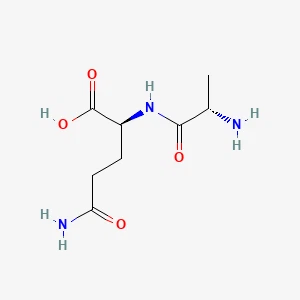

Hangzhou Leap Chem Co., Ltd. is one of the most professional manufacturers and suppliers of memantine hydrochloride丨cas 41100-52-1 in China. Welcome to wholesale bulk high quality chemical products at competitive price from our factory. If you have any enquiry about custom service, please feel free to email us.
Specifications of Memantine hydrochloride丨41100-52-1
|
Property |
Specification |
|
Grade |
USP42 |
|
Appearance |
White or almost white crystalline powder |
|
Identification (IR) |
The retention time of major peak of sample solution corresponds to that of the standard solution |
|
Identification tests-General |
Chloride |
|
Loss on drying |
Less than 1.0% |
|
pH |
4.5 - 6.5 |
|
Residue on ignition |
0.1% max |
|
Heavy metals |
10 ppm max |
|
Related substances |
1,3-Dimethyladamantane: 0.15% max |
|
Residual solvent |
Dichloromethane: 0.06% max |
|
Assay |
98.0 - 102.0% (GC, calculated on the dried basis) |
|
Particle Size |
NLT 90% Pass 60 mesh |
Transport Information of Memantine hydrochloride丨41100-52-1
|
Parameter |
Specification |
|
UN Number |
|
|
Class |
|
|
Packing Group |
|
|
H.S. Code |
2921300090305 |
|
Stability & Reactivity |
Stable |
|
Storage |
Tightly closed. Store in a closed, dry, ventilated place |
|
Condition to Avoid |
Oxidizing agents |
|
Package |
Manufacturing Information of Memantine hydrochloride丨41100-52-1
|
Parameter |
Specification |
|
Capacity |
1MT/month |
|
Frequency |
|
|
Main Export Countries |
|
|
Capacity/Batch |
200kg/batch |
|
Experience |
Production since 2008, 200kg in stock |
|
Facilities |
Memantine hydrochloride丨41100-52-1 – Applications and Benefits
Memantine hydrochloride丨41100-52-1 is the hydrochloride salt form of memantine, a medication primarily used in the treatment of Alzheimer's disease and dementia. It acts as a NMDA receptor antagonist, which plays a crucial role in regulating glutamate activity in the brain. Glutamate is the main excitatory neurotransmitter, and when in excess, it can cause neuronal toxicity. By blocking the NMDA receptors, memantine hydrochloride helps to balance glutamate levels, reducing excitotoxicity and protecting neurons from damage.
Memantine has been widely used for managing the symptoms of Alzheimer's disease, and more recently, it has been studied for its potential in treating other neurological disorders. This medication has proven to be effective in improving cognitive function, behavioral symptoms, and overall quality of life for individuals with moderate to severe Alzheimer's disease.
Applications of Memantine hydrochloride丨41100-52-1
1. Treatment of Alzheimer's Disease
Memantine hydrochloride is primarily approved for the treatment of moderate to severe Alzheimer's disease. The drug is used to improve cognitive function and decrease behavioral symptoms, offering symptomatic relief to patients.
● Mechanism of Action: Memantine works by blocking the NMDA (N-methyl-D-aspartate) receptors, which are involved in the glutamatergic system in the brain. This system is responsible for learning and memory but can become overactive in Alzheimer's disease. Overactivation of NMDA receptors by excessive glutamate can lead to neuronal damage and cognitive decline. Memantine helps regulate glutamate activity, which protects neurons from excitotoxicity and supports brain function.
● Improvement in Cognitive Function: Clinical studies have shown that memantine can help in the management of cognitive decline, enhancing memory and overall brain function in Alzheimer's patients.
● Behavioral Symptoms: Memantine also helps manage behavioral and psychological symptoms of Alzheimer's, such as aggression, agitation, anxiety, and hallucinations.
2. Parkinson's Disease Dementia
Memantine is sometimes used as an off-label treatment for Parkinson's disease dementia (PDD). This condition is common among Parkinson's patients, especially in later stages, and involves cognitive impairment and memory loss.
● Cognitive Improvement: In cases of Parkinson's disease dementia, Memantine hydrochloride丨41100-52-1 can improve memory, executive function, and processing speed, allowing patients to maintain a better quality of life.
● Symptom Management: It helps manage neuropsychiatric symptoms like agitation, depression, and hallucinations, which are often present in Parkinson's patients.
3. Vascular Dementia
Vascular dementia is caused by impaired blood flow to the brain, which results in cognitive decline. Memantine may be used to manage cognitive symptoms associated with vascular dementia.
● Cognitive Preservation: Although not a cure, memantine can help to slow the progression of cognitive decline in patients with vascular dementia by reducing the excitotoxic damage caused by disrupted blood flow.
● Behavioral Control: It can also alleviate mood and behavioral symptoms, contributing to better patient management.
4. Traumatic Brain Injury (TBI)
There is emerging evidence suggesting that memantine may be beneficial in the treatment of cognitive impairment resulting from traumatic brain injury (TBI), though it is not yet FDA-approved for this use.
● Neuroprotective Effects: Memantine's ability to block NMDA receptors makes it a potential therapeutic option for neuroprotection following brain injury. It may help prevent further damage to brain cells and improve recovery following TBI.
5. Neurodegenerative Diseases
Apart from Alzheimer's and Parkinson's, Memantine hydrochloride丨41100-52-1 has been explored for other neurodegenerative diseases, including Huntington's disease and multiple sclerosis (MS), particularly for managing cognitive symptoms.
● Huntington's Disease: Memantine has been tested in clinical trials for its ability to manage cognitive and motor symptoms in Huntington's disease, although it is not an approved treatment for the condition.
● Multiple Sclerosis (MS): In MS, memantine may help with cognitive dysfunction, improving attention, memory, and executive function.
6. Depression and Bipolar Disorder
There is some preliminary evidence that memantine may have potential as an adjunct treatment for depression and bipolar disorder, particularly in patients who are resistant to traditional antidepressant treatments.
● Adjunct to Antidepressants: Memantine may enhance the effects of other antidepressants, particularly in patients with treatment-resistant depression.
● Mood Regulation: By modulating glutamate levels, memantine may help stabilize mood and reduce the severity of depressive symptoms in individuals with bipolar disorder.
Benefits of Memantine hydrochloride丨41100-52-1
1. Cognitive Function Improvement
The primary benefit of memantine hydrochloride is its ability to improve cognitive function in patients with neurodegenerative conditions, especially Alzheimer's disease. By regulating glutamate activity, it prevents excessive stimulation of neurons, which can lead to cognitive decline. Patients typically experience improvements in memory, attention, and executive function, resulting in a better quality of life.
2. Symptom Control
Memantine hydrochloride丨41100-52-1 provides relief from various behavioral and psychological symptoms associated with Alzheimer's and other forms of dementia. These include symptoms like agitation, anxiety, depression, hallucinations, and delusions. By improving mood and reducing agitation, it helps enhance patient comfort and reduce caregiver burden.
3. Neuroprotective Effects
Memantine offers neuroprotective effects, which means it can protect neurons from damage due to excessive glutamate activity. By blocking NMDA receptors, it reduces the potential for excitotoxicity, a key mechanism contributing to neurodegeneration in Alzheimer's disease. This helps preserve brain function and potentially slows the progression of cognitive decline.
4. Improved Daily Functioning
As a result of better cognitive and behavioral control, memantine allows many patients to maintain their daily functioning for longer periods. This includes the ability to perform self-care activities, engage in social interactions, and maintain independence. This improves both the patient's and caregiver's quality of life.
5. Potential for Use in Other Neurological Disorders
While currently approved for Alzheimer's disease, memantine is being investigated for its potential benefits in other neurological disorders, such as Parkinson's disease dementia, vascular dementia, and traumatic brain injury. Its unique ability to modulate the glutamate system makes it an important candidate for research in other forms of cognitive impairment.
Conclusion
Memantine hydrochloride丨41100-52-1 is a key therapeutic agent for the management of moderate to severe Alzheimer's disease and other cognitive disorders, offering both cognitive improvements and behavioral symptom relief. Its ability to block NMDA receptors and regulate glutamate activity in the brain provides a neuroprotective effect that helps preserve cognitive function, slow disease progression, and improve the quality of life for patients. With ongoing research into its use in other neurological disorders, memantine holds promise for broader applications in the treatment of neurodegenerative diseases.