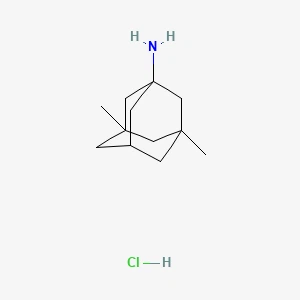
Hangzhou Leap Chem Co., Ltd. is one of the most professional manufacturers and suppliers of 1-adamantanamine hydrochloride丨cas 665-66-7 in China. Welcome to wholesale custom made chemical products at competitive price from our factory. For more cheap products, contact us now.
Specifications of 1-Adamantanamine hydrochloride丨665-66-7
|
Property |
Value |
|
Grade |
USP34 |
|
Appearance |
White crystal |
|
Assay (dry basis) |
98.5-101.5% |
|
Identification |
IR: conforms to the standard, Solution: clear and colorless |
|
pH |
3.0-5.5 |
|
Heavy Metals |
10 ppm max |
|
Related Substance (GC) |
Single impurity: 0.3% max, Total impurities: 1.0% max |
Transport Information of 1-Adamantanamine hydrochloride丨665-66-7
|
Parameter |
Specification |
|
UN Number |
|
|
Class |
|
|
Packing Group |
|
|
H.S. Code |
2921300090 |
|
Stability & Reactivity |
Stable |
|
Storage |
Tightly closed. Dry. |
|
Condition to Avoid |
water, air and high temperature |
|
Package |
Introduction
1-Adamantanamine hydrochloride丨665-66-7 is a chemical compound derived from adamantane, a polycyclic hydrocarbon. It is commonly known as amantadine and is primarily used in medical applications. The hydrochloride salt form of amantadine is more
Production:
1-Adamantanamine hydrochloride is synthesized from adamantane, a hydrocarbon with a unique cage-like structure, which can be functionalized by introducing amino groups. The synthesis typically involves aminating adamantane derivatives, followed by the addition of hydrochloric acid to form the hydrochloride salt.
Uses of 1-Adamantanamine hydrochloride丨665-66-7
Antiviral Treatment:
Amantadine was originally developed as an antiviral drug and is most commonly used to treat influenza A infections. It works by inhibiting the uncoating of the influenza virus inside the host cell, preventing the virus from replicating. It is most effective when used early in the course of infection.
While its use as an antiviral has been reduced due to the development of more specific and effective antiviral drugs, it is still used in some cases for treating influenza, especially in patients who cannot tolerate other medications.
Parkinson's Disease Treatment:
1-Adamantanamine hydrochloride丨665-66-7 is used in the treatment of Parkinson's disease, particularly for managing motor symptoms such as tremors, rigidity, and bradykinesia (slowness of movement).
It is believed to work by increasing the release of dopamine in the brain and blocking certain receptors that contribute to movement disorders. It can help improve motor function and reduce the severity of symptoms in Parkinson's patients.
Additionally, amantadine is sometimes used to treat drug-induced parkinsonism, a side effect of medications used for treating psychiatric disorders.
Dopaminergic Mechanism:
In Parkinson's disease, amantadine may have dopaminergic effects, meaning it can enhance dopamine activity in the brain. This can help in balancing the neurotransmitters that are out of sync in individuals with Parkinson's disease.
Cognitive Disorders and Fatigue:
Some studies suggest that 1-Adamantanamine hydrochloride丨665-66-7 may have benefits for treating cognitive disorders or fatigue related to conditions like multiple sclerosis (MS). It may help reduce mental fatigue and improve cognitive performance, though its use in this context is still being explored.
Neuroprotective Properties:
Research suggests that amantadine has potential neuroprotective effects, meaning it might help protect nerve cells from damage caused by oxidative stress and inflammation. This makes it a candidate for studying other neurodegenerative diseases beyond Parkinson's, although more clinical evidence is needed.
Other Uses in Neurology:
It has also been used in the treatment of postencephalitic parkinsonism (a condition that may result from viral encephalitis) and dystonia (abnormal muscle contractions), although its use for these conditions is less common.
Post-Surgical Use:
In some cases, amantadine is used to help prevent or reduce post-operative fatigue and speed up recovery in patients undergoing surgeries, such as joint replacements, particularly in patients with other underlying conditions like Parkinson's disease.
Mechanism of Action
Amantadine has several mechanisms of action depending on its application:
● Antiviral Effect: 1-Adamantanamine hydrochloride丨665-66-7 inhibits the M2 ion channel protein of influenza A viruses. By blocking this channel, it prevents the uncoating of the viral genome inside the host cell, which is necessary for viral replication. However, many influenza strains have become resistant to amantadine over time.
● Parkinson's Disease Treatment: In Parkinson's disease, amantadine's mechanism is not fully understood. It is believed to increase the release of dopamine in the brain and may also have NMDA receptor antagonistic properties, which may reduce abnormal activity in the basal ganglia that leads to motor symptoms.
Conclusion
1-Adamantanamine hydrochloride丨665-66-7 is a versatile drug with antiviral and neuropharmacological properties. It has been used primarily to treat influenza A infections and Parkinson's disease, but its applications also extend to treating certain cognitive disorders and providing post-surgical recovery benefits. Although generally safe when used as prescribed, it can cause a range of side effects, particularly affecting the nervous system. Monitoring and dosage adjustments are important, especially in elderly patients or those with kidney dysfunction.