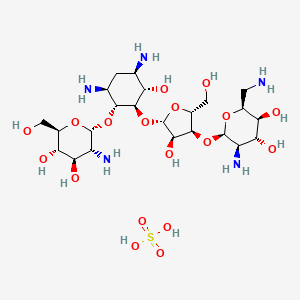

Hangzhou Leap Chem Co., Ltd. is one of the most professional manufacturers and suppliers of tobramycin丨cas 32986-56-4 in China. Welcome to wholesale custom made chemical products at competitive price from our factory. For more cheap products, contact us now.
Specifications of Tobramycin丨32986-56-4
|
Property |
Value |
|
Grade |
USP43 |
|
Characters |
White off-white hygroscopic powder |
|
Assay (on anhydrous basis) |
900 µg/mg min |
|
pH |
9.0 to 11.0 |
|
Water |
8.0% max |
|
Residue on ignition |
1.0% max |
|
Ethanol |
0.5% max |
|
Bacterial endotoxins |
2.0 EU/mg max |
|
Organic impurities |
1.0% max |
Introduction
Tobramycin丨32986-56-4 is an aminoglycoside antibiotic that is primarily used to treat bacterial infections caused by Pseudomonas aeruginosa and other Gram-negative bacteria. It is closely related to gentamicin, another aminoglycoside, but has specific applications due to its efficacy against particular bacterial strains. Tobramycin is commonly administered in its sulfate form and is used in both systemic and topical formulations.
Applications of Tobramycin丨32986-56-4
Treatment of Bacterial Infections Tobramycin is widely used to treat serious infections caused by Gram-negative bacteria, particularly Pseudomonas aeruginosa. It is effective in managing:
Respiratory infections, including pneumonia and bronchitis.
Urinary tract infections (UTIs), especially in hospitalized patients or those with catheter use.
Intra-abdominal infections, like peritonitis.
Bloodstream infections (bacteremia) caused by susceptible organisms.
Cystic Fibrosis Management Tobramycin is often used in inhalation form to treat chronic respiratory infections in individuals with cystic fibrosis. Pseudomonas aeruginosa is a common pathogen in these patients, and inhaled tobramycin helps reduce the bacterial load and improve lung function, thus slowing the progression of respiratory damage. It is typically administered as an inhalation solution via a nebulizer.
Topical Application Tobramycin丨32986-56-4 is also available in topical forms, such as ointments and eye drops. It is used to treat localized infections, including:
Eye infections, such as conjunctivitis or keratitis.
Skin infections, particularly those caused by susceptible Gram-negative bacteria.
Wound infections, particularly in the setting of burns or surgical wounds.
Combination with Other Antibiotics Tobramycin is sometimes used in combination with other antibiotics, such as beta-lactams, to treat mixed infections or those involving both Gram-negative and Gram-positive bacteria. The combination can enhance the antibiotic spectrum of activity, particularly in severe or complicated infections.
Neonatal Infections Tobramycin is used in neonates, particularly those with serious infections like sepsis, meningitis, or respiratory distress syndrome, as part of combination therapy with other antibiotics. It is effective against many pathogens that commonly affect neonates, including Escherichia coli and Klebsiella pneumoniae.
Health Benefits of Tobramycin丨32986-56-4
1.Effective Against Resistant Pathogens Tobramycin丨32986-56-4 is particularly valuable in treating infections caused by multi-drug-resistant pathogens, especially Pseudomonas aeruginosa, which is notoriously resistant to many antibiotics. In cystic fibrosis patients, where chronic infection is a challenge, tobramycin is an important therapeutic option.
2.Broad Spectrum of Activity While primarily effective against Gram-negative bacteria, tobramycin also has some activity against certain Gram-positive organisms. It is often used for its broad-spectrum antibacterial activity when treating complex or polymicrobial infections.
3.Targeted Therapy for Respiratory Infections Inhaled tobramycin allows for targeted delivery to the lungs, where it exerts high local concentrations to combat bacterial infections without affecting the entire body as much as oral or intravenous formulations. This approach helps to reduce systemic side effects while providing effective treatment for respiratory infections.
4.Reduces Inflammation in Lung Disease By reducing bacterial load, particularly in chronic lung diseases like cystic fibrosis, Tobramycin丨32986-56-4 helps to reduce inflammation, thereby improving lung function and reducing the frequency of exacerbations. This can contribute to better long-term outcomes for patients with chronic respiratory conditions.
Conclusion
Tobramycin丨32986-56-4 is a potent and effective antibiotic, particularly useful in treating infections caused by Gram-negative bacteria like Pseudomonas aeruginosa. Its role in managing respiratory infections in cystic fibrosis patients, in combination with its broad antibacterial spectrum, makes it an important tool in modern medicine. However, its potential for nephrotoxicity and ototoxicity requires careful monitoring, and its use must be carefully managed to minimize side effects. For patients requiring antibiotic therapy for serious bacterial infections, tobramycin remains an important option, especially for those with resistant pathogens.