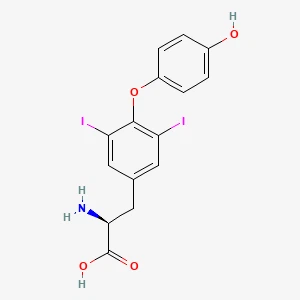
Hangzhou Leap Chem Co., Ltd. is one of the most professional manufacturers and suppliers of dl-lysine丨cas 70-54-2 in China. Welcome to wholesale bulk high quality chemical products at competitive price from our factory. If you have any enquiry about custom service, please feel free to email us.
Specifications
| Appearance | White to off-white crystals or crystalline powder |
| Assay | 98% min |
| Specific rotation [α]D20 | -0.5° to +0.5° |
| Chloride (Cl) | 0.03% max |
| Ammonium (NH₄) | 0.02% max |
| Iron (Fe) | 10 ppm max |
| Heavy metals (Pb) | 10 ppm max |
| Arsenic (As₂O₃) | 1 ppm max |
| Other amino acids | 0.5% max |
| Loss on drying | 5% max |
| Residue on ignition | 0.5% max |
Transport Information
|
Parameter |
Specification |
|
UN Number |
|
|
Class |
|
|
Packing Group |
|
|
H.S. Code |
2922411000 |
|
Stability & Reactivity |
The product is chemically stable under standard ambient conditions. |
|
Storage |
Under inert gas (nitrogen or Argon) at 2–8 °C |
|
Condition to Avoid |
|
|
Package |
Applications
1. Nutritional Supplements (Specialized Applications)
DL-Lysine may be used in experimental nutrition, animal nutrition research, or biochemical studies to evaluate the roles of stereoisomers of lysine.
While L-lysine is the biologically active form in protein synthesis, the racemic DL form is used for specific comparative or metabolic studies.
2. Chemical Intermediate
Serves as a starting material for synthesizing derivatives of lysine, such as:
Protecting groups for peptide synthesis
Pharmaceutical precursors
Chiral catalysts or ligands
DL-lysine is often used when the chirality is not critical to the synthetic goal.
3. Microbiological and Biochemical Research
Used in the study of amino acid metabolism, enzyme specificity, and transport mechanisms in microbial systems.
Useful in the screening of racemase enzymes that convert between D- and L-amino acids.
4. Polymer and Resin Development
May be employed in the synthesis of biodegradable polymers or polyamide resins where lysine acts as a diamine monomer.
The DL form is often more cost-effective and readily available for non-biological applications.
Benefits
✅ Cost-Effective Alternative
Less expensive than pure L-lysine, making it practical for non-chirality-dependent synthesis or industrial use.
✅ Versatility
Can be used in chemical synthesis, material science, or metabolic studies, where a racemic mixture is suitable or even advantageous.
✅ Research Utility
Useful for stereochemical studies to understand how biological systems differentiate between D- and L-isomers.
Helpful in designing enzyme inhibitors, racemase assays, and isomer separation techniques.
Conclusion
DL-Lysine (CAS 70-54-2) is a racemic form of the essential amino acid lysine, primarily valued in research, industrial synthesis, and non-biological applications. While it lacks the nutritional benefits of pure L-lysine, it offers cost efficiency, synthetic utility, and experimental value in exploring stereoisomeric behavior, making it a useful compound in a range of chemical and biochemical contexts.