


Fluorescein is a well - known and widely used fluorescent dye in various scientific fields, including biochemistry, cell biology, and analytical chemistry. As a fluorescein supplier, I often encounter questions from researchers and scientists about the properties of fluorescein, and one of the most frequently asked questions is: "What is the maximum excitation wavelength of fluorescein?" In this blog post, I will delve into this topic in detail, exploring the factors that influence the maximum excitation wavelength and its significance in practical applications.
Basic Properties of Fluorescein
Fluorescein is a synthetic organic compound with a characteristic bright green fluorescence. Its chemical structure consists of a xanthene core with two phenolic hydroxyl groups. This structure is responsible for its unique optical properties. When a molecule of fluorescein absorbs a photon of light, it gets excited from its ground state to a higher - energy excited state. After a short period, it returns to the ground state, emitting a photon of light at a longer wavelength, which is the fluorescence emission.
The maximum excitation wavelength of a fluorescent dye is the wavelength of light at which the dye absorbs the most photons, resulting in the highest level of fluorescence emission. For fluorescein, the maximum excitation wavelength is typically around 494 nm in an aqueous solution at neutral pH. This value can vary slightly depending on several factors, such as the solvent, pH, and the presence of other molecules.
Factors Affecting the Maximum Excitation Wavelength
Solvent Effects
The solvent in which fluorescein is dissolved can have a significant impact on its maximum excitation wavelength. Different solvents have different polarities, and the interaction between the fluorescein molecule and the solvent molecules can alter the energy levels of the dye. For example, in a more polar solvent, the maximum excitation wavelength of fluorescein may shift to a longer wavelength (red - shift). This is because the polar solvent molecules can interact with the charged or polar groups on the fluorescein molecule, stabilizing the excited state and reducing the energy difference between the ground state and the excited state.
pH Effects
The pH of the solution also plays a crucial role in determining the maximum excitation wavelength of fluorescein. Fluorescein has two phenolic hydroxyl groups that can be protonated or deprotonated depending on the pH of the solution. At low pH values, the hydroxyl groups are protonated, and the molecule exists in a neutral form. As the pH increases, the hydroxyl groups start to deprotonate, forming an anionic form. The anionic form of fluorescein has a different electronic structure compared to the neutral form, which leads to a shift in the maximum excitation wavelength. At neutral to slightly basic pH values (around pH 7 - 9), the maximum excitation wavelength is close to the typical value of 494 nm. However, at very low or very high pH values, the maximum excitation wavelength can deviate significantly from this value.
Interaction with Other Molecules
Fluorescein can interact with other molecules in the solution, such as proteins, nucleic acids, or metal ions. These interactions can change the electronic environment around the fluorescein molecule, affecting its energy levels and thus the maximum excitation wavelength. For example, when fluorescein binds to a protein, the protein - fluorescein complex may have a different maximum excitation wavelength compared to free fluorescein. This property is often exploited in fluorescence - based assays to detect the presence or concentration of specific molecules.
Significance of the Maximum Excitation Wavelength in Practical Applications
Fluorescence Microscopy
In fluorescence microscopy, the maximum excitation wavelength is a critical parameter. Microscopes are equipped with light sources and filters that are designed to provide light at the appropriate wavelength to excite the fluorescent dye. For fluorescein - labeled samples, a light source that emits light around 494 nm is typically used to achieve the highest level of fluorescence emission. This allows researchers to visualize the fluorescein - labeled structures or molecules within cells or tissues with high sensitivity and contrast.
Fluorescence - Based Assays
Fluorescence - based assays, such as enzyme - linked immunosorbent assays (ELISAs) and fluorescence resonance energy transfer (FRET) assays, rely on the efficient excitation of fluorescent dyes. Knowing the maximum excitation wavelength of fluorescein is essential for optimizing the assay conditions. By using a light source with the appropriate wavelength, the signal - to - noise ratio of the assay can be improved, leading to more accurate and reliable results.
Our Fluorescein Products
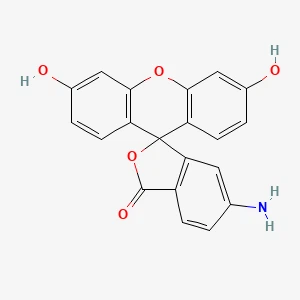
As a fluorescein supplier, we offer a wide range of fluorescein - related products, each with its own unique properties and applications. For example, 6 - Aminofluorescein丨CAS 51649 - 83 - 3 is a derivative of fluorescein that can be used for labeling biomolecules. It has similar fluorescence properties to fluorescein but with the added advantage of a reactive amino group that can be used for conjugation.
Another product in our portfolio is L - Thyroxine丨CAS 51 - 48 - 9. Although not a pure fluorescein, it can be labeled with fluorescein for use in thyroid - related research. The labeled L - Thyroxine can be used to study the binding and transport of thyroid hormones in biological systems.
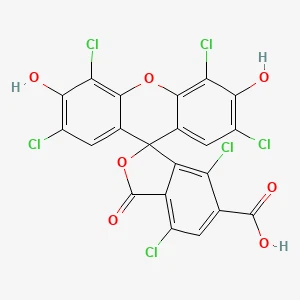
We also supply 6 - HEX丨CAS 155911 - 16 - 3, which is a fluorescent dye similar to fluorescein but with a different emission spectrum. It is often used in multiplexed fluorescence assays, where multiple dyes are used simultaneously to detect different analytes.
Contact Us for Procurement
If you are interested in our fluorescein products or have any questions about the maximum excitation wavelength or other properties of fluorescein, we encourage you to contact us for procurement and further discussion. Our team of experts is always ready to assist you in choosing the right products for your specific research needs.
References
- Lakowicz, J. R. (2006). Principles of Fluorescence Spectroscopy. Springer Science & Business Media.
- Haugland, R. P. (2002). Handbook of Fluorescent Probes and Research Products. Molecular Probes.
- Valeur, B. (2002). Molecular Fluorescence: Principles and Applications. Wiley - VCH.


