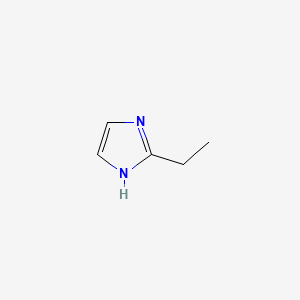
Hangzhou Leap Chem Co., Ltd. is one of the most professional manufacturers and suppliers of tetrahydro-2h-pyran-4-carboxylic acid丨cas 5337-03-1 in China. Welcome to wholesale bulk high quality chemical products at competitive price from our factory. If you have any enquiry about custom service, please feel free to email us.
Specifications of Tetrahydro-2H-pyran-4-carboxylic acid丨CAS 5337-03-1
|
Appearance |
White or off white solid |
|
Purity |
98% min |
|
Storage |
Store closed in a cool place |
Chemical Overview:
Tetrahydro-2H-pyran-4-carboxylic acid丨CAS 5337-03-1 is an organic compound characterized by a six-membered tetrahydropyran ring with a carboxylic acid group attached at the 4-position. It is a valuable intermediate in synthetic organic chemistry, offering a versatile scaffold for various functionalizations. This compound is known for its moderate polarity and reactivity due to the carboxyl group, which facilitates the formation of esters, amides, and other derivatives.
Applications
Pharmaceutical Intermediate
Tetrahydro-2H-pyran-4-carboxylic acid is widely used as a building block in pharmaceutical synthesis. Its structural motif-a saturated tetrahydropyran ring-is prevalent in many bioactive molecules and natural products. The compound serves as a precursor for the synthesis of drugs targeting several therapeutic areas such as:
Antiviral agents: The tetrahydropyran ring is found in nucleoside analogs and other antiviral compounds. Modifications around this ring system can lead to potent inhibitors of viral enzymes.
Anti-inflammatory and analgesic drugs: The molecule's ability to be functionalized at the carboxyl group allows for creating derivatives that act on inflammatory pathways.
Antibiotics and antifungals: Some antibiotic classes feature tetrahydropyran rings, and this compound aids in their synthetic routes.
Organic Synthesis Intermediate
Due to its reactive carboxylic acid moiety and stable tetrahydropyran ring, it is used in organic synthesis as:
A versatile synthon: It can be converted into esters, amides, anhydrides, and other derivatives, enabling the construction of complex molecules.
Chiral building block: In asymmetric synthesis, tetrahydropyran derivatives are utilized to introduce stereocenters and control stereochemistry in target molecules.
Polymer precursors: Functionalized derivatives can be incorporated into polymer backbones or side chains, imparting specific physical or chemical properties.
Agrochemical Industry
This compound is useful in the synthesis of agrochemicals such as herbicides, insecticides, and fungicides. The tetrahydropyran ring structure is common in various bioactive agrochemical compounds that require stability and lipophilicity. Functionalized tetrahydro-2H-pyran-4-carboxylic acid derivatives can be tailored to optimize activity, environmental stability, and biodegradability.
Flavor and Fragrance Industry
Although less common, derivatives of tetrahydro-2H-pyran-4-carboxylic acid may serve as intermediates in the synthesis of certain flavor and fragrance compounds. The tetrahydropyran ring can mimic sugar or fruit-related structures, contributing to the desired olfactory or taste profile.
Material Science and Specialty Chemicals
Its derivatives are sometimes used in the preparation of specialty materials, such as biodegradable polymers or functional coatings, where the tetrahydropyran unit provides flexibility and compatibility with biological environments.
Benefits
Versatility in Chemical Transformations
The presence of both a stable tetrahydropyran ring and a reactive carboxylic acid group gives this molecule great versatility. It can undergo a variety of chemical reactions-esterification, amidation, reduction, and more-making it an indispensable intermediate in synthetic routes.
Structural Scaffold for Bioactivity
The tetrahydropyran ring system is a common motif in many biologically active natural products and synthetic drugs. Its saturated ring structure provides conformational flexibility and improves molecular recognition in biological systems. Incorporating this scaffold can enhance the pharmacokinetic and pharmacodynamic properties of new drug candidates.
Chirality and Stereochemical Control
Tetrahydro-2H-pyran-4-carboxylic acid丨CAS 5337-03-1 can be synthesized or resolved in enantiomerically pure forms, enabling the preparation of chiral molecules crucial in pharmaceuticals. Control of stereochemistry often leads to improved efficacy and reduced side effects in drugs.
Improved Solubility and Bioavailability
The carboxylic acid group can improve the solubility of compounds in aqueous media, which is essential for oral drug formulations. Additionally, the hydrophilic acid group combined with the hydrophobic tetrahydropyran ring offers a balanced amphiphilic character that can enhance membrane permeability and bioavailability.
Environmental and Safety Advantages
Compared to some aromatic or halogenated intermediates, tetrahydro-2H-pyran-4-carboxylic acid and its derivatives generally show better biodegradability and lower toxicity, making them attractive for green chemistry applications and environmentally friendly product development.
Cost-Effectiveness and Availability
The synthesis of tetrahydro-2H-pyran-4-carboxylic acid is well-established, and it is commercially available at reasonable costs. Its stability and ease of handling make it practical for scale-up and industrial applications.
Summary
Tetrahydro-2H-pyran-4-carboxylic acid丨CAS 5337-03-1 is a valuable chemical intermediate prominently used in pharmaceutical, agrochemical, and specialty chemical industries. Its unique combination of a stable tetrahydropyran ring and a reactive carboxylic acid group allows for extensive functionalization and incorporation into bioactive molecules, materials, and polymers.
The compound facilitates the development of drugs with improved efficacy and safety profiles due to its structural and stereochemical advantages. Its environmental compatibility and cost-effectiveness further enhance its utility in modern synthetic and industrial chemistry.