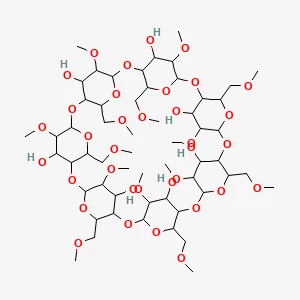
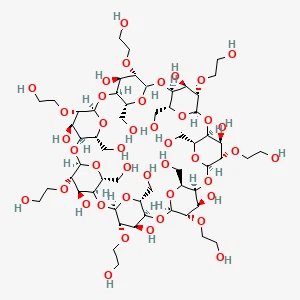
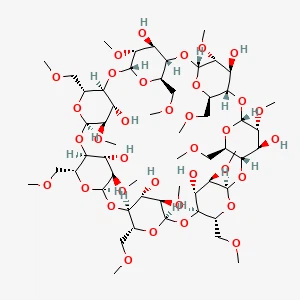
Hangzhou Leap Chem Co., Ltd. is one of the most professional manufacturers and suppliers of 2-hydroxypropyl-α-cyclodextrin丨cas 128446-33-3 in China. Welcome to wholesale bulk high quality chemical products at competitive price from our factory. If you have any enquiry about custom service, please feel free to email us.
Specifications
|
Appearance: |
White or almost white powder, Odorless, slightly sweet; Freely soluble in water, soluble in methanol and ethanol, almost insoluble in acetone and trichloromethane. |
|
pH: |
5.0 to 8.5 |
|
Clarity of solution: |
2.5g/25ml water solution is clear |
|
Water: |
10% max |
|
Alpha-Cyclodextrin: |
1.5% max |
|
Residue on ignition: |
0.2% max |
|
Heavy metals: |
10 ppm max |
|
Propylene glycol: |
0.5% max |
|
Chloride: |
0.05% max |
|
Hydroxypropoxyl content: |
22.3% to 36.1% |
|
Total aerobic microbial count: |
1000 cfu/g max |
|
Total combined moulds and yeasts count: |
100 cfu/g max |
|
Escherichia coli: |
Absence |
|
Bacterial endotoxins test: |
According to preparation needs |
Transport Information
|
Parameter |
Specification |
|
UN Number |
|
|
Class |
|
|
Packing Group |
|
|
H.S. Code |
3505100000302 |
|
Stability & Reactivity |
The product is chemically stable under standard ambient conditions. |
|
Storage |
Tightly closed. Store in a closed, dry, ventilated place |
|
Condition to Avoid |
|
|
Package |
Manufacturing Information
|
Parameter |
Specification |
|
Capacity |
1MT/month |
|
Frequency |
|
|
Main Export Countries |
|
|
Capacity/Batch |
|
|
Experience |
Production since 2015 |
|
Stock |
Overview
2-hydroxypropyl-α-cyclodextrin丨CAS 128446-33-3 is a chemically modified cyclic oligosaccharide derived from α-cyclodextrin (α-CD) by the substitution of hydroxypropyl groups on the hydroxyl sites of the glucose units. This modification significantly improves the water solubility and inclusion complexation properties of the molecule while reducing potential toxicity and crystallinity. Due to its relatively small cavity size (~0.57 nm), HPαCD is particularly well-suited to host small, hydrophobic guest molecules, enhancing their stability, solubility, and bioavailability.
Applications
1. Pharmaceutical Industry
Solubilizer and Carrier for Small Molecules: HPαCD enhances the aqueous solubility and stability of poorly water-soluble drugs like anesthetics, vitamins, and steroids.
Drug Delivery Systems: Used in oral, ophthalmic, and parenteral formulations for small active pharmaceutical ingredients (APIs).
Protein and Peptide Stabilization: Can protect labile biologics by preventing aggregation and degradation.
Controlled Release: Helps regulate the release rate of drugs by forming reversible inclusion complexes.
2. Food and Nutraceuticals
Flavor and Aroma Stabilizer: Protects and slowly releases volatile components in food products.
Encapsulation of Nutrients: Used to stabilize vitamins and fatty acids in supplements and functional foods.
Cholesterol Removal: Though less effective than β- or γ-CDs, it still demonstrates moderate activity in reducing cholesterol content in dairy.
3. Cosmetics and Personal Care
Fragrance Control: Encapsulates perfumes for prolonged scent release.
Active Stabilization: Preserves sensitive ingredients such as retinoids or essential oils.
Enhanced Skin Absorption: Can improve solubility and delivery of actives in topical formulations.
4. Agricultural and Industrial Uses
Pesticide Formulation: Improves solubility and delivery of hydrophobic agrochemicals.
Bioremediation: Forms complexes with environmental pollutants (e.g., phenols, hydrocarbons) for remediation.
Chromatography and Separation Science: Used in chiral separations due to its stereoselective binding ability.
Benefits
|
Feature |
Benefit |
|
High water solubility |
Enables aqueous formulations of hydrophobic actives |
|
Small internal cavity (~0.57 nm) |
Ideal for small molecule encapsulation |
|
Reduced crystallinity |
Prevents precipitation in formulations |
|
Low toxicity and non-irritating |
Biocompatible and safe for ingestion and topical use |
|
Biodegradable and eco-friendly |
Environmentally sustainable choice |
|
Thermal and chemical stability |
Suitable for wide formulation and processing conditions |
Conclusion
2-hydroxypropyl-α-cyclodextrin丨CAS 128446-33-3 is a highly water-soluble, safe, and effective cyclodextrin derivative designed for encapsulating and stabilizing small hydrophobic molecules. Its advantages-such as enhanced solubility, low toxicity, and cavity compatibility-make it suitable for pharmaceuticals, cosmetics, food additives, and environmental technologies. It is particularly valuable where β- or γ-cyclodextrins are too large or when high aqueous solubility is critical.