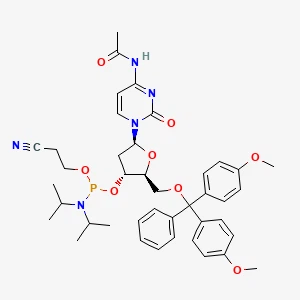
Hangzhou Leap Chem Co., Ltd. is one of the most professional manufacturers and suppliers of n4-acetyl-2-o-methyl-cytidine丨cas 113886-71-8 in China. Welcome to wholesale bulk high quality chemical products at competitive price from our factory. If you have any enquiry about custom service, please feel free to email us.
Specifications
| Appearance: | White to Off White Powder |
| Purity: | 97.0% min. |
| Water Content: | 1.0% max. |
Manufacturing Information
|
Parameter |
Specification |
|
Capacity |
100kg/month |
|
Frequency |
|
|
Main Export Countries |
|
|
Capacity/Batch |
|
|
Experience |
Production since 2012 |
|
Stock |
Applications
1. Epitranscriptomic and RNA Modification Research
Serves as a standard or reference compound to study RNA modifications, particularly N4-acetylation and 2′-O-methylation in RNA molecules.
Helps elucidate the functional roles of combined base and sugar modifications on RNA structure, stability, and protein interactions.
2. Molecular Biology and Synthetic Biology
Used in the synthesis of modified RNA oligonucleotides for:
Investigating RNA folding and dynamics
Probing enzyme recognition and activity, such as RNA methyltransferases and acetyltransferases
Studying RNA-protein interactions relevant to gene regulation
3. Therapeutic RNA Development
Incorporated into synthetic RNA therapeutics (e.g., siRNA, mRNA vaccines) to improve:
RNA stability against nucleases
Reduced immunogenicity in vivo
Enhanced pharmacokinetic properties
4. Analytical Chemistry and Diagnostics
Used as a marker in mass spectrometry and chromatography to detect and quantify RNA modifications in biological samples.
Aids in the profiling of RNA modification patterns linked to disease states or cellular responses.
Benefits
1. Improved RNA Stability
The 2′-O-methyl group protects RNA from degradation by nucleases.
N4-acetylation can influence base-pairing properties and RNA structure, adding another layer of stability.
2. Modulation of RNA Function
Modifications like N4-acetyl and 2′-O-methyl influence translation, splicing, and RNA-protein binding, affecting gene expression regulation.
3. Reduced Immune Recognition
Modified nucleosides decrease the activation of innate immune sensors, making synthetic RNAs more biocompatible for therapeutic use.
4. Key to Understanding RNA Epigenetics
Studying such modifications expands knowledge of the epitranscriptome, revealing regulatory mechanisms beyond the genetic code.
Conclusion
N4-Acetyl-2-O-Methyl-cytidine (CAS 113886-71-8) is a dual-modified cytidine nucleoside important in RNA biology and epitranscriptomic research. It is utilized as a tool to study RNA structure and function, enzyme specificity, and to enhance the performance of RNA-based therapeutics by improving stability and reducing immune activation. This modified nucleoside is vital for advancing molecular biology, synthetic biology, and pharmaceutical development involving RNA.