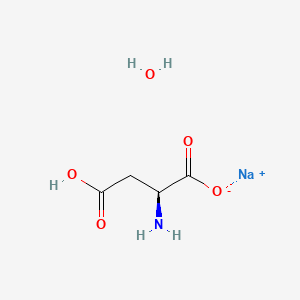
Hangzhou Leap Chem Co., Ltd. is one of the most professional manufacturers and suppliers of glycine丨cas 56-40-6 in China. Welcome to wholesale bulk high quality chemical products at competitive price from our factory. If you have any enquiry about custom service, please feel free to email us.
Specifications
|
Grade: |
USP39 |
|
Assay: |
White crystalline powder, odourless |
|
Assay (C2H5NO2): |
98.5 ~ 101.5% |
|
Appearance of solution: |
Clear |
|
Identification IR: |
Meets the requirement |
|
Chloride (as Cl): |
0.007% max |
|
Heavy metals (as Pb): |
0.001% max |
|
Sulfate (as SO4): |
0.0065% max |
|
Loss on drying: |
0.2% max |
|
Residue on ignition: |
0.1% max |
|
Hydrolyzable substances: |
Conforms |
|
Lead: |
5 ppm max |
|
Chromatographic purity: |
Meets the requirements |
|
Organic volatile impurities: |
Meets the requirements |
|
Arsenic: |
1 ppm max |
|
Cadmium: |
1 ppm max |
|
Mercury: |
0.1 ppm max |
Microbiological items
|
Total plate count: |
1000 cfu/g max |
|
Yeast and Mold: |
100 cfu/g max |
|
E. Coli: |
Negative |
|
Salmonella: |
Negative |
Transport Information
|
Parameter |
Specification |
|
UN Number |
|
|
Class |
|
|
Packing Group |
|
|
H.S. Code |
2924199090306 |
|
Stability & Reactivity |
The product is chemically stable under standard ambient conditions. |
|
Storage |
Tightly closed. Store in a closed, dry, ventilated place |
|
Condition to Avoid |
|
|
Package |
Manufacturing Information
|
Parameter |
Specification |
|
Capacity |
10MT/day |
|
Frequency |
|
|
Main Export Countries |
|
|
Capacity/Batch |
|
|
Experience |
Production since 2005 |
|
Stock |
Overview
Glycine丨CAS 56-40-6 is the simplest naturally occurring amino acid, and a vital component in numerous biological and industrial systems. As a non-essential amino acid, glycine is biosynthesized by the human body and plays fundamental roles in protein synthesis, neurotransmission, and cellular metabolism.
It is used widely in pharmaceutical, food, agriculture, biochemical, and industrial applications due to its safety, solubility, and reactivity.
Applications
1. Pharmaceuticals and Medicine
Used as an excipient in drug formulations.
Acts as a buffering agent in intravenous (IV) solutions.
Component in oral rehydration salts and amino acid infusions.
Plays a role in the treatment of conditions like benign prostatic hyperplasia, stroke, and schizophrenia due to its neurotransmitter properties (as an inhibitory neurotransmitter in the central nervous system).
2. Nutritional and Food Industry
Functions as a nutritional supplement and flavor enhancer (E640).
Used in protein supplements, especially in sports and clinical nutrition.
Enhances the sweetness or umami taste of certain formulations.
A precursor in the synthesis of creatine and glutathione.
3. Agriculture and Animal Feed
Added to animal feed to promote growth and feed efficiency.
Used as a chelating agent for micronutrient fertilizers (e.g., glycine-chelated zinc or iron).
Can enhance the uptake and bioavailability of nutrients in plants.
4. Chemical and Industrial Synthesis
Starting material in the production of glyphosate, a common herbicide.
Involved in buffer preparation in biochemical labs (e.g., Tris-glycine buffers for electrophoresis).
Used as a complexing agent in electroplating and metal finishing.
5. Cosmetic and Personal Care
Included in skin care and hair care products for its moisturizing and conditioning properties.
Functions as a pH adjuster and skin-soothing agent.
Summary
Glycine丨CAS 56-40-6 is a multifunctional amino acid central to biological systems, nutraceuticals, and industrial chemistry. Its roles in protein synthesis, neurotransmission, metabolic processes, and industrial formulations underscore its versatility and broad utility across scientific, medical, and commercial domains.
Let me know if you'd like comparisons with other amino acids (e.g., alanine, serine) or details on its role in biochemical pathways.