

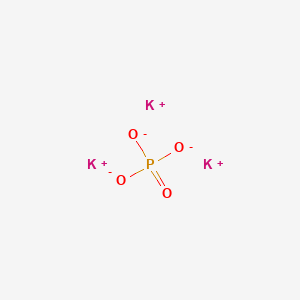
Hangzhou Leap Chem Co., Ltd. is one of the most professional manufacturers and suppliers of potassium phosphate丨cas 7778-53-2 in China. Welcome to wholesale bulk high quality chemical products at competitive price from our factory. If you have any enquiry about custom service, please feel free to email us.
Specifications of Potassium phosphate丨7778-53-2
|
Property |
Specification |
|
Grade |
GB |
|
Appearance |
White to Off-white powder |
|
Assay |
97% (on dried basis) |
|
pH (1g/100ml solution) |
11.5 - 12.5 |
|
As (mg/kg) |
3.0 max |
|
Heavy metal (Pb, mg/kg) |
10.0 max |
|
Pb (mg/kg) |
2.0 max |
|
F (mg/kg) |
10.0 max |
|
Water Insolubles (w/%) |
0.2% max |
|
Residue on ignition (w/%) |
5.0% max |
Transport Information of Potassium phosphate丨7778-53-2
|
Parameter |
Specification |
|
UN Number |
|
|
Class |
|
|
Packing Group |
|
|
H.S. Code |
2835240000104 |
|
Stability & Reactivity |
Stable. Incompatible with strong oxidants and moisture. |
|
Storage |
Tightly closed. Store in a closed, dry, ventilated place |
|
Condition to Avoid |
|
|
Package |
Introduction
Potassium phosphate丨7778-53-2, refers to a group of inorganic salts composed of potassium cations (K⁺) and phosphate anions (PO₄³⁻). The most common forms are monopotassium phosphate (KH₂PO₄), dipotassium phosphate (K₂HPO₄), and tripotassium phosphate (K₃PO₄). These compounds are widely used in food, pharmaceuticals, agriculture, and industrial applications due to their buffering, nutritional, and chemical properties.
Applications of Potassium phosphate丨7778-53-2
1. Food Industry:
- Food Additive: Potassium phosphate is used as a food additive (E340) to regulate acidity, improve texture, and act as an emulsifier in processed foods such as cheeses, meats, and baked goods.
- Nutrient Supplement: It is added to foods and beverages as a source of potassium and phosphorus, essential minerals for human health.
- Stabilizer: It helps stabilize and extend the shelf life of food products by preventing spoilage and maintaining consistency.
2. Pharmaceuticals:
- Buffering Agent: Potassium phosphate is used in pharmaceutical formulations to maintain the pH of drugs, particularly in injectable solutions and oral medications.
- Electrolyte Replacement: It is used in intravenous (IV) solutions and oral rehydration salts to replenish electrolytes in patients with deficiencies.
3. Agriculture:
- Fertilizer: Potassium phosphate is used as a fertilizer to provide potassium and phosphorus, essential nutrients for plant growth and development.
- Soil Amendment: It helps improve soil quality and nutrient availability, promoting healthier crops.
4. Industrial Applications:
- Water Treatment: Potassium phosphate is used in water treatment processes to control pH and prevent corrosion in boilers and cooling systems.
- Detergents and Cleaners: It is used in detergents and cleaning products as a water softener and buffering agent.
5. Laboratory and Research:
- Buffer Solutions: Potassium phosphate is commonly used to prepare buffer solutions for biochemical and molecular biology experiments, ensuring stable pH conditions.
- Reagent: It is used as a reagent in chemical synthesis and analytical chemistry.
Benefits of Potassium phosphate丨7778-53-2
1. Buffering Capacity:
- Potassium phosphate is an effective buffering agent, maintaining stable pH levels in food, pharmaceuticals, and laboratory applications.
2. Nutritional Value:
- It provides essential nutrients (potassium and phosphorus) in food and agricultural applications, supporting human health and plant growth.
3. Versatility:
- Its applications span multiple industries, including food, pharmaceuticals, agriculture, and industrial processes, highlighting its versatility.
4. Stability and Solubility:
- Potassium phosphate is highly soluble in water and stable under a wide range of conditions, making it easy to incorporate into various formulations.
5. Cost-Effectiveness:
- As a commercially available compound, potassium phosphate is relatively inexpensive, making it accessible for industrial and research use.
Safety and Handling
1. General Safety:
- Potassium phosphate丨7778-53-2 is generally safe when used as directed. However, excessive consumption or exposure can lead to imbalances in electrolytes, particularly potassium and phosphorus levels.
2. Storage:
- It should be stored in a cool, dry place, away from incompatible materials such as strong acids. Proper labeling and storage conditions are essential to ensure safety.
3. Environmental Impact:
- Potassium phosphate is not considered highly toxic to the environment. However, excessive use in agriculture can contribute to nutrient runoff, leading to water pollution and algal blooms. Proper application and disposal practices should be followed.
Conclusion
Potassium phosphate丨7778-53-2 is a versatile and widely used compound with applications in the food industry, pharmaceuticals, agriculture, and industrial processes. Its buffering capacity, nutritional value, and stability make it an indispensable tool in various fields. While it is generally safe, proper handling and application practices are essential to ensure its benefits are realized without adverse effects. As industries continue to evolve, potassium phosphate will remain a key component in the development of food products, medicines, fertilizers, and more.


