

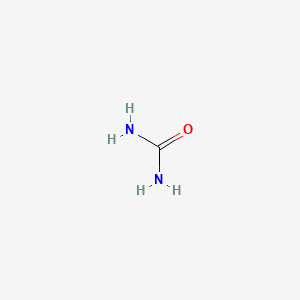
Hangzhou Leap Chem Co., Ltd. is one of the most professional manufacturers and suppliers of urea丨cas 57-13-6 in China. Welcome to wholesale bulk high quality chemical products at competitive price from our factory. If you have any enquiry about custom service, please feel free to email us.
Specifications of Urea丨57-13-6
|
Property |
Specification |
|
Grade |
Food grade |
|
Appearance |
White needle crystal or white powder |
|
Content |
99.0% to 100.5% |
|
Drying weightlessness |
1.0% max |
|
Ethanol insoluble |
0.04% max |
|
Chloride (Cl) |
0.007% max |
|
Sulfate (SO₄) |
0.01% max |
|
Lead (Pb) |
0.0005% max |
|
Heavy metal (in terms of Pb) |
0.001% max |
|
Sulfate ash |
0.1% max |
|
Arsenic (As) |
0.0003% max |
Transport Information of Urea丨57-13-6
|
Parameter |
Specification |
|
UN Number |
|
|
Class |
|
|
Packing Group |
|
|
H.S. Code |
3102100090102 |
|
Stability & Reactivity |
Stable |
|
Storage |
Tightly closed. Store in a closed, dry, ventilated place |
|
Condition to Avoid |
|
|
Package |
25kg/bag, 1MT/pallet |
Manufacturing Information of Urea丨57-13-6
|
Parameter |
Specification |
|
Capacity |
10MT/day |
|
Frequency |
|
|
Main Export Countries |
US, Korea, Japan, Malaysia |
|
Capacity/Batch |
|
|
Experience |
Production since 2016 |
|
Facilities |
Introduction to Urea丨57-13-6
Urea丨57-13-6, also known as carbamide, is a simple organic compound made up of two amino groups (-NH₂) attached to a carbonyl group (C=O). It is a colorless, odorless, and highly soluble solid, commonly found in urine as a major nitrogenous waste product in mammals. Urea丨57-13-6 is a key component in the nitrogen cycle, as it plays a crucial role in the excretion of nitrogen by animals.
Urea is not only found naturally in biological systems but is also widely manufactured synthetically. The synthetic production of urea began in the early 20th century and it has since become one of the most produced organic chemicals globally. It has a wide range of applications in various industries, from agriculture to medicine and cosmetics.
Applications of Urea丨57-13-6
1. Agriculture and Fertilizers
Urea is most commonly known for its use as a fertilizer in agriculture. It is one of the most commonly used nitrogen-based fertilizers due to its high nitrogen content and cost-effectiveness. The nitrogen in urea is essential for plant growth as it is a key component of amino acids and proteins.
● Nitrogen Fertilizer: Urea contains approximately 46% nitrogen, making it one of the most concentrated nitrogen fertilizers available. Nitrogen is a critical nutrient for plants, promoting healthy root and leaf development, and enhancing photosynthesis.
● Slow-Release Formulations: Urea can be treated to form slow-release fertilizers, which help provide plants with a steady supply of nitrogen over time, reducing the need for frequent applications and minimizing environmental impact.
2. Industrial Applications
Urea丨57-13-6 is extensively used in various industrial processes due to its chemical properties. It is an important raw material in the production of plastics, resins, and adhesives.
● Production of Urethane: Urea is used in the synthesis of urethanes, which are used in the manufacture of foams, paints, varnishes, and adhesives. The flexibility and durability of urethane make it essential in the automotive, construction, and packaging industries.
● Melamine Production: Urea is also involved in the production of melamine, a compound used in the manufacture of formaldehyde resins, which are used in laminates, kitchenware, and other durable products.
● Adhesives and Coatings: Urea-formaldehyde resins, derived from urea, are widely used in the production of adhesives and coatings in the furniture, construction, and automotive industries.
3. Pharmaceutical and Medical Applications
Urea has several uses in medicine and pharmaceuticals due to its moisturizing and solubilizing properties. It is commonly found in topical medications, especially for skin and wound care.
● Topical Treatments: Urea is used in topical creams and ointments for the treatment of dry skin conditions such as eczema, psoriasis, and dermatitis. It works by helping to retain moisture in the skin, softening the skin and improving its elasticity.
● Wound Care: Urea is also used in some wound dressings as it promotes debridement (the removal of dead skin) and helps to hydrate and soften the tissue, aiding in faster healing.
● Dialysis Treatment: Urea plays an important role in renal dialysis. During hemodialysis, urea, which accumulates in the blood in patients with kidney failure, is removed from the blood through a dialysis machine to prevent toxicity.
4. Cosmetics and Skin Care
Urea is a common ingredient in many cosmetic and personal care products due to its humectant properties. It is used for moisturizing the skin, reducing roughness, and promoting overall skin health.
● Moisturizers and Lotions: Urea is frequently used in moisturizing creams and lotions to help hydrate the skin, retain moisture, and improve skin texture. It helps to enhance the skin's natural barrier function.
● Exfoliating Products: Urea has keratolytic (exfoliating) properties, which means it can help to remove dead skin cells and promote smoother, softer skin. It is commonly found in products for rough, dry, or cracked skin.
● Anti-aging: Urea's ability to retain moisture and improve skin elasticity makes it an important ingredient in anti-aging products, where it helps to reduce the appearance of fine lines and wrinkles.
5. Chemical Synthesis
Urea is used in the production of many chemicals and materials due to its versatile chemical reactivity.
● Isocyanates: Urea丨57-13-6 is involved in the production of diisocyanates, which are used in the manufacture of polyurethanes for various applications, such as in the production of rigid foams, paints, and coatings.
● Ammonium Nitrate: Urea is also used in the production of ammonium nitrate, a key ingredient in fertilizers and explosives.
6. Animal Feed
In livestock production, urea is used as a supplement in animal feed to provide additional nitrogen to ruminant animals (such as cattle and sheep), which can convert urea into amino acids in their digestive system.
● Nitrogen Source: Urea is used in ruminant feed to supplement their nitrogen intake. The microorganisms in the rumen of ruminant animals break down urea and convert it into protein, which is essential for growth and milk production.
Benefits of Urea丨57-13-6
1. Highly Effective Fertilizer
As a nitrogen-rich compound, Urea丨57-13-6 provides a highly effective and efficient source of nitrogen for plants, which is vital for their growth and development. The high nitrogen content (46%) ensures that plants receive a potent nutrient boost, promoting leaf growth, photosynthesis, and overall plant health.
● Efficient Nutrient Delivery: The high nitrogen content in urea fertilizers leads to rapid and healthy plant growth, making it an essential fertilizer in modern agriculture.
● Cost-Effective: Urea is one of the most cost-effective nitrogen fertilizers available, contributing to the widespread use of this compound in global agriculture.
2. Skin Hydration and Care
In the pharmaceutical and cosmetic industries, urea's moisturizing and exfoliating properties make it a valuable ingredient in various skin care products. By improving hydration and promoting cell turnover, urea helps maintain healthy, soft, and youthful skin.
● Effective Hydration: Urea retains moisture, keeping the skin hydrated and preventing dryness and cracking, making it ideal for people with skin conditions like eczema and psoriasis.
● Skin Exfoliation: As a keratolytic agent, urea helps remove dead skin cells, improving the texture and appearance of the skin and enhancing the effectiveness of other skin treatments.
3. Industrial Versatility
Urea's chemical properties make it a versatile compound for a wide range of industrial applications, including the production of plastics, adhesives, resins, and explosives. Its role in producing urea-formaldehyde resins, used in the construction and furniture industries, demonstrates its utility in high-demand sectors.
4. Environmentally Safer Fertilizer Option
While nitrogen fertilizers in general can contribute to environmental pollution through leaching and volatilization, urea is often seen as more manageable in terms of its environmental impact when used properly. The compound can be used in slow-release formulations, reducing nitrogen runoff and improving nutrient use efficiency.
Conclusion
Urea丨57-13-6 is a highly versatile compound with widespread applications across various industries, including agriculture, pharmaceuticals, cosmetics, and chemical synthesis. Its ability to provide essential nitrogen for plant growth, its beneficial effects on skin health, and its role in industrial processes highlight its importance in modern society. Urea's cost-effectiveness and efficacy make it an indispensable component in many products and processes, contributing to its continued prominence in various sectors.


