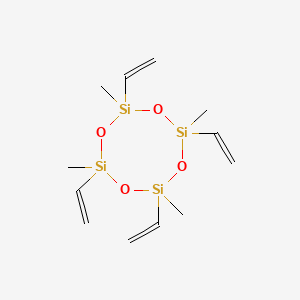
Hangzhou Leap Chem Co., Ltd. is one of the most professional manufacturers and suppliers of (triisopropylsilyl)acetylene丨cas 89343-06-6 in China. Welcome to wholesale bulk high quality chemical products at competitive price from our factory. If you have any enquiry about custom service, please feel free to email us.
Specifications
| Appearance: | colorless or light yellow liquid |
| Assay: | 97% min |
| evaporities : | 0.1% max |
| Water: | 0.1% max |
Transport Information
|
Parameter |
Specification |
|
UN Number |
1993 |
|
Class |
3 |
|
Packing Group |
III |
|
H.S. Code |
2931900090 |
|
Stability & Reactivity |
The product is chemically stable under standard ambient conditions. |
|
Storage |
Tightly closed. Keep away from heat and sources of ignition. Never allow product to get in contact with water during storage. Air and moisture sensitive. Handle and store under inert gas |
|
Condition to Avoid |
Water, air and high temperature |
|
Package |
Manufacturing Information
|
Parameter |
Specification |
|
Capacity |
5,000MT/year |
|
Frequency |
|
|
Main Export Countries |
|
|
Capacity/Batch |
|
|
Experience |
Production since 2001 |
|
Stock |
Applications
(Triisopropylsilyl)acetylene is a versatile building block in synthetic organic chemistry, especially valued for its role in constructing alkyne-functionalized molecules. Its uses span research, materials science, and pharmaceuticals:
1. Protecting Group for Terminal Alkynes
One of the most prominent applications of TIPS-acetylene is as a protected form of acetylene. The TIPS group is large and sterically hindered, providing stability to the alkyne during multi-step synthesis:
Use in organic synthesis: The TIPS group is introduced to an alkyne to prevent undesired reactions at the terminal position during intermediate steps.
Deprotection: It can later be removed under mild conditions using fluoride sources such as tetrabutylammonium fluoride (TBAF), regenerating the free terminal alkyne.
2. Cross-Coupling Reactions
TIPS-acetylene is frequently employed in Sonogashira and Cadiot-Chodkiewicz cross-coupling reactions, where it acts as a nucleophile:
Sonogashira Coupling: Combines TIPS-acetylene with aryl or vinyl halides in the presence of palladium and copper catalysts to form substituted alkynes.
Use in pharmaceutical synthesis: These coupling reactions allow the creation of carbon–carbon triple bonds, which are found in many bioactive molecules.
3. Synthesis of Natural Products and Pharmaceuticals
Due to the growing importance of alkynes in bioactive molecules, TIPS-acetylene is widely used in the synthesis of:
Anticancer agents
Antiviral compounds
Enzyme inhibitors
In these contexts, the TIPS group serves as a protecting group during complex synthesis, preventing side reactions until the final deprotection step.
4. Materials Science and Molecular Electronics
Alkynes are essential components in conjugated materials due to their ability to extend π-systems. TIPS-acetylene plays a significant role in:
Design of conjugated polymers
Development of organic semiconductors
Synthesis of liquid crystals and advanced coatings
Its bulky silyl group enhances solubility and processability, crucial for creating well-defined structures in electronics and nanotechnology.
5. Click Chemistry (after deprotection)
Once the TIPS group is removed, the resulting terminal alkyne can be used in azide-alkyne cycloaddition ("click chemistry"), a powerful and widely used method for:
Bioconjugation
Drug delivery systems
Surface modifications
This versatility makes TIPS-acetylene a favored precursor in biomedical applications.
Benefits
The popularity of (Triisopropylsilyl)acetylene in synthetic chemistry and materials research is driven by several key benefits:
1. Excellent Alkyne Protection
Steric hindrance from the triisopropylsilyl group prevents undesired side reactions at the alkyne site.
Thermal and chemical stability during multi-step reactions, even under basic or oxidative conditions.
Easy deprotection under mild conditions (e.g., TBAF or KF), preserving sensitive functional groups elsewhere in the molecule.
2. High Purity and Reactivity
Commercially available in high purity, making it suitable for sensitive research applications.
Highly reactive under palladium- or copper-catalyzed coupling conditions, enabling efficient formation of C–C bonds.
3. Versatility
Can be used in academic synthesis, industrial production, and medicinal chemistry.
Adaptable to various reaction conditions including:
Polar aprotic solvents (e.g., THF, DMF)
Various catalysts (Pd(PPh₃)₄, CuI, etc.)
4. Enhanced Material Performance
TIPS-substituted alkynes are used to create highly ordered organic semiconductors, with benefits like:
Improved solubility
Enhanced thermal stability
Better film-forming properties
This makes it ideal for optoelectronic applications like OFETs (organic field-effect transistors), OLEDs, and solar cells.
5. Scalability
Well-characterized and widely studied, TIPS-acetylene is suitable for lab-scale and industrial-scale use.
Reactions involving TIPS-acetylene are often high-yielding and compatible with automated or continuous synthesis platforms.
Conclusion
(Triisopropylsilyl)acetylene (TIPS-acetylene, CAS 89343-06-6) is a key reagent in modern organic synthesis. It offers a stable, protected version of terminal alkynes and is widely used in:
Cross-coupling chemistry
Complex molecule synthesis
Materials science
Biomedical research
Its chemical stability, ease of deprotection, and compatibility with a wide range of reactions make it indispensable in both academic and industrial chemistry. As demand grows for precision molecular design, especially in pharmaceuticals and electronics, the role of TIPS-acetylene continues to expand.