

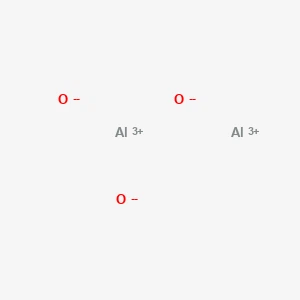
Hangzhou Leap Chem Co., Ltd. is one of the most professional manufacturers and suppliers of aluminum oxide丨cas 1344-28-1 in China. Welcome to wholesale custom made chemical products at competitive price from our factory. For more cheap products, contact us now.
Specifications of Aluminum Oxide丨CAS 1344-28-1
|
Property |
Specification |
|
Type |
Gamma |
|
Appearance |
White powder |
|
Purity |
99.99% min |
|
Average Particle Size |
50 nm |
|
Specific Surface Area |
110 m2/g to 150 m2/g |
|
Bulk Density |
0.1 g/cm3 to 0.3 g/cm3 |
Transport Information of Aluminum Oxide丨CAS 1344-28-1
|
Parameter |
Specification |
|
UN Number |
|
|
Class |
|
|
Packing Group |
|
|
H.S. Code |
2818200000102 |
|
Stability & Reactivity |
Stable |
|
Storage |
Store in a closed, dry, ventilated place |
|
Condition to Avoid |
Moisture |
|
Package |
Manufacturing Information of Aluminum Oxide丨CAS 1344-28-1
|
Parameter |
Specification |
|
Capacity |
12000MT/Year, 1000MT/Month |
|
Frequency |
|
|
Main Export Countries |
|
|
Capacity/Batch |
|
|
Experience |
|
|
Facilities |
Introduction of Aluminum Oxide丨CAS 1344-28-1
Aluminum Oxide (Al₂O₃)丨CAS 1344-28-1, also known as alumina, is a versatile compound widely used in various industries due to its unique physical and chemical properties. As a stable, high-performance material, it plays a key role in fields such as manufacturing, electronics, and environmental technology. Aluminum oxide is a critical component in many industrial processes, offering both durability and efficiency.
Applications of Aluminum Oxide丨CAS 1344-28-1
1.Manufacturing and Industrial Use:
- Abrasives: Aluminum oxide is commonly used as an abrasive in sandpapers, grinding wheels, and cutting tools due to its hardness and durability. It can effectively grind or polish a wide variety of materials, making it essential for industries like automotive, construction, and metalworking.
- Refractory Materials: As a heat-resistant material, aluminum oxide is used in the production of refractory bricks, kiln linings, and crucibles. Its high melting point and resistance to heat make it suitable for applications involving high-temperature processes.
2.Electronics and Semiconductors:
- Insulating Material: Al₂O₃ is used as an electrical insulator in electronic components such as capacitors, resistors, and semiconductors. Its electrical insulating properties are critical for maintaining the efficiency and safety of electronic devices.
- Substrate for Circuit Boards: In the electronics industry, aluminum oxide serves as a substrate material for circuit boards, providing a stable and heat-resistant foundation for the assembly of electronic components.
3.Biomedical Applications:
- Dental and Orthopedic Implants: Due to its hardness, biocompatibility, and wear resistance, Al₂O₃丨CAS 1344-28-1 is used in dental crowns, implants, and prosthetics. Its use in medical devices ensures longevity and reliability in the human body.
- Drug Delivery: Aluminum oxide nanoparticles are being explored for use in drug delivery systems due to their ability to encapsulate and transport pharmaceutical compounds effectively.
4.Catalysis and Chemical Industry:
- Catalysts in Chemical Reactions: Aluminum oxide is often used as a catalyst or catalyst support in various chemical reactions, including petroleum refining and the production of chemicals. It facilitates important reactions, such as those involved in the production of gasoline and other fuels.
- Environmental Applications: Aluminum oxide is also used in water treatment and air purification systems, where its ability to adsorb impurities is leveraged to reduce pollution and improve environmental health.
5.Ceramics and Coatings:
- Ceramic Materials: Aluminum oxide丨CAS 1344-28-1 is a fundamental component in the manufacture of advanced ceramics, including cutting tools, wear-resistant components, and heat shields. Its strength, hardness, and thermal stability make it ideal for applications in harsh environments.
- Protective Coatings: Aluminum oxide coatings are applied to metal surfaces to protect against corrosion and wear. These coatings extend the lifespan of machinery, equipment, and tools in industries ranging from aerospace to automotive.
Benefits of Aluminum Oxide丨CAS 1344-28-1
1.Durability and Strength:
- Aluminum oxide is known for its exceptional hardness and resistance to wear, making it an ideal material for abrasive applications and for use in high-stress environments.
2.High Thermal Stability:
- Its high melting point (over 2000°C) ensures that aluminum oxide can withstand extreme temperatures without degrading, making it invaluable in refractory applications and high-temperature industrial processes.
3.Electrical Insulation:
- Aluminum oxide's insulating properties make it a safe and efficient material for use in electronic devices, ensuring that components operate without the risk of electrical short circuits or heat damage.
4.Biocompatibility:
- Aluminum oxide is biocompatible, making it suitable for use in medical implants and devices. Its resistance to corrosion and bioactivity ensures that it can be used safely in the human body.
5.Environmental Efficiency:
- As a natural material, aluminum oxide is abundant and can be sourced sustainably. Its use in environmental applications, like water purification, helps reduce environmental contamination and promotes cleaner industries.
6.Versatility:
- Aluminum oxide's range of uses across multiple industries – from electronics and manufacturing to healthcare and environmental protection – highlights its adaptability and importance in modern technology and industry.
Precautions and Considerations of Using Aluminum Oxide丨CAS 1344-28-1
1.Handling and Safety:
- While aluminum oxide is generally safe to handle, fine particles of alumina dust can be harmful if inhaled. Proper safety measures, such as protective masks and ventilation, should be in place during industrial handling.
2.Environmental Impact:
- The production of aluminum oxide from bauxite ore can have environmental impacts, including habitat destruction and water use. Sustainable mining practices and recycling of aluminum oxide are important to mitigate these effects.
3.Cost and Availability:
- Aluminum oxide is relatively abundant and cost-effective, but its availability can fluctuate depending on mining and processing factors. Industries that rely on aluminum oxide must consider these fluctuations when sourcing materials.
Conclusion:
Aluminum Oxide丨CAS 1344-28-1 is a highly versatile and durable material with applications across a wide range of industries. Its strength, thermal stability, electrical insulating properties, and biocompatibility make it indispensable in manufacturing, electronics, healthcare, and environmental solutions. Whether used in abrasive materials, semiconductors, or medical implants, aluminum oxide provides long-lasting, reliable performance. By handling the material properly and using sustainable practices, industries can continue to leverage the many benefits of aluminum oxide while minimizing environmental impact.


