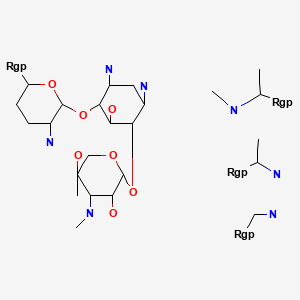

Hangzhou Leap Chem Co., Ltd. is one of the most professional manufacturers and suppliers of apramycin sulfate丨cas 65710-07-8 in China. Welcome to wholesale custom made chemical products at competitive price from our factory. For more cheap products, contact us now.
Specifications of Apramycin sulfate丨65710-07-8
|
Property |
Specification |
|
Grade |
BP2019 Grade |
|
Appearance |
A light brown powder or granular material, hygroscopic |
|
Assay |
The potency is not less than 450 units per mg, calculated with reference to the anhydrous substance |
|
Identification |
|
|
A (TLC) |
Corresponds to the reference |
|
B (HPLC) |
Corresponds to the reference |
|
C (Yields reaction A characteristic of sulphates) |
Positive reaction |
|
Sulphate |
26.0-33.0% SO4, calculated with reference to the anhydrous substance |
|
Caerulomycin and dipyridy derivatives |
1% max |
|
3-hydroxyapramycin |
7% max |
|
Lividamine / 2-deoxystreptamine |
5% max |
|
Compound A |
2% max |
|
Compound B |
2% max |
|
Any other substance |
2% max |
|
Sum of any other substances |
15% max |
|
Sulphated ash |
1.0% max |
|
Water |
14.0% max |
Transport Information of Apramycin sulfate丨65710-07-8
|
Parameter |
Specification |
|
UN Number |
|
|
Class |
|
|
Packing Group |
|
|
H.S. Code |
2941909099302 |
|
Stability & Reactivity |
Stable |
|
Storage |
Tightly closed. Store in a closed, dry, ventilated place |
|
Condition to Avoid |
dust and aerosols |
|
Package |
|
Manufacturing Information of Apramycin sulfate丨65710-07-8
|
Parameter |
Specification |
|
Capacity |
5MT/month |
|
Frequency |
|
|
Main Export Countries |
|
|
Capacity/Batch |
|
|
Experience |
Production since |
|
Facilities |
Introduction
Apramycin sulfate丨65710-07-8 is an aminoglycoside antibiotic that is used primarily in veterinary medicine for the treatment of bacterial infections in animals. It is derived from the bacterium Streptomyces tenebrarius and is chemically related to other aminoglycoside antibiotics like gentamicin and kanamycin. Apramycin is effective against a wide range of Gram-negative bacteria, including those that affect livestock and poultry.
Applications of Apramycin sulfate丨65710-07-8
Veterinary Medicine:
Treatment of Bacterial Infections: Apramycin sulfate is primarily used for the treatment of bacterial infections in animals, particularly livestock (such as cattle, pigs, and poultry). It is commonly employed to treat infections caused by Escherichia coli, Salmonella spp., and Klebsiella spp., which are known to cause diarrhea, septicemia, and other infections in animals.
Poultry: Apramycin is particularly used in poultry farming to treat and prevent enteric infections caused by pathogenic bacteria. This helps to reduce the economic losses associated with infectious diseases in poultry.
Aquaculture:
Apramycin sulfate丨65710-07-8 is used in aquaculture for the treatment of bacterial diseases in fish and shrimp. It helps control bacterial infections, such as vibriosis, which can lead to significant mortality in aquatic animals.
Prophylactic Use:
In some cases, apramycin sulfate is used prophylactically in animals to prevent infections in high-risk conditions, such as after surgery or during periods of stress, such as transportation or confinement.
Feed Additive:
Apramycin sulfate can be added to animal feed to prevent or treat subclinical infections in livestock, particularly in poultry and swine farming.
Human Medicine (Limited Use):
While apramycin is primarily used in veterinary medicine, some research and clinical trials have explored its potential for human use in treating multi-drug resistant infections, particularly tuberculosis. However, its use in human medicine is not widespread due to concerns over side effects and the development of antibiotic resistance.
Benefits and Advantages of Apramycin sulfate丨65710-07-8
Broad-Spectrum Activity:
Apramycin sulfate丨65710-07-8 is effective against a wide range of Gram-negative bacteria, which makes it a versatile antibiotic for treating multiple bacterial infections in animals.
Low Toxicity in Animals:
Compared to other aminoglycosides, apramycin tends to have lower toxicity in animals, especially in terms of nephrotoxicity (kidney damage) and ototoxicity (hearing damage), which are common side effects of many aminoglycosides.
Effective in Treating Resistant Infections:
Apramycin has shown effectiveness in treating bacterial infections caused by antibiotic-resistant strains, particularly those that are resistant to other aminoglycosides like gentamicin and kanamycin. This is particularly important in modern animal husbandry, where antibiotic resistance is a growing concern.
Rapid Action:
Apramycin works relatively quickly to reduce bacterial load, making it suitable for use in acute infections where immediate treatment is necessary to prevent further harm to the animal.
Easy Administration:
Apramycin sulfate丨65710-07-8 is usually administered via injection or oral solutions in veterinary settings, allowing for convenient and effective delivery, especially in livestock management practices.
Economic Benefits in Livestock and Poultry:
By reducing the impact of bacterial infections, apramycin helps improve animal health and productivity. This leads to reduced mortality rates and improved growth rates in livestock and poultry, contributing to higher yields and profitability for farmers.
Conclusion
Apramycin sulfate丨65710-07-8 is a veterinary antibiotic with broad-spectrum efficacy against Gram-negative bacteria, making it a valuable tool in the treatment of bacterial infections in animals, particularly in poultry, swine, and aquaculture. Its low toxicity, rapid action, and effectiveness against resistant strains are key benefits that contribute to improved animal health and productivity. However, care should be taken to follow proper dosing guidelines to avoid toxicity, and its use should be monitored to prevent the development of antibiotic resistance.