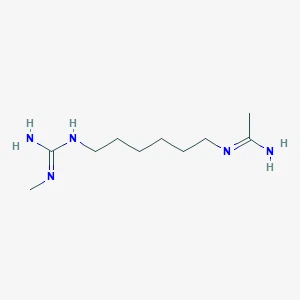

Hangzhou Leap Chem Co., Ltd. is one of the most professional manufacturers and suppliers of phenformin丨cas 114-86-3 in China. Welcome to wholesale bulk high quality chemical products at competitive price from our factory. If you have any enquiry about custom service, please feel free to email us.
Specifications
| Grade | CP 2010 grade |
| Characters/Appearance | White crystalline powder |
| Assay | 99.0% min |
| Solubility | Soluble in water, ethanol |
| Identification | Complies |
| pH | 6.0 - 7.0 |
| Loss on Drying | 1.0% max |
| Residue on Ignition | 0.1% max |
| Sulfated Ash | 0.1% max |
| Heavy Metals | 10 ppm max |
Applications
Phenformin is a biguanide compound historically used as an oral antihyperglycemic agent for the management of type 2 diabetes mellitus. It functions by improving glucose tolerance, reducing hepatic gluconeogenesis, and enhancing peripheral glucose uptake, thereby lowering blood glucose levels. While its clinical use was discontinued in many countries due to safety concerns, particularly lactic acidosis, phenformin remains of interest in biomedical research. It is studied for its role in metabolic regulation, mitochondrial activity modulation, and potential antitumor effects. Researchers also explore its application in oncology, as it has shown promise in inhibiting cancer cell proliferation through mitochondrial complex I inhibition, making it a valuable tool in cancer metabolism studies.
Benefits
The benefits of phenformin are linked to its potent activity in altering cellular metabolism and regulating glucose utilization. It demonstrates stronger mitochondrial inhibitory effects compared to related compounds, making it especially valuable in mechanistic research. Its ability to lower blood glucose provided clinical benefits for diabetic patients prior to its discontinuation. In modern research, phenformin's benefits extend to its potential in oncology, where it is studied as a candidate for cancer treatment strategies targeting tumor metabolism. Additionally, its pharmacological profile makes it a useful reference compound in evaluating the efficacy and safety of newer biguanides and related metabolic modulators.
Conclusion
In summary, phenformin is a biguanide compound with significant historical relevance in diabetes management and ongoing importance in biomedical research. Although discontinued in clinical practice due to safety concerns, it continues to be explored for its role in regulating glucose metabolism and as a potential anticancer agent. Its benefits in research include potent mitochondrial activity, antitumor potential, and value as a reference compound for developing safer metabolic therapies. Phenformin remains an important molecule in advancing scientific understanding of metabolism and therapeutic innovation.