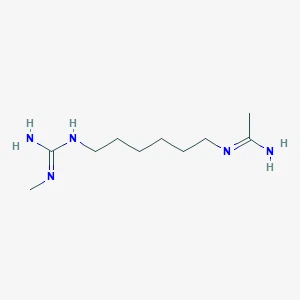
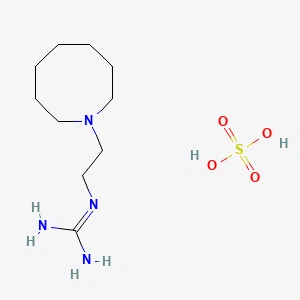
Hangzhou Leap Chem Co., Ltd. is one of the most professional manufacturers and suppliers of guanethidine monosulfate丨cas 645-43-2 in China. Welcome to wholesale bulk high quality chemical products at competitive price from our factory. If you have any enquiry about custom service, please feel free to email us.
Specifications of Guanethidine monosulfate丨CAS 645-43-2
|
Parameter |
Specification |
|
Grade |
USP32 Grade |
|
Appearance |
White or off-white powder |
|
Assay |
97% to 103% |
Transport Information of Guanethidine monosulfate丨CAS 645-43-2
|
Parameter |
Specification |
|
UN Number |
|
|
Class |
|
|
Packing Group |
|
|
H.S. Code |
2925290090304 |
|
Stability & Reactivity |
Stable |
|
Storage |
Store in a closed, dry, ventilated place |
|
Condition to Avoid |
dust and aerosols |
|
Package |
Manufacturing Information of Guanethidine monosulfate丨CAS 645-43-2
|
Parameter |
Specification |
|
Capacity |
10kg/month |
|
Frequency |
|
|
Main Export Countries |
|
|
Capacity/Batch |
|
|
Experience |
|
|
Facilities |
Introduction of Guanethidine monosulfate丨CAS 645-43-2
Guanethidine monosulfate丨CAS 645-43-2 is a medication primarily used as an antihypertensive agent. It has been employed in the management of hypertension (high blood pressure) and in certain treatments for complex regional pain syndrome (CRPS). Below are its key applications and benefits:
Applications of Guanethidine monosulfate丨CAS 645-43-2
1. Hypertension Treatment:
- Management of High Blood Pressure: Guanethidine monosulfate is used to lower blood pressure in patients with hypertension. It works by inhibiting the release of norepinephrine from sympathetic nerve endings, leading to a reduction in blood pressure.
2. Complex Regional Pain Syndrome (CRPS) Treatment:
- Sympathetic Block: Guanethidine is used in sympathetic nerve blocks to treat CRPS, a chronic pain condition. It is delivered through intravenous regional blockade (Bier block), where it acts by reducing sympathetic nerve activity and alleviating pain and inflammation.
3. Treatment of Certain Heart Conditions:
- Arrhythmias and Heart Failure: In the past, guanethidine was occasionally used in the treatment of certain arrhythmias and heart failure, though it has largely been replaced by newer medications.
Benefits of Guanethidine monosulfate丨CAS 645-43-2
1. Effective Blood Pressure Control:
- Potent Antihypertensive Agent: Guanethidine monosulfate丨CAS 645-43-2 is effective in reducing blood pressure in patients with severe or resistant hypertension, particularly when other treatments have failed.
2. Sympathetic Nervous System Inhibition:
- Reduction of Sympathetic Tone: By inhibiting the release of norepinephrine, guanethidine reduces the activity of the sympathetic nervous system, which is beneficial in conditions where excessive sympathetic activity is a problem.
3. Pain Relief in CRPS:
- Alleviation of Chronic Pain: In CRPS, guanethidine's ability to block sympathetic nerves can lead to significant pain relief, making it a valuable option in managing this challenging condition.
4. Prolonged Action:
- Long-Lasting Effects: The effects of guanethidine are long-lasting, which means it can provide sustained relief from high blood pressure or pain, reducing the frequency of dosing.
Precautions and Considerations:
1. Side Effects:
- Orthostatic Hypotension: Guanethidine monosulfate丨CAS 645-43-2 can cause a significant drop in blood pressure upon standing, leading to dizziness or fainting.
- Bradycardia: It may cause a slow heart rate, which can be problematic in certain patients.
- Diarrhea and Nasal Congestion: Common side effects include gastrointestinal disturbances and nasal congestion.
2. Drug Interactions:
- Interaction with Other Medications: Guanethidine can interact with other drugs, particularly those affecting the cardiovascular system, and should be used cautiously in combination with them.
3. Limited Use in Modern Medicine:
- Replaced by Newer Drugs: Guanethidine has largely been replaced by newer, more effective, and better-tolerated antihypertensive medications. Its use is now relatively rare, reserved for specific cases where other treatments are not suitable.
4. Administration Caution:
- Monitoring Required: Patients receiving guanethidine treatment require careful monitoring of blood pressure and heart rate, especially when initiating therapy.
Guanethidine monosulfate丨CAS 645-43-2, while not as commonly used today due to the availability of newer antihypertensives, remains a potent option in specific clinical scenarios, particularly in managing severe hypertension and providing relief in CRPS. Its primary benefit lies in its ability to significantly lower blood pressure and reduce sympathetic nerve activity, though its use requires careful management due to potential side effects.