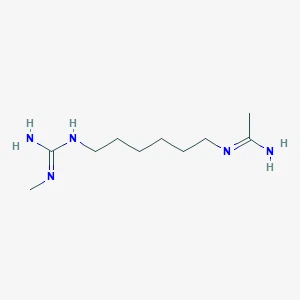
Hangzhou Leap Chem Co., Ltd. is one of the most professional manufacturers and suppliers of chlorhexidine丨cas 55-56-1 in China. Welcome to wholesale bulk high quality chemical products at competitive price from our factory. If you have any enquiry about custom service, please feel free to email us.
Specifications of Chlorhexidine丨CAS 55-56-1
|
Parameter |
Specification |
|
Appearance |
Off-white crystalline powder |
|
Assay |
97.5% min |
|
P-chloroaniline |
500 ppm max |
|
Loss on drying |
3.0% max |
Transport Information of Chlorhexidine丨CAS 55-56-1
|
Parameter |
Specification |
|
UN Number |
UN 3077 |
|
Class |
9 |
|
Packing Group |
III |
|
H.S. Code |
|
|
Stability & Reactivity |
Stable |
|
Storage |
Store in a closed, dry, ventilated place |
|
Condition to Avoid |
|
|
Package |
Introduction of Chlorhexidine丨CAS 55-56-1
Chlorhexidine丨CAS 55-56-1 is an antiseptic agent commonly used in medical, dental, and veterinary settings. It is effective against a wide range of bacteria, some fungi, and certain viruses. Here are its primary applications and benefits:
Applications of Chlorhexidine丨CAS 55-56-1
1. Skin Disinfection:
- Preoperative Skin Preparation: Chlorhexidine is often used to disinfect the skin before surgery to reduce the risk of infections.
- Hand Sanitizers: It is an ingredient in hand sanitizers and soaps used by healthcare workers to prevent the spread of infections.
2. Wound Care:
- Topical Antiseptic: Chlorhexidine丨CAS 55-56-1 is applied to wounds to prevent or treat infections, especially in minor cuts, abrasions, and burns.
3. Oral Health:
- Mouthwash: It is used in mouthwashes to reduce dental plaque and gingivitis. It can also be prescribed for treating oral infections.
- Dental Procedures: Chlorhexidine is used in dental rinses before procedures like tooth extractions to reduce the bacterial load in the mouth.
4. Catheter and Implant Care:
- Central Venous Catheters: Chlorhexidine is used to clean and disinfect the insertion site of catheters to prevent bloodstream infections.
- Surgical Implants: It is also used to disinfect the area before inserting surgical implants.
5. Veterinary Medicine:
- Animal Wound Care: Chlorhexidine is used to clean and disinfect wounds on animals, similar to its use in human medicine.
- Dental Care for Pets: It is also included in oral care products for pets to reduce plaque and tartar.
Benefits of Chlorhexidine丨CAS 55-56-1
1. Broad-Spectrum Antimicrobial Activity:
- Chlorhexidine is effective against a wide range of gram-positive and gram-negative bacteria, as well as certain fungi and viruses, making it a versatile antiseptic.
2. Long-Lasting Effect:
- It has a residual antibacterial effect, meaning it continues to work for several hours after application, providing ongoing protection against infections.
3. Low Irritation Potential:
- Compared to some other antiseptics, chlorhexidine is generally well-tolerated, causing minimal irritation to the skin and mucous membranes.
4. Reduces Surgical Site Infections:
- Its use in preoperative skin disinfection has been shown to significantly reduce the incidence of surgical site infections.
5. Promotes Oral Health:
- Chlorhexidine丨CAS 55-56-1 mouthwashes effectively reduce plaque buildup, gingivitis, and oral bacterial load, promoting overall oral health.
6. Versatility:
- Its wide range of uses in both human and veterinary medicine makes chlorhexidine a valuable tool in infection prevention and control.
Precautions:
- Staining: Prolonged use, especially in oral care, can cause staining of the teeth and tongue.
- Allergic Reactions: Though rare, some individuals may experience allergic reactions to chlorhexidine.
- Avoid in Eyes and Ears: It should not be used in the eyes or ears, as it can cause irritation or damage.
Chlorhexidine's effectiveness and versatility make it a widely used antiseptic in various healthcare settings.