

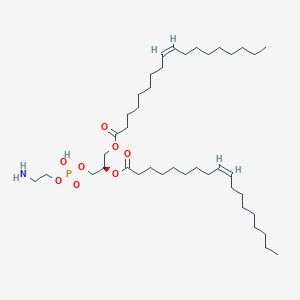
Hangzhou Leap Chem Co., Ltd. is one of the most professional manufacturers and suppliers of dioleoyl phosphoethanolamine丨cas 4004-05-1 in China. Welcome to wholesale bulk high quality chemical products at competitive price from our factory. If you have any enquiry about custom service, please feel free to email us.
Specifications
| Appearance: | Light yellow or white waxy solid |
| Purity (HPLC): | 98% min |
Applications
Dioleoyl phosphoethanolamine (DOPE) is a key phospholipid widely used in the pharmaceutical, biotechnology, and materials science fields. It is primarily employed in the formulation of liposomes, lipid nanoparticles, and other lipid-based delivery systems for drugs, genes, and vaccines. DOPE serves as a helper lipid in cationic liposome formulations, enhancing membrane fusion, endosomal escape, and efficient delivery of nucleic acids such as DNA, RNA, and siRNA into target cells. It is also used in the development of biomimetic membranes, model lipid bilayers, and in the study of membrane biophysics. Additionally, DOPE finds applications in cosmetic formulations, providing emollient and structural properties to skin-care products.
Benefits
DOPE offers significant advantages due to its unsaturated fatty acyl chains and phosphoethanolamine headgroup, which impart fluidity, fusogenicity, and biocompatibility to lipid membranes. Its helper lipid properties enhance the transfection efficiency of liposomal and nanoparticle delivery systems, facilitating better cellular uptake and endosomal release of therapeutic agents. The compound is highly soluble in organic solvents and compatible with various lipids, surfactants, and excipients, making it versatile for both research and industrial formulations. Furthermore, DOPE is biodegradable, non-toxic, and well-tolerated in biological systems, making it an ideal component in drug delivery and biomedical applications.
Conclusion
Dioleoyl phosphoethanolamine is a valuable phospholipid for drug delivery, gene therapy, and membrane research. Its fusogenic properties, biocompatibility, and versatility in lipid formulations make it indispensable for developing efficient lipid-based delivery systems, biomimetic membranes, and advanced therapeutic applications.


