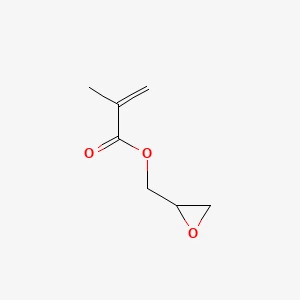
Hangzhou Leap Chem Co., Ltd. is one of the most professional manufacturers and suppliers of titanium ethoxide丨cas 3087-36-3 in China. Welcome to wholesale bulk high quality chemical products at competitive price from our factory. If you have any enquiry about custom service, please feel free to email us.
Specifications
| Appearance | Colorless to yellowish clear liquid |
| Assay (TiO2) | 33% to 35% |
| Density (25℃) | 1.08 - 1.10 g/cm³ |
| Residual chlorine | 100 ppm max |
| Alcohol | 1.0% max |
| Color | 100 APHA max |
Transport Information
|
Parameter |
Specification |
|
UN Number |
1993 |
|
Class |
3 |
|
Packing Group |
III |
|
H.S. Code |
2905199090305 |
|
Stability & Reactivity |
The product is chemically stable under standard ambient conditions. |
|
Storage |
Keep container tightly closed in a dry and well-ventilated place. |
|
Condition to Avoid |
Heat, flames and sparks. |
|
Package |
Manufacturing Information
|
Parameter |
Specification |
|
Capacity |
50MT/month |
|
Frequency |
|
|
Main Export Countries |
|
|
Capacity/Batch |
|
|
Experience |
Production since 2005 |
|
Stock |
Applications
Titanium ethoxide, also known as titanium tetraethoxide, is a highly reactive titanium alkoxide widely applied in materials science, catalysis, and advanced chemical synthesis. It is primarily used as a precursor in sol–gel processes for the production of titanium dioxide (TiO₂) nanoparticles, thin films, and coatings, which find applications in photocatalysis, photovoltaics, sensors, and optical devices. In organic synthesis, titanium ethoxide functions as a catalyst or reagent in esterification, transesterification, and oxidation reactions, contributing to the production of pharmaceuticals, fine chemicals, and functional polymers. It is also employed in the preparation of advanced ceramics, dielectric materials, and nanostructured composites due to its ability to form stable titanium–oxygen networks. In coatings and surface treatments, titanium ethoxide helps create transparent, durable, and chemically resistant layers, expanding its industrial relevance in electronics, construction, and energy technologies.
Benefits
The benefits of titanium ethoxide stem from its versatility, strong reactivity, and role in generating high-purity titanium-based materials. Its use as a sol–gel precursor allows precise control over material morphology, porosity, and crystallinity, enabling the design of high-performance TiO₂ for applications such as photocatalytic degradation of pollutants, solar energy conversion, and self-cleaning surfaces. In catalytic processes, titanium ethoxide improves reaction efficiency, selectivity, and product yields, supporting sustainable chemical synthesis in both industrial and laboratory settings. Its compatibility with other metal alkoxides also enables the fabrication of mixed-metal oxides and hybrid materials with tailored functional properties. Moreover, its ability to form strong, stable films and coatings enhances durability, chemical resistance, and optical performance in end-use applications.
Conclusion
Titanium ethoxide is a valuable titanium alkoxide that plays a central role in modern materials science, catalysis, and advanced synthesis. Its applications range from producing TiO₂-based nanomaterials to enabling efficient organic transformations and protective coatings. The benefits it offers include improved material performance, enhanced catalytic activity, and opportunities for innovative applications in energy, environmental technologies, and high-performance coatings. With its combination of reactivity, versatility, and functional utility, titanium ethoxide remains an indispensable compound for both research and industrial advancements.