Hey there! As a fluorescein supplier, I often get asked about the maximum emission wavelength of fluorescein. So, let's dive right into it and break down what this is all about.
First off, what's fluorescein? It's a well - known organic compound that's super useful in a bunch of different fields. You can find it being used in biological research, medical diagnostics, and even in some industrial applications. It has this amazing property of fluorescence, which means it can absorb light at a certain wavelength and then re - emit light at a different, usually longer, wavelength.
The maximum emission wavelength of fluorescein is around 518 - 520 nanometers (nm). Now, why is this number so important? Well, in biological research, for example, scientists use fluorescein to label different molecules. When they shine light on these labeled molecules at the right excitation wavelength (around 490 nm for fluorescein), the fluorescein absorbs that energy and then emits light at its maximum emission wavelength. This emitted light can be detected by special instruments, allowing researchers to track and study the movement and behavior of these molecules within cells or tissues.
In medical diagnostics, fluorescein is used in a technique called fluorescein angiography. Doctors inject a small amount of fluorescein into a patient's bloodstream. As the fluorescein circulates through the blood vessels in the eyes, for instance, they can use a special camera that's sensitive to the 518 - 520 nm wavelength to take images. These images help them detect problems like blocked blood vessels, abnormal growths, or other eye diseases.
Let's talk a bit about the factors that can affect the maximum emission wavelength of fluorescein. One big factor is the environment in which the fluorescein is located. The pH level of the solution can have an impact. In more acidic solutions, the emission wavelength might shift slightly. Also, the presence of other molecules or ions in the solution can interact with fluorescein and cause changes in its emission properties.
Now, at our company, we offer a range of fluorescein - related products. For example, we have L-Thyroxine丨CAS 51 - 48 - 9, which is often used in conjunction with fluorescein in some biological assays. It can help in more accurate detection and analysis of certain biological processes.
Another product we have is D - Luciferin Potassium Salt丨CAS 115144 - 35 - 9. This salt is known for its bioluminescent properties and can be used in combination with fluorescein in some advanced imaging techniques. It adds an extra dimension to the detection and visualization of biological events.
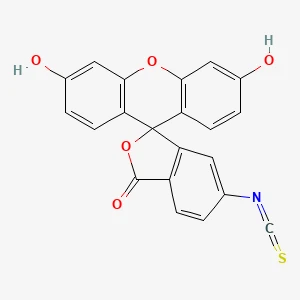
And of course, we have Fluorescein 6 - isothiocyanate丨CAS 18861 - 78 - 4. This compound is great for labeling proteins and other biomolecules. It has a high reactivity with amino groups, which makes it easy to attach to different molecules and use them for fluorescence - based studies.
When you're working with fluorescein and its related products, it's important to handle them properly. Make sure to store them at the right temperature and follow all the safety guidelines. We provide detailed product information and handling instructions with every order to make sure you get the best results.
If you're in the market for high - quality fluorescein products, whether it's for research, diagnostics, or industrial use, we're here to help. Our products are carefully tested to ensure consistent quality and performance. We understand the importance of having reliable reagents in your experiments or applications, and that's why we go the extra mile to make sure our fluorescein products meet the highest standards.

If you have any questions about our products, the maximum emission wavelength of fluorescein, or how to use our products in your specific project, don't hesitate to reach out. We're always happy to have a chat and help you find the right solutions for your needs. Whether you're a small research lab or a large pharmaceutical company, we can work with you to provide the fluorescein products you require.
So, if you're interested in starting a procurement process or just want to learn more, feel free to contact us. We're looking forward to working with you and helping you achieve your goals in the world of fluorescence - based research and applications.
References
- Principles of Fluorescence Spectroscopy, Third Edition by Joseph R. Lakowicz
- Handbook of Fluorescent Probes and Research Chemicals by Richard P. Haugland