Hey there! As a supplier of ligands, I've been diving deep into the world of these amazing little molecules and their functions in the cardiovascular system. Ligands are like the keys that unlock specific biological responses in our bodies, and in the context of the cardiovascular system, they play some pretty crucial roles.
Let's start by understanding what ligands are. In simple terms, ligands are molecules that bind to specific receptors on cells. This binding can trigger a whole cascade of events inside the cell, leading to various physiological responses. In the cardiovascular system, ligands interact with receptors on blood vessels, heart cells, and other related tissues to regulate blood pressure, heart rate, and blood flow.
One of the primary functions of ligands in the cardiovascular system is to regulate blood pressure. For example, angiotensin II is a well - known ligand. It binds to receptors on the smooth muscle cells of blood vessels. When angiotensin II binds to its receptors, it causes the blood vessels to constrict. This constriction increases the resistance in the blood vessels, which in turn raises blood pressure. On the flip side, there are ligands like nitric oxide (NO). NO is a gaseous ligand that diffuses into the smooth muscle cells of blood vessels. It activates an enzyme called guanylate cyclase, which leads to the relaxation of the blood vessels. This relaxation reduces the resistance in the blood vessels and lowers blood pressure.
Ligands also play a significant role in regulating heart rate. Adrenaline, also known as epinephrine, is a ligand that is released by the adrenal glands in response to stress or excitement. It binds to beta - adrenergic receptors on heart cells. When adrenaline binds to these receptors, it increases the heart rate and the force of contraction of the heart. This is part of the body's "fight or flight" response, which prepares the body to deal with a perceived threat.
Another important function of ligands in the cardiovascular system is in angiogenesis, the formation of new blood vessels. Vascular endothelial growth factor (VEGF) is a ligand that stimulates the growth and proliferation of endothelial cells, which are the cells that line the inside of blood vessels. VEGF binds to specific receptors on endothelial cells, triggering a series of events that lead to the formation of new blood vessels. This is crucial for tissue repair and growth, as well as for the development of tumors, unfortunately.
Now, let's talk a bit about some of the ligands we supply. We have 1,3 - Bis(diphenylphosphino)propane丨CAS 6737 - 42 - 4. Although it might not be directly involved in the cardiovascular system in a biological sense, it's a very important ligand in chemical synthesis. In the context of the cardiovascular field, it can be used in the synthesis of drugs that target the cardiovascular system. For example, it can be used in the synthesis of small - molecule drugs that act on the receptors in the heart or blood vessels.
Glutacondianil Hydrochloride丨CAS 1497 - 49 - 0 is another ligand we offer. While its direct role in the cardiovascular system might not be as well - known as some of the biological ligands, it can be used in research and development. Scientists might use it to study the binding mechanisms of other ligands or to develop new drugs that interact with the cardiovascular system.
Trihexylamine丨CAS 102 - 86 - 3 is also part of our product range. It can be used in various chemical reactions that are relevant to the production of cardiovascular drugs. For instance, it can be used as a base or a catalyst in the synthesis of compounds that have potential cardiovascular applications.
In addition to these, there are many other types of ligands that can have an impact on the cardiovascular system. Some ligands can modulate the immune response in the cardiovascular system. For example, cytokines are ligands that are involved in the inflammatory response. In the cardiovascular system, chronic inflammation can lead to conditions like atherosclerosis, where plaque builds up inside the blood vessels. Certain cytokines can either promote or inhibit this inflammatory process, depending on the context.
Ligands can also affect the function of platelets, which are important for blood clotting. Thrombin is a ligand that binds to receptors on platelets, activating them and causing them to aggregate. This is a normal part of the body's hemostatic response, which prevents excessive bleeding when there is an injury. However, abnormal platelet activation can lead to the formation of blood clots inside the blood vessels, which can cause serious problems like heart attacks and strokes.
When it comes to research in the cardiovascular field, ligands are essential tools. Scientists use them to study the function of receptors, to develop new drugs, and to understand the underlying mechanisms of cardiovascular diseases. For example, by using ligands that selectively bind to certain receptors, researchers can block or activate specific signaling pathways in the cardiovascular system. This helps them to figure out how these pathways work and how they can be targeted to treat diseases.
As a supplier of ligands, we understand the importance of providing high - quality products to researchers and pharmaceutical companies. Our ligands are carefully synthesized and tested to ensure their purity and effectiveness. We know that in the world of cardiovascular research, even the slightest impurity in a ligand can lead to inaccurate results.
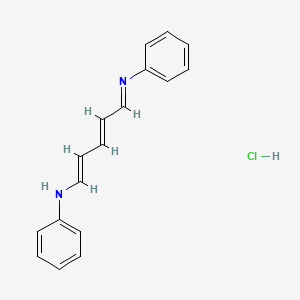

If you're involved in cardiovascular research or drug development, and you're looking for reliable ligands, we're here to help. Whether you need 1,3 - Bis(diphenylphosphino)propane丨CAS 6737 - 42 - 4, Glutacondianil Hydrochloride丨CAS 1497 - 49 - 0, Trihexylamine丨CAS 102 - 86 - 3, or any other type of ligand, feel free to get in touch with us. We can discuss your specific needs and provide you with the right products at competitive prices.
In conclusion, ligands are incredibly important in the cardiovascular system. They regulate blood pressure, heart rate, angiogenesis, platelet function, and the immune response. They are also vital for research and drug development in the cardiovascular field. As a supplier, we're committed to supporting the scientific community in their efforts to understand and treat cardiovascular diseases. So, if you're in the market for ligands, don't hesitate to reach out and start a conversation about your procurement needs.
References:
- Guyton and Hall Textbook of Medical Physiology
- Katzung & Trevor's Pharmacology: Examination and Board Review
- Molecular Biology of the Cell by Bruce Alberts et al.