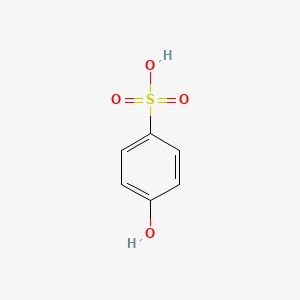
Fluorescein is a well - known fluorescent dye that has found extensive applications in various scientific fields, including biochemistry, molecular biology, and medical diagnostics. As a fluorescein supplier, I have witnessed firsthand the diverse forms of fluorescein and their unique characteristics. In this blog, I will explore the differences between various forms of fluorescein, highlighting their chemical structures, properties, and applications.
Chemical Structures
The basic structure of fluorescein consists of a xanthene ring system with two phenolic hydroxyl groups. Different forms of fluorescein are derived from modifications to this basic structure.
One common modification is the addition of functional groups at specific positions on the molecule. For example, 5(6) - Carboxyfluorescein丨CAS 72088 - 94 - 9 has a carboxyl group attached to either the 5 - or 6 - position of the fluorescein molecule. This carboxyl group provides a reactive site for conjugation with other molecules, such as proteins or nucleic acids. The presence of the carboxyl group also affects the solubility and charge properties of the molecule.
Another important form is 5 - Fluorescein Phosphoramidite丨CAS 204697 - 37 - 0. Phosphoramidite is a key functional group in oligonucleotide synthesis. By attaching a phosphoramidite group to the 5 - position of fluorescein, it becomes a useful reagent for labeling oligonucleotides during the synthesis process. This allows for the introduction of a fluorescent label at a specific location within an oligonucleotide sequence.
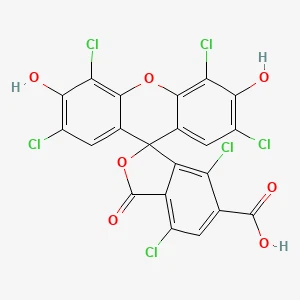
6 - HEX丨CAS 155911 - 16 - 3 is also a modified form of fluorescein. HEX (Hexachloro - fluorescein) has chlorine atoms substituted at specific positions on the fluorescein molecule. These chlorine substitutions change the electronic properties of the molecule, resulting in a shift in the absorption and emission spectra compared to the unsubstituted fluorescein.
Physical and Chemical Properties
Absorption and Emission Spectra
One of the most significant differences between various forms of fluorescein lies in their absorption and emission spectra. The unsubstituted fluorescein typically has an absorption maximum around 490 - 495 nm and an emission maximum around 515 - 520 nm. However, modifications to the structure can cause shifts in these spectra.
For instance, 6 - HEX has a different absorption and emission profile due to the presence of chlorine atoms. The chlorine substitutions cause a bathochromic shift (a shift to longer wavelengths) in both the absorption and emission spectra. This makes 6 - HEX useful in multiplex fluorescence applications, where different dyes with distinct emission spectra are used simultaneously to detect multiple targets.
The addition of functional groups like carboxyl or phosphoramidite can also have an impact on the spectra, although the effect may be less dramatic compared to halogen substitutions. The charge and polarity of these functional groups can interact with the electronic structure of the fluorescein core, leading to small changes in the absorption and emission wavelengths.
Solubility
Solubility is another important property that varies among different forms of fluorescein. The unsubstituted fluorescein is sparingly soluble in water but more soluble in organic solvents such as ethanol or dimethyl sulfoxide (DMSO).

The addition of a carboxyl group in 5(6) - Carboxyfluorescein increases its water solubility. The carboxyl group can form hydrogen bonds with water molecules, making the molecule more hydrophilic. This enhanced water solubility is beneficial in biological applications, where aqueous environments are commonly used.
On the other hand, 5 - Fluorescein Phosphoramidite is more soluble in organic solvents due to the non - polar nature of the phosphoramidite group. This solubility property is important for its use in oligonucleotide synthesis, which is typically carried out in organic solvents.
Stability
Stability is crucial for the long - term storage and use of fluorescein derivatives. Different forms of fluorescein may have different stabilities under various conditions.
The presence of reactive functional groups can affect the stability of the molecule. For example, the carboxyl group in 5(6) - Carboxyfluorescein can react with amines or other nucleophiles over time, leading to degradation. Therefore, proper storage conditions, such as low temperature and protection from light, are necessary to maintain the integrity of the molecule.
The phosphoramidite group in 5 - Fluorescein Phosphoramidite is relatively unstable in the presence of water and moisture. It is sensitive to hydrolysis, which can break the phosphoramidite bond and render the molecule inactive. As a result, it must be stored and handled under anhydrous conditions.
Applications
Biological Labeling
Fluorescein derivatives are widely used for labeling biological molecules. 5(6) - Carboxyfluorescein is commonly used to label proteins and antibodies. The carboxyl group can be activated and conjugated to amino groups on proteins using carbodiimide chemistry. This allows for the visualization of proteins in cells or tissues using fluorescence microscopy.
5 - Fluorescein Phosphoramidite is essential for labeling oligonucleotides. In DNA sequencing and PCR applications, fluorescently labeled oligonucleotides are used to detect and amplify specific DNA sequences. The ability to introduce a fluorescent label at a specific position within an oligonucleotide using 5 - Fluorescein Phosphoramidite enables accurate detection and quantification of DNA.
Multiplex Fluorescence Assays
6 - HEX is valuable in multiplex fluorescence assays. In these assays, multiple fluorescent dyes with distinct emission spectra are used to detect different targets simultaneously. For example, in real - time PCR, 6 - HEX can be used in combination with other dyes such as FAM (Fluorescein amidite) to detect multiple genes in a single reaction. This increases the efficiency and throughput of the assay, allowing for the analysis of multiple targets in a single sample.
Conclusion
In conclusion, the various forms of fluorescein offer a wide range of properties and applications due to their different chemical structures. The modifications to the basic fluorescein structure, such as the addition of functional groups or halogen substitutions, result in differences in absorption and emission spectra, solubility, and stability. These differences make each form of fluorescein suitable for specific applications in biological research, medical diagnostics, and other fields.
As a fluorescein supplier, we are committed to providing high - quality fluorescein derivatives to meet the diverse needs of our customers. Whether you are working on protein labeling, oligonucleotide synthesis, or multiplex fluorescence assays, we have the right fluorescein product for you. If you are interested in learning more about our fluorescein products or would like to discuss your specific requirements, please feel free to contact us for procurement and further discussions.
References
- Haugland, R. P. (2002). Handbook of Fluorescent Probes and Research Products. Molecular Probes.
- Hermanson, G. T. (2013). Bioconjugate Techniques. Academic Press.
- Tyagi, S., & Kramer, F. R. (1996). Molecular beacons: probes that fluoresce upon hybridization. Nature Biotechnology, 14(3), 303 - 308.