Fluorescein is a well - known and widely used fluorescent dye in various scientific and industrial fields. As a fluorescein supplier, I am often asked about how this remarkable dye works. In this blog post, I will delve into the science behind fluorescein's fluorescence, its applications, and why it is such a popular choice for many researchers and professionals.
The Basics of Fluorescence
Before we dive into the details of fluorescein, it's important to understand the concept of fluorescence. Fluorescence is a phenomenon where a substance absorbs light at a certain wavelength (the excitation wavelength) and then emits light at a longer wavelength (the emission wavelength). This process occurs almost instantaneously, typically within nanoseconds.
The key to fluorescence lies in the electronic structure of the molecule. When a molecule absorbs a photon of light, an electron in the molecule is excited from its ground state to a higher - energy excited state. This excited state is unstable, and the electron will eventually return to the ground state. As it does so, it releases the excess energy in the form of a photon, which we observe as fluorescence.
Structure and Properties of Fluorescein
Fluorescein has a unique chemical structure that is responsible for its fluorescent properties. Its basic structure consists of a xanthene ring system with two phenolic hydroxyl groups. The xanthene core is planar and highly conjugated, which means that it has a system of alternating single and double bonds that allows for the delocalization of electrons.
This delocalized electron system is crucial for fluorescence. When fluorescein absorbs light, the energy of the photon promotes an electron from the highest occupied molecular orbital (HOMO) to the lowest unoccupied molecular orbital (LUMO). The energy difference between these two orbitals corresponds to the wavelength of the absorbed light.
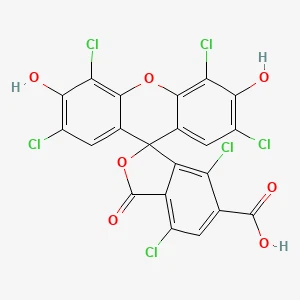
The phenolic hydroxyl groups on the fluorescein molecule also play an important role. They can undergo protonation and deprotonation reactions depending on the pH of the environment. This pH - sensitivity affects the fluorescence properties of fluorescein. In acidic conditions, the phenolic hydroxyl groups are protonated, and the fluorescence intensity is relatively low. As the pH increases and the hydroxyl groups become deprotonated, the fluorescence intensity increases significantly.
Excitation and Emission of Fluorescein
Fluorescein has an excitation maximum around 490 - 495 nm, which is in the blue - green region of the visible spectrum. When it absorbs light at this wavelength, it enters an excited state. The excited fluorescein molecule then relaxes to the lowest vibrational level of the excited state through a process called internal conversion.
After reaching the lowest vibrational level of the excited state, the electron returns to the ground state, emitting a photon in the process. The emission maximum of fluorescein is around 515 - 520 nm, which is in the green region of the visible spectrum. This difference between the excitation and emission wavelengths is known as the Stokes shift.
The Stokes shift is an important characteristic of fluorescent dyes. It allows for the separation of the excitation light from the emitted fluorescence, which is essential for many fluorescence - based applications.
Applications of Fluorescein
Fluorescein's unique fluorescence properties make it a valuable tool in a wide range of applications.
Biological Imaging
In the field of biology, fluorescein is commonly used for labeling biological molecules such as proteins, nucleic acids, and antibodies. By attaching fluorescein to these molecules, researchers can visualize their location and movement within cells and tissues using fluorescence microscopy. For example, fluorescein - labeled antibodies can be used to detect specific antigens in a sample, allowing for the identification of cells or pathogens.
Medical Diagnosis
Fluorescein is also used in medical diagnosis. In ophthalmology, fluorescein angiography is a common procedure where fluorescein is injected into the bloodstream, and then the blood vessels in the eye are visualized using a special camera that detects the fluorescence. This technique can help diagnose various eye conditions such as diabetic retinopathy and macular degeneration.
Environmental Monitoring
In environmental science, fluorescein can be used as a tracer to study the movement of water in rivers, lakes, and groundwater systems. By adding a small amount of fluorescein to a water source, researchers can track the flow of water and measure parameters such as flow rate and dispersion.
Our Product Range
As a fluorescein supplier, we offer a wide range of fluorescein - related products. For example, we have 5 - Aminofluorescein丨CAS 3326 - 34 - 9, which is a derivative of fluorescein with an amino group. This amino group can be used for further chemical modifications, making it useful for labeling and conjugation applications.
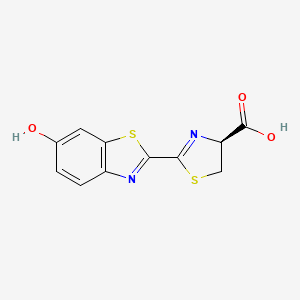
Another product in our range is D - Luciferin丨CAS 2591 - 17 - 5. Although it is not a traditional fluorescein, it is a bioluminescent compound that is often used in combination with luciferase enzymes to produce light. This system is widely used in bioluminescence imaging, which has applications in drug discovery and in vivo imaging.
We also supply 6 - HEX丨CAS 155911 - 16 - 3, a fluorescent dye that is similar to fluorescein but has different spectral properties. It is commonly used in DNA sequencing and other molecular biology applications.
Why Choose Our Fluorescein Products
Our fluorescein products are of the highest quality. We use strict quality control measures during the manufacturing process to ensure that our products have consistent fluorescence properties. Our team of experts is also available to provide technical support and advice on the use of our products.
Whether you are a researcher in a laboratory, a medical professional, or an environmental scientist, our fluorescein products can meet your needs. If you are interested in purchasing our fluorescein products or have any questions about our product range, please feel free to contact us for a procurement discussion. We are committed to providing you with the best products and services.
References
- Lakowicz, J. R. (2006). Principles of Fluorescence Spectroscopy. Springer Science & Business Media.
- Haugland, R. P. (2002). Handbook of Fluorescent Probes and Research Products. Molecular Probes.
- Tsien, R. Y. (1998). The green fluorescent protein. Annual Review of Biochemistry, 67(1), 509 - 544.