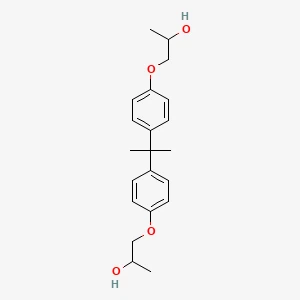

Hey there! As a crown ether supplier, I've been super into how these cool compounds interact with biomolecules. Crown ethers are cyclic chemical compounds made up of a ring containing several ether groups. They've got this amazing ability to form complexes with various cations and other molecules, and when it comes to biomolecules, the interactions are just mind - blowing.
Let's start by understanding what biomolecules are. Biomolecules are the building blocks of life. We're talking about things like proteins, nucleic acids (DNA and RNA), carbohydrates, and lipids. These molecules are involved in every single biological process in our bodies, from metabolism to cell division.
One of the key ways crown ethers interact with biomolecules is through host - guest chemistry. Crown ethers act as hosts, and biomolecules or their components can act as guests. The size of the crown ether ring plays a huge role here. For example, 12 - Crown - 4丨CAS 294 - 93 - 9 has a relatively small ring. It can selectively bind to small cations. In biological systems, these cations are often involved in enzyme activity and cell signaling. When 12 - Crown - 4 binds to a specific cation, it can change the local environment around a biomolecule. This might affect the way an enzyme functions, either by activating or inhibiting it.
On the other hand, 18 - Crown - 6丨CAS 17455 - 13 - 9 has a larger ring. It's great at binding larger cations like potassium ions. In cells, potassium ions are crucial for maintaining the membrane potential. If 18 - Crown - 6 gets into a biological system and binds to potassium ions, it can disrupt the normal ion balance. This can have a domino effect on cell functions such as nerve impulse transmission and muscle contraction.
Let's talk about proteins. Proteins are long chains of amino acids folded into complex three - dimensional structures. Crown ethers can interact with proteins in multiple ways. They can bind to metal ions that are part of the protein's active site. For example, some enzymes have metal cofactors like zinc or magnesium. A crown ether might bind to these metal ions, altering the enzyme's shape and its ability to catalyze reactions.

Another way is through non - covalent interactions. Crown ethers can form hydrogen bonds, van der Waals forces, and electrostatic interactions with the amino acid residues on the surface of a protein. This can change the protein's stability and its ability to interact with other molecules. For instance, if a crown ether binds to a region of a protein that is involved in protein - protein interactions, it can prevent the normal formation of protein complexes.
When it comes to nucleic acids, crown ethers can also have significant effects. DNA and RNA are made up of nucleotides, which contain phosphate groups, sugars, and nitrogenous bases. Crown ethers can interact with the positively charged ions associated with the negatively charged phosphate backbone of nucleic acids. By binding to these ions, crown ethers can change the conformation of DNA or RNA. This can affect processes like DNA replication, transcription, and translation.
Carbohydrates are another important class of biomolecules. They play roles in energy storage, cell recognition, and more. Crown ethers can interact with carbohydrates through hydrogen bonding. The hydroxyl groups on carbohydrates can form hydrogen bonds with the oxygen atoms in the crown ether ring. This interaction can change the solubility and the way carbohydrates are recognized by other molecules in the body.
Lipids are the main components of cell membranes. Crown ethers can interact with lipids by disrupting the lipid bilayer structure. If a crown ether binds to ions that are important for maintaining the integrity of the membrane, it can cause the membrane to become more permeable. This can lead to the leakage of cellular contents and ultimately affect cell viability.
Now, let's think about the potential applications of these interactions. In drug delivery, crown ethers can be used to target specific biomolecules. For example, if we can design a crown ether that selectively binds to a protein on the surface of cancer cells, we can attach a drug molecule to it. The crown ether will then carry the drug directly to the cancer cells, increasing the effectiveness of the treatment and reducing side effects.
In diagnostics, crown ethers can be used as sensors. We can design a crown ether that changes its properties when it binds to a specific biomolecule. For example, it might change its fluorescence or its electrical conductivity. By detecting these changes, we can identify the presence and concentration of a particular biomolecule in a sample.
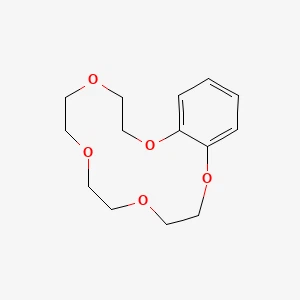
As a crown ether supplier, I'm really excited about the potential of these compounds in the field of biomedicine. We offer a wide range of crown ethers, including Benzo - 15 - Crown - 5丨CAS 14098 - 44 - 3, which has unique properties due to the presence of the benzene ring. This can lead to different interaction patterns with biomolecules compared to non - substituted crown ethers.
If you're in the research field, whether it's in academia or industry, and you're looking to explore the interactions between crown ethers and biomolecules, we've got the products you need. Our crown ethers are of high quality and are available in various quantities. We can also provide technical support to help you with your experiments. If you're interested in purchasing crown ethers for your research or other applications, I encourage you to reach out for a purchase negotiation.
References
- Lehn, J. - M. (1988). Supramolecular chemistry - scope and perspectives: molecules, supermolecules, and molecular devices (Nobel Lecture). Angewandte Chemie International Edition in English, 27(1), 89 - 112.
- Pedersen, C. J. (1967). Cyclic polyethers and their complexes with metal salts. Journal of the American Chemical Society, 89(26), 7017 - 7036.
- Gokel, G. W., & Murillo, O. (2009). Crown ethers: sensors for ions and molecules. Chemical Society Reviews, 38(4), 1043 - 1053.