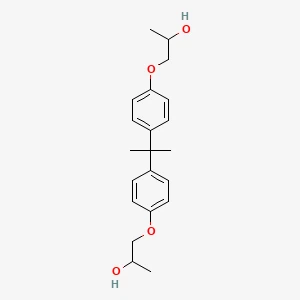

Ligands play a crucial role in various biological and chemical processes, including within the lymphatic system. As a leading supplier of high - quality ligands, I am excited to delve into how ligands work in the lymphatic system and share some of our top - notch products that can be relevant in research and applications related to this area.

Understanding the Lymphatic System
The lymphatic system is a complex network of vessels, tissues, and organs that work together to maintain fluid balance in the body, filter out harmful substances, and support the immune system. Lymphatic vessels carry a clear fluid called lymph, which contains white blood cells, proteins, and waste products. Lymph nodes, which are small, bean - shaped structures located throughout the body, act as filters, trapping and destroying pathogens, foreign particles, and abnormal cells.
Role of Ligands in the Lymphatic System
Cell - Cell Communication
Ligands are molecules that bind to specific receptors on the surface of cells. In the lymphatic system, this binding is fundamental for cell - cell communication. For example, cytokines are a type of ligand that can be secreted by immune cells in the lymph nodes. When a cytokine binds to its receptor on a target cell, it can trigger a series of intracellular signaling pathways. This can lead to changes in the cell's behavior, such as activation, proliferation, or differentiation.
One well - known cytokine is interleukin - 2 (IL - 2). IL - 2 is secreted by activated T cells and binds to IL - 2 receptors on other T cells, natural killer (NK) cells, and B cells. This binding promotes the growth and survival of these immune cells, enhancing the immune response. In the context of the lymphatic system, this is essential as the lymph nodes are major sites of immune cell activation and proliferation.
Chemotaxis
Chemotaxis is the movement of cells in response to a chemical gradient. Ligands known as chemokines are responsible for guiding immune cells to the sites of infection or inflammation within the lymphatic system. Chemokines are secreted by various cells, including endothelial cells of lymphatic vessels and immune cells in the lymph nodes.
For instance, CCL21 is a chemokine that is highly expressed in lymphatic endothelial cells. It binds to the CCR7 receptor on dendritic cells and T cells. This interaction guides these immune cells from the periphery to the lymph nodes through the lymphatic vessels. Once in the lymph nodes, these cells can present antigens to other immune cells, initiating an immune response.
Immune Cell Activation and Regulation
Ligands also play a role in the activation and regulation of immune cells in the lymphatic system. Antigen - presenting cells (APCs), such as dendritic cells, present antigens on their surface in the form of peptide - major histocompatibility complex (MHC) complexes. These complexes act as ligands for T - cell receptors (TCRs) on T cells.
When a TCR on a T cell binds to a peptide - MHC complex on an APC, it can activate the T cell. However, full activation of T cells often requires additional co - stimulatory signals provided by other ligands. For example, the B7 family of ligands (B7 - 1 and B7 - 2) on APCs bind to the CD28 receptor on T cells. This co - stimulatory signal is essential for the proper activation and proliferation of T cells in the lymph nodes.
Our Ligand Products for Lymphatic System Research
As a reliable ligands supplier, we offer a wide range of ligands that can be used in research related to the lymphatic system.
Trihexylamine丨CAS 102 - 86 - 3 is a chemical ligand that can be used in various chemical synthesis processes. In the context of lymphatic system research, it can potentially be used in the synthesis of new drugs or chemical probes that target specific aspects of the lymphatic system. For example, it could be used in the synthesis of a compound that mimics the structure of a natural ligand and can be used to study receptor - ligand interactions.
Diphenyl - 2 - pyridylphosphine丨CAS 37943 - 90 - 1 is another ligand in our product portfolio. This ligand has unique chemical properties that make it useful in the development of catalysts. In lymphatic system research, these catalysts could be used in the synthesis of complex molecules that can be used as tools to study the biochemical processes in the lymphatic system, such as the synthesis of novel cytokines or chemokines analogs.
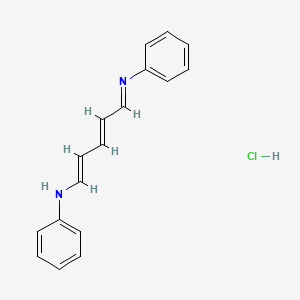
Glutacondianil Hydrochloride丨CAS 1497 - 49 - 0 is a ligand that can be used in the synthesis of bioactive compounds. It may have applications in the development of drugs that target the lymphatic system. For example, it could be used in the synthesis of a compound that can modulate the activity of immune cells in the lymph nodes.
Research Applications
Drug Development
The knowledge of how ligands work in the lymphatic system is invaluable for drug development. By understanding the receptor - ligand interactions in the lymphatic system, researchers can design drugs that can target specific receptors. For example, drugs can be developed to block the binding of a harmful ligand to its receptor, preventing unwanted immune activation or inflammation.
Immunotherapy
In immunotherapy, ligands can be used to enhance the immune response against cancer or infectious diseases. For example, artificial ligands can be designed to activate immune cells in the lymph nodes more effectively. This can lead to a stronger immune response against tumor cells or pathogens.
Contact Us for Ligand Procurement
If you are involved in research related to the lymphatic system or any other field that requires high - quality ligands, we are here to assist you. Our team of experts can provide you with detailed information about our products, their applications, and technical support. Whether you need a small quantity for initial research or a large - scale supply for industrial applications, we can meet your requirements. Contact us to start a procurement discussion and explore how our ligands can contribute to your research and projects.
References
- Alberts, B., Johnson, A., Lewis, J., Raff, M., Roberts, K., & Walter, P. (2002). Molecular Biology of the Cell. Garland Science.
- Murphy, K. M., Travers, P., & Walport, M. (2011). Janeway's Immunobiology. Garland Science.
- Muller, W. A. (2011). Leukocyte - endothelial cell interactions in lymphatic vessels. Microcirculation, 18(3), 173 - 180.