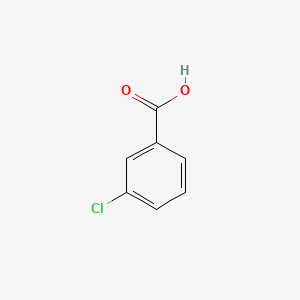

Hangzhou Leap Chem Co., Ltd. is one of the most professional manufacturers and suppliers of indole-3-acetic acid丨cas 87-51-4 in China. Welcome to wholesale bulk high quality chemical products at competitive price from our factory. If you have any enquiry about custom service, please feel free to email us.
Specifications
|
Appearance |
Off white powder |
|
Content (HPLC) |
98% min |
|
Melting point |
166–169°C |
|
Residues after ignition |
0.1% max |
|
Loss on drying |
0.5% max |
Transport Information
|
Parameter |
Specification |
|
UN Number |
|
|
Class |
|
|
Packing Group |
|
|
H.S. Code |
2933990099306 |
|
Stability & Reactivity |
The product is chemically stable under standard ambient conditions. |
|
Storage |
Keep container tightly closed. Store in a cool and shaded area. Keep under inert gas. Avoid exposure to light. |
|
Condition to Avoid |
Exposure to air. Exposure to light. |
|
Package |
Manufacturing Information
|
Parameter |
Specification |
|
Capacity |
3MT/month |
|
Frequency |
|
|
Main Export Countries |
US, Japan |
|
Capacity/Batch |
|
|
Experience |
Production since 2004 |
|
Stock |
Introduction
Indole-3-acetic acid丨CAS 87-51-4, is the most common and well-characterized naturally occurring auxin, a class of plant hormones that regulate various aspects of plant growth and development. IAA is a derivative of indole, featuring a carboxylic acid functional group. It is primarily synthesized in plant apical meristems and young leaves and then transported to other parts of the plant. Due to its vital role in cell elongation, division, differentiation, and tropisms, IAA is extensively used in both plant research and agriculture.
Applications of Indole-3-acetic acid
A. Plant Growth Regulation
Indole-3-acetic acid丨CAS 87-51-4 is essential in modulating plant physiological responses, including:
Cell Elongation and Division: Promotes elongation of plant cells, particularly in stems and roots.
Apical Dominance: Maintains dominance of the shoot apex over lateral buds, regulating branching.
Tropisms: Controls plant responses to gravity (gravitropism) and light (phototropism) by redistributing auxin concentrations.
Vascular Differentiation: Assists in the formation and maintenance of vascular tissues during growth.
B. Root Induction and Propagation
Root Initiation: IAA is widely used to stimulate adventitious root formation in cuttings during vegetative propagation.
Tissue Culture: Commonly used in combination with cytokinins in in vitro plant regeneration systems to balance root and shoot formation.
Hydroponics and Nursery Use: Applied to promote faster and stronger root systems, improving transplant survival and early growth.
C. Plant Tissue Culture and Micropropagation
Used as an auxin component in plant growth media, typically with cytokinins like BAP or kinetin.
Influences callus induction, organogenesis, and somatic embryogenesis, depending on concentration and the plant species.
Important for genetic transformation systems in species like rice, maize, and Arabidopsis.
D. Fruit Development and Ripening
IAA plays a role in ovary development and fruit set, particularly in parthenocarpic (seedless) fruits.
It can be exogenously applied to enhance fruit size and uniformity in crops like tomatoes, cucumbers, and strawberries.
Assists in delaying premature fruit drop by stabilizing the abscission layer.
E. Research and Analytical Applications
Serves as a standard molecule in plant hormone analysis and hormone signaling studies.
Used in transgenic and gene expression studies involving auxin-responsive promoters (e.g., DR5::GUS constructs).
A key compound in studying plant growth pathways, hormone crosstalk, and environmental responses.
F. Stress Physiology and Defense Mechanisms
Helps modulate plant responses to abiotic stresses like drought, salinity, and nutrient deficiency.
Involved in plant–microbe interactions, both beneficial (e.g., symbiosis with rhizobia) and pathogenic (e.g., gall formation by Agrobacterium tumefaciens, which manipulates IAA biosynthesis).
Benefits of Indole-3-acetic acid
A. Natural Plant Hormone
IAA is a naturally produced compound in plants, making it more biocompatible and less likely to cause phytotoxicity at appropriate concentrations.
It is biodegradable and environmentally friendly compared to some synthetic growth regulators.
B. Enhances Agricultural Productivity
Promotes faster seedling establishment and healthier root systems, leading to stronger, more resilient plants.
Reduces propagation time and increases rooting success rates in nurseries, horticulture, and forestry.
C. Versatile and Broadly Applicable
Effective across a wide range of plant species and developmental stages.
Useful in various propagation systems: cuttings, seedlings, hydroponics, and micropropagation.
D. Essential for Research and Innovation
Central to understanding plant developmental biology and hormone regulation.
Plays a key role in biotechnology and genetic engineering by enabling tissue regeneration and transformation.
Conclusion
Indole-3-acetic acid丨CAS 87-51-4 is an indispensable plant hormone that plays a central role in growth regulation, organ development, root induction, and stress response. Its applications span commercial agriculture, biotechnology, horticulture, and scientific research. Despite challenges related to stability and concentration sensitivity, IAA's natural origin and broad efficacy make it a powerful tool in both fundamental plant science and practical crop management. As technologies evolve, its role in sustainable agriculture and plant improvement is expected to grow significantly.