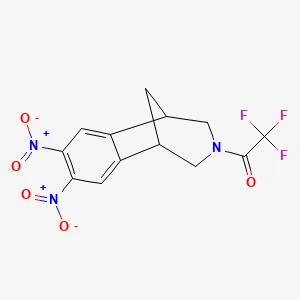
Hangzhou Leap Chem Co., Ltd. is one of the most professional manufacturers and suppliers of tert-butyl 4-(6-aminopyridin-3-yl)piperazine-1-carboxylate丨cas 571188-59-5 in China. Welcome to wholesale bulk high quality chemical products at competitive price from our factory. If you have any enquiry about custom service, please feel free to email us.
Specifications
| Appearance: | Light yellow to brown powder |
| Assay: | 98.5% min |
| Related substance: | |
| Impurity A: | 0.15% max |
| Impurity B: | 0.15% max |
| Individual impurity: | 0.5% max |
| Total impurities: | 1.5% max |
| Loss on drying: | 0.5% max |
Applications
1. Pharmaceutical Intermediate
This compound is primarily used as an intermediate or building block in medicinal chemistry, especially for:
Kinase inhibitor development
Neuropharmaceuticals targeting CNS pathways
Anti-cancer agents based on pyridine-piperazine scaffolds
The Boc-protected amine and heterocyclic substitution make it suitable for combinatorial chemistry and SAR (Structure-Activity Relationship) exploration.
2. Fragment in Drug Discovery
It is a privileged fragment in fragment-based drug design (FBDD) and lead optimization.
Commonly found in molecules targeting:
GPCRs
Ion channels
Enzyme inhibitors, especially involving PI3K, mTOR, or kinase domains.
3. Heterocyclic Scaffold in Bioactive Compounds
The pyridine ring enhances binding affinity and offers sites for H-bonding interactions with biological targets.
The piperazine moiety contributes to:
Increased solubility
Improved drug-likeness
Flexibility in conjugation to other pharmacophores
4. Chemical Synthesis
It is a valuable synthetic intermediate in the preparation of:
Multifunctional ligands
Heteroaromatic derivatives
Bioconjugates used in drug delivery systems or diagnostic agents
Benefits
1. Boc Protection Increases Versatility
The tert-butyl carbamate (Boc) group:
Protects the piperazine nitrogen during multi-step syntheses
Can be easily removed under mild acidic conditions (e.g., TFA), allowing for selective deprotection and functionalization
2. Enhanced Pharmacokinetic Properties
The combination of heteroaromatic (pyridine) and piperazine groups is known to:
Improve oral bioavailability
Support BBB (blood-brain barrier) penetration
Increase metabolic stability
3. Modular Design for Drug Development
The structure allows easy modification at multiple points:
The amine group on the pyridine ring can be acylated, sulfonylated, or converted to heterocycles.
The Boc-piperazine can be diversified to attach other pharmacophores or linkers.
This makes it ideal for library generation in high-throughput screening (HTS).
4. High Synthetic Yield & Commercial Availability
The compound is available at high purity and is relatively stable under storage.
Suitable for scale-up in medicinal chemistry pipelines and process development.
Conclusion
tert-Butyl 4-(6-aminopyridin-3-yl)piperazine-1-carboxylate (CAS 571188-59-5) is a versatile intermediate widely used in drug discovery, particularly for developing kinase inhibitors, CNS-active drugs, and anti-cancer agents. Its balanced structure, featuring a reactive amino pyridine, a protected piperazine, and a Boc group, provides synthetic flexibility and valuable pharmacological properties. It is a favored building block in modern medicinal chemistry for generating diverse, bioactive heterocyclic compounds.