

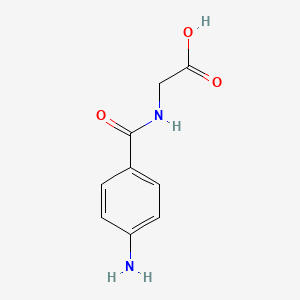
Hangzhou Leap Chem Co., Ltd. is one of the most professional manufacturers and suppliers of p-aminohippuric acid丨cas 61-78-9 in China. Welcome to wholesale bulk high quality chemical products at competitive price from our factory. If you have any enquiry about custom service, please feel free to email us.
Specifications of p-Aminohippuric acid丨CAS 61-78-9
|
Appearance: |
Light red or off-white solid |
|
Assay: |
98% min |
|
Water: |
1.0% max |
|
Ash: |
0.8% max |
|
Related Substances: |
Conforms |
Transport Information of p-Aminohippuric acid丨CAS 61-78-9
|
Parameter |
Specification |
|
UN Number |
|
|
Class |
|
|
Packing Group |
|
|
H.S. Code |
2921420090307 |
|
Stability & Reactivity |
The product is chemically stable under standard ambient conditions (room temperature). |
|
Storage |
Tightly closed. Store in a closed, dry, ventilated place |
|
Condition to Avoid |
|
|
Package |
Applications of p-Aminohippuric acid丨CAS 61-78-9
1. Renal Function Testing (Medical Diagnostic Use)
p-Aminohippuric acid is primarily used in clinical and research settings to assess renal plasma flow (RPF):
● Gold Standard for RPF Measurement:
p-Aminohippuric acid丨CAS 61-78-9 is cleared almost completely by the kidneys in a single pass through the renal tubules, making it ideal for calculating effective renal plasma flow via clearance testing.
● Used in PAH Clearance Tests:
Injected intravenously, PAH is neither reabsorbed nor metabolized by the kidneys. Its urinary excretion reflects renal blood filtration efficiency.
● Non-invasive and Reliable:
It is a non-toxic and well-characterized compound used as a marker for renal perfusion, particularly in patients with suspected kidney dysfunction or in pharmacokinetic studies.
2. Research Tool in Nephrology and Pharmacology
● Transport Studies:
PAH is a model compound for studying organic anion transporters (OATs) in the renal proximal tubule. It helps understand how drugs and toxins are secreted by the kidneys.
● Drug Interaction Studies:
Widely used in in vitro and in vivo studies to explore the inhibition or competition of renal drug transporters, crucial for drug development and safety assessment.
● Animal Models:
Used in renal clearance experiments in animals to examine the effects of various compounds on kidney function.
3. Analytical Chemistry and Biochemistry
● PAH is a reference compound in chromatography, HPLC, and spectrophotometric assays, especially when studying renal excretion patterns.
● It is also used to validate dialysis machines, perfusion systems, and filtration equipment in bioengineering applications.
Benefits of p-Aminohippuric acid丨CAS 61-78-9
1. Highly Specific Renal Marker
● Its near-complete extraction by the kidneys makes it one of the most precise indicators of renal plasma flow, outperforming many alternatives in accuracy.
2. Non-toxic and Well-Tolerated
● PAH is generally safe at diagnostic doses, with a low risk of side effects and minimal systemic interaction, making it ideal for clinical renal assessments.
3. Versatile Research Tool
● Offers broad applications across nephrology, toxicology, and pharmacokinetics, especially for studying renal excretion mechanisms and transporter biology.
4. Benchmark for Drug Development
● Used as a standard substrate in evaluating how new drugs may affect or be affected by renal drug transporters, critical for understanding drug-drug interactions.
Conclusion
p-Aminohippuric acid丨CAS 61-78-9 is a vital diagnostic and research compound renowned for its role in evaluating renal plasma flow and kidney transporter activity. Its safety profile, reliability, and unique pharmacokinetic properties make it a gold standard in nephrological diagnostics and pharmacological transport studies. As a tool for clinical assessment and laboratory experimentation, PAH continues to contribute significantly to renal medicine, toxicology, and drug development.


