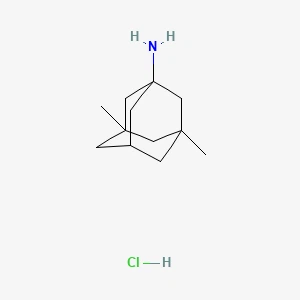
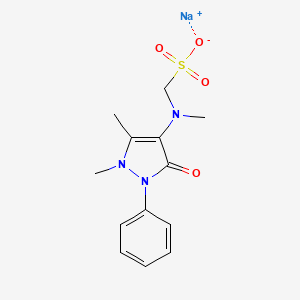
Hangzhou Leap Chem Co., Ltd. is one of the most professional manufacturers and suppliers of dipyrone丨cas 68-89-3 in China. Welcome to wholesale bulk high quality chemical products at competitive price from our factory. If you have any enquiry about custom service, please feel free to email us.
Specifications
| Grade | EP7/DAB10 |
| Characters | White or almost white, crystalline powder, very soluble in water, soluble in ethanol (96%) |
| Assay (dried substance) | 99.0% to 101.0% |
| Identification | A: IR absorption Complies D: Chemical identification Complies |
| Related substances | Impurity C: 0.5% max Impurity A, B, D: for each impurity 0.2% max Total of all impurities: 0.5% max |
| Appearance of solution | Clear and not more intensely coloured than reference solution BY6 |
| Acidity or alkalinity | 0.1 ml max |
| Sulfates | 0.1% max |
| Heavy metals | 20 ppm max |
| Loss on drying | 4.9% - 5.3% |
Transport Information
|
Parameter |
Specification |
|
UN Number |
|
|
Class |
|
|
Packing Group |
|
|
H.S. Code |
2933192000999 |
|
Stability & Reactivity |
The product is chemically stable under standard ambient conditions. |
|
Storage |
Keep container tightly closed in a dry and well-ventilated place. |
|
Condition to Avoid |
|
|
Package |
Manufacturing Information
|
Parameter |
Specification |
|
Capacity |
10MT/month |
|
Frequency |
|
|
Main Export Countries |
|
|
Capacity/Batch |
|
|
Experience |
Production since 2006 |
|
Stock |
Applications
Scopine-2,2-dithienyl glycolate is mainly used as a pharmaceutical intermediate in medicinal chemistry and drug development. It is a key structural component in the synthesis of antimuscarinic and anticholinergic agents, where the scopine moiety contributes to receptor binding and biological activity. The compound is applied in research focused on central nervous system and respiratory indications, supporting the development of therapeutics that target muscarinic acetylcholine receptors. In laboratory settings, it is also used for structure–activity relationship studies, optimization of ester-linked tropane derivatives, and exploration of pharmacological profiles of substituted glycolate esters.
Benefits
The compound offers several advantages due to its unique combination of a rigid scopine framework and a lipophilic dithienyl glycolate group. This structural arrangement enhances receptor affinity and selectivity in target molecules, supporting improved pharmacological performance. The ester linkage allows controlled chemical modification and hydrolysis, providing flexibility during synthesis and optimization. Its well-defined stereochemistry ensures predictable biological and chemical behavior, reducing variability in research outcomes. Additionally, the compound is compatible with standard organic synthesis techniques and solvents, facilitating efficient incorporation into multi-step pharmaceutical synthesis processes.
Conclusion
Scopine-2,2-dithienyl glycolate is a valuable intermediate for pharmaceutical research and drug development. Its applications in the synthesis of antimuscarinic agents, combined with benefits such as structural rigidity, chemical versatility, and reproducible performance, make it an important compound for advancing medicinal chemistry programs and the development of therapeutically relevant molecules.