

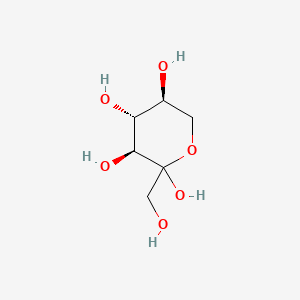
Hangzhou Leap Chem Co., Ltd. is one of the most professional manufacturers and suppliers of l-(-)-sorbose丨cas 87-79-6 in China. Welcome to wholesale bulk high quality chemical products at competitive price from our factory. If you have any enquiry about custom service, please feel free to email us.
Specifications
| Appearance: | white to off white crystal or powder |
| Solubility: | Easily soluble in water, insoluble in ether |
| Appearance of solution: | Dissolve 0.5 g in 10 ml of water, and the solution should be clear |
| Specific rotation (C = 2 in H2O): | -40° to -45° |
| Loss on Drying: | 0.5% max |
| Heavy metal: | 10 ppm max |
| Residue on ignition: | 0.1% max |
| Any impurity: | 0.5% max |
| Assay by HPLC: | 99% min |
| Total Plate Count: | 1000 cfu/g max |
| Yeast, Mold & Fungi: | 200 cfu/g max |
| Salmonella: | Negative |
| E. Coli: | Negative |
| Staphylococcus: | Negative |
Applications
1. Industrial Production of Vitamin C
L-(-)-Sorbose is a critical intermediate in the Reichstein process and other fermentation-based methods for producing ascorbic acid (vitamin C).
It is converted from sorbitol and subsequently transformed through chemical and enzymatic steps to vitamin C, which is widely used in pharmaceuticals, food fortification, and cosmetics.
2. Pharmaceutical Industry
Used in the synthesis of ascorbic acid, an essential vitamin and antioxidant in human health.
Vitamin C derived from L-(-)-sorbose is employed in nutritional supplements, injectable formulations, and topical antioxidants.
3. Food Industry
Indirectly supports food fortification efforts by enabling cost-effective production of vitamin C, a vital nutrient and preservative.
Vitamin C enhances immune function and prolongs shelf life in food products.
4. Biotechnological Research
L-(-)-Sorbose is used in microbial and enzymatic studies involving sugar metabolism and transformation pathways.
It serves as a substrate for screening and developing biocatalysts and enzymes involved in rare sugar synthesis.
5. Chemical Synthesis
Can be used as a building block or intermediate for the synthesis of other sugar derivatives and specialty chemicals.
Benefits
✅ Key Role in Vitamin C Manufacturing
Enables industrial-scale production of ascorbic acid, ensuring global availability of this vital nutrient.
✅ High Purity and Stability
L-(-)-Sorbose can be produced and purified to high standards, ensuring efficiency and consistency in downstream processing.
✅ Supports Nutritional and Health Applications
By facilitating vitamin C synthesis, it indirectly contributes to antioxidant support, collagen synthesis, and immune health.
✅ Biocompatible and Naturally Derived
Derived from natural carbohydrates, making it safe and environmentally friendly.
✅ Versatile Intermediate
Applicable in both chemical and enzymatic synthesis routes, offering flexibility for manufacturers.
Conclusion
L-(-)-Sorbose (CAS 87-79-6) is a crucial ketohexose sugar predominantly used as an intermediate in the industrial synthesis of vitamin C. Its importance lies in enabling the cost-effective and large-scale production of ascorbic acid, a vitamin essential for human health and widely used in pharmaceuticals, food, and cosmetics. Beyond vitamin C synthesis, L-(-)-sorbose is utilized in research and chemical manufacturing for developing rare sugar derivatives and biotechnological applications.


