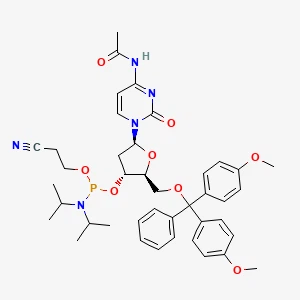
Hangzhou Leap Chem Co., Ltd. is one of the most professional manufacturers and suppliers of fmoc-s-trityl-l-cysteine丨cas 103213-32-7 in China. Welcome to wholesale bulk high quality chemical products at competitive price from our factory. If you have any enquiry about custom service, please feel free to email us.
Specifications of FMOC-S-trityl-L-cysteine丨CAS 103213-32-7
|
Property |
Specification |
|
Appearance |
White powder |
|
Purity (HPLC) |
99% min |
|
Optical Purity |
0.3% max D-enantiomer |
|
TLC |
98% min |
|
Element Analysis (C, H, N) |
5.0% max |
|
Melting Point |
170–180°C |
|
Specific Rotation [α]20D |
+20 ± 2° (C=1 in DMF) |
|
Clarity of Solution |
0.3 g in 2 ml DMF yields a clear solution |
|
Kaiser Test |
0.05% max |
|
Water Content (K.F.) |
1.0% max |
|
Loss on Drying |
1.0% max (80°C, 2 h) |
|
IR Spectrum |
In accordance with the standard |
|
Mass Spectrum |
In accordance with the standard |
|
NMR Spectrum |
In accordance with the standard |
FMOC-S-trityl-L-cysteine丨CAS 103213-32-7, is a protected derivative of the amino acid L-cysteine, widely used in peptide synthesis, particularly solid-phase peptide synthesis (SPPS). It combines two protecting groups:
● FMOC (9-fluorenylmethyloxycarbonyl) – for the N-terminal amino group
● Trityl (Triphenylmethyl) – for the thiol (-SH) side chain of cysteine
This dual protection allows for controlled and selective deprotection during multi-step peptide assembly, reducing side reactions and maintaining peptide integrity.
Applications of FMOC-S-trityl-L-cysteine丨CAS 103213-32-7
1. Peptide Synthesis (SPPS)
● FMOC-S-trityl-L-cysteine丨CAS 103213-32-7 is widely used in Fmoc/tBu strategy of solid-phase peptide synthesis.
● Allows selective protection of functional groups:
o FMOC group is removed using mild bases (e.g., piperidine), leaving the trityl group intact.
o Trityl group is removed with weak acids (e.g., TFA in low concentration), leaving the peptide backbone unaffected.
● Ensures high-purity peptide chains with correct disulfide formation post-synthesis.
2. Disulfide Bridge Formation
● After peptide chain elongation, the trityl protecting group is removed under mild acidic conditions to free the thiol, enabling the formation of disulfide bonds between cysteine residues.
● Crucial in synthesizing biologically active peptides and proteins like:
o Insulin
o Oxytocin
o Antimicrobial peptides
3. Pharmaceutical and Biotech Research
● Used in developing therapeutic peptides and peptidomimetics.
● Facilitates the production of drug candidates, hormone analogs, and enzyme inhibitors.
4. Diagnostic and Imaging Agents
● Incorporated into peptides used for molecular imaging, targeting peptides, and biomarkers.
● Ensures functional group integrity during labeling with fluorophores or radioligands.
Benefits of FMOC-S-trityl-L-cysteine丨CAS 103213-32-7
1. Excellent Protection Strategy
● Dual protection allows for orthogonal deprotection:
o FMOC can be removed without disturbing the trityl group.
o Trityl can be removed under acidic conditions after full chain assembly.
● Minimizes side reactions, such as thiol oxidation or cross-linking during synthesis.
2. High Purity and Stability
● Commercially available in high purity, which ensures consistent peptide synthesis.
● Stable under standard SPPS conditions and easy to handle.
3. Facilitates Complex Peptide Structures
● Enables construction of cyclic peptides, disulfide-rich peptides, and therapeutic proteins.
● Essential in the synthesis of bioactive and conformationally stable molecules.
4. Compatibility with Automation
● Fully compatible with automated peptide synthesizers using FMOC chemistry.
● Ensures high throughput and reproducibility for research and production.
Conclusion
FMOC-S-trityl-L-cysteine丨CAS 103213-32-7 is a critical building block in modern peptide synthesis, providing dual protection for controlled deprotection and assembly. Its stability, compatibility with standard SPPS protocols, and essential role in forming biologically relevant disulfide bonds make it indispensable in pharmaceutical research, therapeutic development, and biotechnology. Its careful use ensures high-quality, functional peptide products ready for diverse biological applications.