

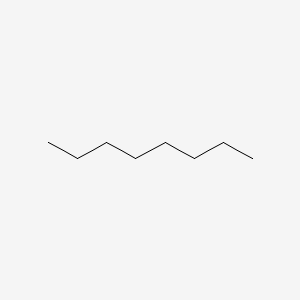
Hangzhou Leap Chem Co., Ltd. is one of the most professional manufacturers and suppliers of octane丨cas 111-65-9 in China. Welcome to wholesale bulk high quality chemical products at competitive price from our factory. If you have any enquiry about custom service, please feel free to email us.
Specifications
|
N-Octane (GC): |
99.0% min |
|
Color Saybolt: |
28 min |
|
Initial Boiling Point: |
123°C min |
|
Dry Point: |
126°C max |
|
Specific Gravity (20°C): |
690 kg/m³ to 710 kg/m³ |
|
Bromine Index: |
50 mg/100g max |
|
Aromatics Content: |
30 ppm max |
|
Total Sulfur: |
1 ppm max |
|
Water Content: |
50 ppm max |
Transport Information
|
Parameter |
Specification |
|
UN Number |
1262 |
|
Class |
3 |
|
Packing Group |
II |
|
H.S. Code |
2901109000302 |
|
Stability & Reactivity |
The product is chemically stable under standard ambient conditions. |
|
Storage |
Keep container tightly closed in a dry and well-ventilated place. Keep away from heat and sources of ignition. Hygroscopic. |
|
Condition to Avoid |
Warming. |
|
Package |
Manufacturing Information
|
Parameter |
Specification |
|
Capacity |
1,000MT/month |
|
Frequency |
|
|
Main Export Countries |
|
|
Capacity/Batch |
|
|
Experience |
Production since 2007 |
|
Stock |
Overview
Octane丨CAS 111-65-9 is a member of the alkane family and exists in several isomeric forms. Its significance lies primarily in its role as a component of gasoline and its use as a fuel standard for evaluating engine performance.
Applications
1. Fuel Industry
Gasoline Component:
Octane丨CAS 111-65-9 is a major component of petroleum-derived fuels. Its branched isomers (especially isooctane) are key ingredients in high-performance gasoline blends.
Octane Rating Standard:
The term "octane rating" refers to a fuel's ability to resist engine knocking (pre-detonation). Isooctane (2,2,4-trimethylpentane) is assigned a rating of 100 and used as the reference standard for high-compression engine fuels.
2. Laboratory and Industrial Solvent
Used as a non-polar solvent in chemical reactions, chromatography, and extractions involving hydrophobic substances.
3. Organic Synthesis
Acts as a starting material or solvent in the preparation of other chemicals such as chlorinated hydrocarbons, alcohols, and oxidized derivatives.
4. Calibration and Testing
Employed in engine research laboratories and combustion analysis to test fuel behavior, engine performance, and pollution profiles.
Benefits
1. Benchmark for Fuel Quality
Octane's isomers help define the knock-resistance scale used globally to rate the performance and efficiency of fuels.
Fuels with higher octane numbers allow engines to operate at higher compression ratios, improving power and fuel efficiency.
2. Clean Combustion Characteristics
When properly combusted, octane produces only carbon dioxide and water, making it relatively clean-burning compared to heavier hydrocarbons or aromatic compounds.
3. Low Reactivity and High Stability
The straight-chain form of octane is relatively inert and stable under normal storage and transport conditions, making it a reliable component in industrial formulations.
4. Versatile Solvent Properties
Useful in processes requiring non-polar, hydrocarbon-based solvents, especially where water or polar solvents would interfere with chemical reactivity.
Conclusion
Octane丨CAS 111-65-9 plays a critical role in the fuel industry, both as a component of gasoline and a benchmark for fuel quality (via octane rating). Its chemical stability, clean-burning properties, and utility as a non-polar solvent also make it valuable in industrial and laboratory settings. However, due to its flammability and environmental impact, careful handling and regulatory compliance are essential.


