Hangzhou Leap Chem Co., Ltd. is one of the most professional manufacturers and suppliers of triisopropyl borate丨cas 5419-55-6 in China. Welcome to wholesale bulk high quality chemical products at competitive price from our factory. If you have any enquiry about custom service, please feel free to email us.
Top Triisopropyl borate丨CAS 5419-55-6
Chemical Identifiers
| InChI | 1S/C9H21BO3/c1-7(2)11-10(12-8(3)4)13-9(5)6/h7-9H,1-6H3 |
| InChI Key | NHDIQVFFNDKAQU-UHFFFAOYSA-N |
| Smiles | B(OC(C)C)(OC(C)C)OC(C)C |
| EC No. | 226-529-9 |
| MDL No. | MFCD0008872 |
| PubChem CID | 21531 |
Applications
Applications in Boronic Acid and Organoboron Compound Synthesis
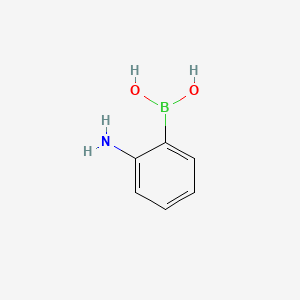
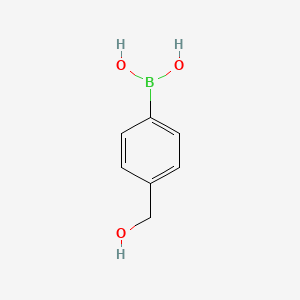
One important application of Triisopropyl borate is the preparation of boronic acids and their derivatives. It can react with suitable organometallic reagents, including Grignard and organolithium compounds, to form organoboron intermediates. Subsequent hydrolysis or other work-up procedures can produce the corresponding boronic acids. This approach is useful for preparing arylboronic acids, heteroarylboronic acids, and other organoboron building blocks used in synthetic chemistry. The method provides a route for introducing boron functionality into molecular frameworks that can be further applied in cross-coupling and other transformations.
Applications in Pharmaceutical Intermediate Synthesis
Triisopropyl borate supports the preparation of organoboron intermediates used in pharmaceutical research and development. Boronic acids and related compounds are important building blocks in medicinal chemistry because they enable carbon–carbon bond formation and provide access to diverse molecular structures. Through the preparation of selected arylboronic and heteroarylboronic compounds, Triisopropyl borate can contribute to synthetic routes for pharmaceutical intermediates and research compounds. Its use in boron-functionalization chemistry also supports the development of complex molecules for lead optimization and structure–activity relationship studies.
Applications in Suzuki–Miyaura Coupling Reagent Preparation
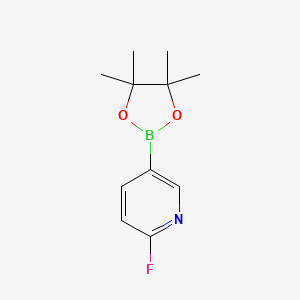
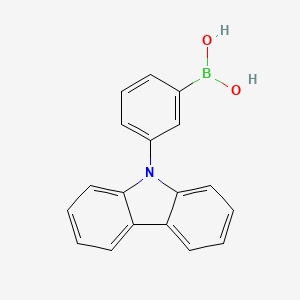
Boronic acids and boronate esters are widely used as coupling partners in Suzuki–Miyaura cross-coupling reactions. Triisopropyl borate can serve as an upstream reagent for preparing these organoboron coupling partners rather than functioning as a conventional Suzuki coupling partner itself. By enabling the synthesis of selected aryl and heteroaryl boronic acids, it helps provide building blocks for constructing biaryl and heterobiaryl compounds. These products are important in pharmaceutical chemistry, agrochemical research, and the synthesis of functional aromatic materials.
Applications in Organic Synthesis and Functional Molecule Development
The boron-containing intermediates prepared using Triisopropyl borate can participate in a range of organic transformations. They are useful for introducing boron-based functionality into aromatic, heteroaromatic, and other molecular frameworks. Researchers can use these intermediates in sequential synthesis, cross-coupling, and the preparation of structurally diverse compounds. This makes Triisopropyl borate a valuable reagent for developing modular synthetic routes and expanding the range of accessible organic molecules.