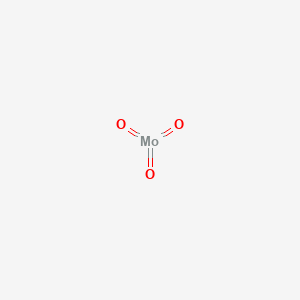
Hangzhou Leap Chem Co., Ltd. is one of the most professional manufacturers and suppliers of molybdenum trioxide丨cas 1313-27-5 in China. Welcome to wholesale custom made chemical products at competitive price from our factory. For more cheap products, contact us now.
Specifications of Molybdenum trioxide丨CAS 1313-27-5
|
MoO3 |
99.5% min |
|
Si |
0.001% max |
|
Al |
0.001% max |
|
As |
0.001% max |
|
Ca |
0.001% max |
|
P |
0.001% max |
|
Cr |
0.001% max |
|
Pb |
0.005% max |
|
Fe |
0.001% max |
|
Cu |
0.0005% max |
|
Mg |
0.001% max |
|
Ni |
0.001% max |
|
Ti |
0.001% max |
|
Sn |
0.0005% max |
Chemical Overview
Molybdenum trioxide丨CAS 1313-27-5 is a key inorganic compound of molybdenum, occurring commonly in the oxidation state +6. It is an important intermediate in both metallurgy and the production of molybdenum-containing chemicals.
Applications of Molybdenum Trioxide
1. Metallurgical Industry
Used in the production of molybdenum metal by reduction with hydrogen or carbon.
Acts as an alloying agent in the manufacture of specialty steels and superalloys to improve strength, corrosion resistance, and high-temperature performance.
Essential in the production of ferromolybdenum, which is used to enhance hardenability and weldability in steel.
2. Catalyst in Industrial Processes
Functions as an effective oxidation catalyst in petrochemical and chemical industries.
Example: In the production of acrylonitrile via the ammoxidation of propylene.
Used in catalytic desulfurization of petroleum products, especially in hydroprocessing.
Serves as a component in heterogeneous catalysts for environmental and chemical transformations.
3. Glass and Ceramic Industry
Added to glass formulations to provide UV and infrared absorption, improve mechanical strength, and reduce thermal expansion.
Used in ceramic enamels and pigments to impart blue to green hues and enhance chemical resistance.
4. Electronic and Optical Materials
Used in the development of electrochromic and photochromic devices, including smart windows and optical switches.
Serves as a semiconducting material in thin films for use in solar cells, sensors, and display technologies.
Acts as a hole-injection layer in OLEDs (organic light-emitting diodes).
5. Corrosion Inhibitor
Incorporated in coatings and treatments as a corrosion inhibitor for metals, especially in alkaline and high-temperature environments.
6. Reagent in Analytical Chemistry
Used as a reagent or standard in the quantitative analysis of phosphates and other anions, due to its ability to form molybdate complexes.
Benefits of Molybdenum trioxide丨CAS 1313-27-5
1. High Thermal and Chemical Stability
Retains structural and chemical integrity at elevated temperatures.
Suitable for use in high-temperature and chemically aggressive environments.
2. Versatile Catalytic Properties
Excellent oxidizing ability and thermal stability make it ideal for catalytic reactions in energy, petrochemical, and environmental sectors.
Compatible with various supports and metals to form complex catalytic systems.
3. Enhances Material Properties
In metallurgy, improves strength, toughness, corrosion resistance, and creep resistance of steels and alloys.
In glass, enhances UV blocking, chemical durability, and optical properties.
4. Enables Advanced Technologies
Crucial in smart material development, including sensors, electrochromic coatings, and energy-efficient devices.
Contributes to green energy solutions via use in photovoltaics and hydrogen production catalysts.
5. Environmental and Analytical Utility
Used in pollution control systems such as selective catalytic reduction (SCR) for NOₓ removal.
Facilitates accurate chemical analysis in environmental and biological testing labs.
Conclusion
Molybdenum trioxide丨CAS 1313-27-5 is a highly functional compound widely used in metallurgy, catalysis, glass manufacturing, electronics, and environmental applications. Its excellent thermal and chemical stability, versatile catalytic behavior, and ability to enhance material properties make it a cornerstone compound in both traditional industries and advanced technologies. Its role in producing cleaner fuels, stronger alloys, and smart materials highlights its ongoing importance across multiple scientific and industrial fields.