


Hey there! As a crown ether supplier, I've been getting a lot of questions lately about the magnetic properties of crown ether - metal ion complexes. So, I thought I'd take a deep dive into this topic and share what I've learned.
First off, let's talk a bit about crown ethers. Crown ethers are cyclic chemical compounds made up of ether groups linked by ethylene or other similar units. They've got this unique ring - shaped structure that makes them super interesting. The size of the ring can vary, and that's a big deal because it determines which metal ions they can bind to. For example, we've got Benzo - 18 - crown - 6丨CAS 14098 - 24 - 9, Benzo - 15 - crown - 5丨CAS 14098 - 44 - 3, and 12 - Crown - 4丨CAS 294 - 93 - 9. Each of these has a different ring size, and that affects how they interact with metal ions.
When crown ethers form complexes with metal ions, it's like a lock - and - key situation. The metal ion fits into the cavity of the crown ether, and they form a stable complex. But what does this have to do with magnetic properties? Well, the magnetic behavior of these complexes is mainly determined by the metal ion involved.
Most metal ions have unpaired electrons. These unpaired electrons are like tiny magnets. When a metal ion forms a complex with a crown ether, the environment around the metal ion changes. This change can affect the way the unpaired electrons behave, and thus, the magnetic properties of the complex.
There are two main types of magnetic behavior we're interested in: paramagnetism and diamagnetism. Paramagnetic substances are attracted to a magnetic field, while diamagnetic substances are repelled by it.
Let's start with paramagnetism. Metal ions with unpaired electrons are usually paramagnetic. When a crown ether forms a complex with a paramagnetic metal ion, the magnetic properties can change depending on the strength of the interaction between the crown ether and the metal ion. If the crown ether binds strongly to the metal ion, it can cause a change in the energy levels of the unpaired electrons. This change can either increase or decrease the magnetic moment of the complex.
For example, some transition metal ions like iron(III) or copper(II) have unpaired electrons. When they form complexes with crown ethers, the magnetic moment of the complex can be different from that of the free metal ion. The crown ether can act as a ligand, and the way it donates electron density to the metal ion can affect the spin state of the unpaired electrons.
On the other hand, diamagnetic substances have all their electrons paired up. When a metal ion with all paired electrons forms a complex with a crown ether, the complex is usually diamagnetic. However, there can be some cases where the interaction between the crown ether and the metal ion causes a small amount of induced paramagnetism. This is usually due to the distortion of the electron cloud around the metal ion.

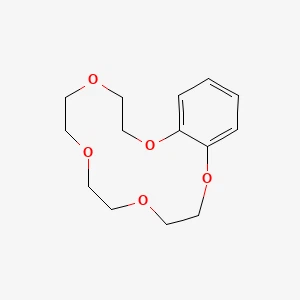
The size of the crown ether ring also plays a role in the magnetic properties of the complex. A larger ring can provide more space for the metal ion, and this can affect the way the unpaired electrons interact with each other. A smaller ring, on the other hand, can put more strain on the metal ion, which can also change the magnetic behavior.
Another factor that affects the magnetic properties is the solvent. The solvent can interact with the crown ether - metal ion complex and change its structure. For example, a polar solvent can solvate the complex and affect the way the unpaired electrons are distributed. This can lead to changes in the magnetic moment of the complex.
Now, you might be wondering why we care about the magnetic properties of these complexes. Well, there are several applications. One of the main applications is in magnetic resonance imaging (MRI). MRI uses strong magnetic fields to create images of the inside of the body. Paramagnetic complexes can be used as contrast agents in MRI. By changing the magnetic properties of the complex, we can improve the quality of the MRI images.
These complexes also have potential applications in data storage. The magnetic properties of the complexes can be used to store information. By controlling the magnetic state of the complex, we can write and read data.
As a crown ether supplier, I know that getting the right crown ether for your specific application is crucial. Whether you're doing research on magnetic properties or using crown ethers in other chemical processes, we've got a wide range of high - quality crown ethers available.
If you're interested in exploring the magnetic properties of crown ether - metal ion complexes or have any other needs related to crown ethers, don't hesitate to reach out. We're here to help you find the perfect crown ether for your project.
In conclusion, the magnetic properties of crown ether - metal ion complexes are a fascinating area of study. They're determined by a variety of factors, including the metal ion, the size of the crown ether ring, and the solvent. Understanding these properties can lead to new applications in fields like medicine and data storage. So, if you're thinking about working with crown ethers, there's a whole world of possibilities waiting for you.
References
- "Comprehensive Coordination Chemistry II: From Biology to Nanotechnology", edited by Jonathan A. McCleverty and Thomas J. Meyer.
- "Crown Ethers and Cryptands" by George W. Gokel.


