Electrode modification is a crucial technique in electrochemistry, offering enhanced selectivity, sensitivity, and stability for various electrochemical applications. Crown ethers, a class of cyclic polyethers with a unique cavity structure, have emerged as valuable modifiers due to their ability to selectively bind metal ions and organic molecules. As a leading crown ether supplier, we are excited to share insights on how to effectively use crown ethers in electrode modification.
Understanding Crown Ethers
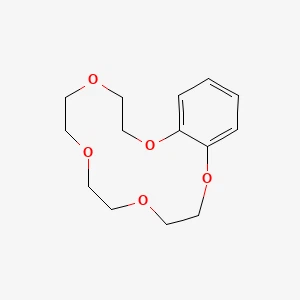
Crown ethers are named for their crown-like molecular structure, consisting of repeating units of ethylene oxide (-CH₂CH₂O-) linked in a cyclic fashion. The size of the cavity formed by the cyclic structure determines the selectivity of the crown ether for different metal ions or molecules. For example, 12-Crown-4丨CAS 294-93-9 has a relatively small cavity, making it selective for lithium ions, while Benzo-15-crown-5丨CAS 14098-44-3 and Dibenzo-18-crown-6丨CAS 14187-32-7 have larger cavities suitable for binding sodium and potassium ions, respectively.
The selectivity of crown ethers arises from the coordination between the oxygen atoms in the crown ether cavity and the metal ions or molecules. This coordination is based on the size, charge, and geometry of the guest species, allowing for specific recognition and binding.

Methods of Crown Ether Modification on Electrodes
There are several methods for incorporating crown ethers onto electrode surfaces, each with its own advantages and limitations.
Physical Adsorption
Physical adsorption is the simplest method, involving the direct deposition of crown ethers onto the electrode surface. This can be achieved by immersing the electrode in a solution containing the crown ether for a certain period, allowing the crown ether molecules to adsorb onto the surface through weak intermolecular forces such as van der Waals forces and hydrogen bonding.
The advantage of physical adsorption is its simplicity and ease of operation. However, the adsorbed crown ethers may be easily desorbed from the electrode surface, leading to poor stability and reproducibility. To improve the stability, the electrode can be treated with a polymer coating after physical adsorption to immobilize the crown ethers.
Covalent Bonding
Covalent bonding involves the formation of covalent bonds between the crown ether molecules and the electrode surface. This can be achieved by functionalizing the crown ether with a reactive group such as an amine, thiol, or carboxylic acid, and then reacting it with a complementary functional group on the electrode surface.
For example, if the electrode surface is modified with a self-assembled monolayer (SAM) containing thiol groups, a crown ether functionalized with a maleimide group can react with the thiol groups through a thiol-maleimide click reaction, forming a covalent bond between the crown ether and the electrode surface.
Covalent bonding provides a more stable and durable modification compared to physical adsorption. However, the synthesis of functionalized crown ethers and the surface modification process can be more complex and time-consuming.
Entrapment in Polymer Matrices
Entrapment in polymer matrices involves the incorporation of crown ethers into a polymer film that is then deposited onto the electrode surface. The polymer matrix acts as a host for the crown ethers, providing a stable environment and preventing their desorption.
Common polymers used for this purpose include polyvinyl chloride (PVC), polyacrylamide, and Nafion. The crown ether can be mixed with the polymer solution before casting the film onto the electrode surface. The choice of polymer depends on the properties required for the specific application, such as mechanical strength, chemical stability, and permeability.
Entrapment in polymer matrices is a versatile method that allows for the easy incorporation of different types of crown ethers and can be used to modify electrodes with various geometries. However, the diffusion of analytes through the polymer matrix may be limited, affecting the response time and sensitivity of the modified electrode.
Applications of Crown Ether-Modified Electrodes
Crown ether-modified electrodes have a wide range of applications in electrochemistry, including ion sensing, biosensing, and electrocatalysis.
Ion Sensing
One of the most common applications of crown ether-modified electrodes is ion sensing. The selective binding of crown ethers to specific metal ions can be used to design ion-selective electrodes (ISEs) for the detection of metal ions in solution.
For example, a crown ether-modified electrode selective for potassium ions can be used to measure the potassium ion concentration in biological samples such as blood and urine. The binding of potassium ions to the crown ether on the electrode surface causes a change in the electrode potential, which can be measured and correlated to the potassium ion concentration.
Biosensing
Crown ether-modified electrodes can also be used in biosensing applications. By incorporating biomolecules such as enzymes or antibodies onto the crown ether-modified electrode surface, the electrode can be used to detect specific biomolecules through a biochemical reaction.
For example, a crown ether-modified electrode functionalized with an enzyme can be used to detect a specific substrate through the enzymatic reaction. The binding of the substrate to the enzyme causes a change in the electrochemical properties of the electrode, which can be measured and used to determine the substrate concentration.
Electrocatalysis
In electrocatalysis, crown ether-modified electrodes can be used to enhance the catalytic activity of the electrode by selectively binding and activating the reactant molecules. The crown ether can act as a molecular receptor, bringing the reactant molecules closer to the electrode surface and facilitating the electron transfer process.
For example, a crown ether-modified electrode can be used to catalyze the oxidation or reduction of a specific molecule by selectively binding the molecule and promoting its electrochemical reaction.
Considerations for Using Crown Ether-Modified Electrodes
When using crown ether-modified electrodes, several factors need to be considered to ensure optimal performance.
Selectivity
The selectivity of the crown ether-modified electrode is crucial for accurate and specific detection. The choice of crown ether should be based on the target analyte and the desired selectivity. It is important to ensure that the crown ether has a high affinity for the target analyte and low affinity for other interfering species.
Sensitivity
The sensitivity of the crown ether-modified electrode is determined by the binding affinity of the crown ether for the target analyte and the efficiency of the electron transfer process. To improve the sensitivity, the surface area of the electrode can be increased, and the thickness of the modification layer can be optimized to reduce the diffusion resistance.
Stability
The stability of the crown ether-modified electrode is important for long-term use and reproducible results. The modification method should be chosen to ensure that the crown ether is firmly attached to the electrode surface and does not desorb during the measurement. The electrode should also be stored and handled properly to prevent degradation of the modification layer.
Interference
Interference from other species in the sample can affect the accuracy of the measurement. To minimize interference, the electrode can be designed with a specific selectivity for the target analyte, and the sample can be pre-treated to remove interfering species.
Conclusion
Crown ethers offer a unique and powerful tool for electrode modification, providing enhanced selectivity, sensitivity, and stability for various electrochemical applications. As a crown ether supplier, we are committed to providing high-quality crown ethers and technical support to help researchers and engineers achieve their goals in electrochemistry.
If you are interested in using crown ethers for electrode modification or have any questions about our products, please feel free to contact us for further information and to discuss your specific requirements. We look forward to working with you to develop innovative solutions in electrochemistry.
References
- Izatt, R. M., Pawlak, K., Bradshaw, J. S., & Bruening, R. L. (1991). Synthetic multidentate macrocyclic compounds. Chemical Reviews, 91(2), 1721-1778.
- Bartsch, R. A., & Maeda, M. (Eds.). (2000). Ion pair extraction chemistry. CRC Press.
- Bard, A. J., & Faulkner, L. R. (2001). Electrochemical methods: fundamentals and applications. John Wiley & Sons.