Hey there! As a crown ether supplier, I've been diving deep into the world of crown ether synthesis. Crown ethers are super cool compounds with a lot of applications in different fields, like in organic synthesis, analytical chemistry, and even in some parts of material science. But getting the synthesis conditions just right can be a real pain. In this blog, I'm gonna share some tips on how to optimize the synthesis conditions of crown ether.
Understanding Crown Ether Basics
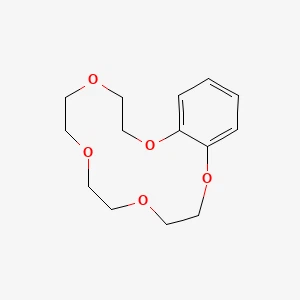
Before we start talking about optimization, let's quickly go over what crown ethers are. Crown ethers are cyclic polyethers, which means they have a ring structure made up of carbon and oxygen atoms. The most common ones are 12-Crown-4 丨CAS 294-93-9, Benzo-15-crown-5 丨CAS 14098-44-3, and Dibenzo-18-crown-6 丨CAS 14187-32-7. Each of these has a different number of atoms in the ring, which gives them different properties and applications.
Solvent Selection
One of the first things to consider when synthesizing crown ethers is the solvent. The solvent plays a crucial role in the reaction because it can affect the solubility of the reactants, the reaction rate, and the yield. For example, polar aprotic solvents like dimethyl sulfoxide (DMSO) and acetonitrile are often used because they can dissolve a wide range of organic and inorganic compounds. They also have a relatively high dielectric constant, which can help stabilize the transition state of the reaction.
However, the choice of solvent also depends on the specific reaction conditions. If the reaction involves a base, for instance, you need to make sure the solvent is compatible with it. Some solvents can react with bases, which can lead to side reactions and lower yields. So, it's always a good idea to do some preliminary tests with different solvents to see which one works best for your synthesis.
Temperature Control
Temperature is another key factor in crown ether synthesis. Different reactions have different optimal temperature ranges. In general, higher temperatures can increase the reaction rate, but they can also lead to more side reactions. On the other hand, lower temperatures can slow down the reaction, but they can also improve the selectivity.
For example, in some cases, the reaction might need to be carried out at a low temperature to prevent the formation of unwanted by-products. This could be especially true for reactions that involve sensitive intermediates. Once the initial reaction is complete, you might need to increase the temperature to drive the reaction to completion. It's all about finding the right balance.

Catalyst Usage
Using a catalyst can significantly improve the synthesis of crown ethers. Catalysts can lower the activation energy of the reaction, which means the reaction can occur at a lower temperature and with a higher rate. There are different types of catalysts that can be used in crown ether synthesis, such as Lewis acids and transition metal catalysts.
Lewis acids like boron trifluoride etherate can activate the reactants and facilitate the formation of the crown ether ring. Transition metal catalysts, on the other hand, can provide a different reaction pathway that can lead to higher yields and better selectivity. However, the choice of catalyst also depends on the specific reaction and the reactants involved. You need to make sure the catalyst is compatible with the other components of the reaction and that it doesn't cause any unwanted side reactions.
Reaction Time
The reaction time is also an important factor to consider. If the reaction time is too short, the reaction might not go to completion, which can result in lower yields. On the other hand, if the reaction time is too long, it can lead to the formation of more side reactions and degradation of the product.
To determine the optimal reaction time, you can monitor the reaction progress using techniques like thin-layer chromatography (TLC) or nuclear magnetic resonance (NMR). These techniques can help you see when the reactants are being consumed and when the product is being formed. Once you have a good understanding of the reaction kinetics, you can adjust the reaction time accordingly.
Stoichiometry
Getting the right stoichiometry is crucial in crown ether synthesis. The ratio of the reactants can affect the yield and the purity of the product. If you use too much of one reactant, it can lead to the formation of side products. On the other hand, if you use too little, the reaction might not go to completion.
It's always a good idea to calculate the stoichiometry based on the balanced chemical equation of the reaction. You can also do some preliminary experiments to see how different ratios of reactants affect the yield and the quality of the product. This way, you can find the optimal ratio for your synthesis.
Purification
After the synthesis is complete, you need to purify the crown ether product. Purification is important because it can remove any impurities and by-products that might be present in the reaction mixture. There are different purification techniques that can be used, such as recrystallization, column chromatography, and distillation.
Recrystallization is a simple and effective method for purifying solid crown ethers. You dissolve the crude product in a suitable solvent at a high temperature and then cool the solution slowly to allow the product to crystallize out. Column chromatography is another common method that can be used to separate the product from impurities based on their different affinities for the stationary phase. Distillation can be used for purifying liquid crown ethers.
Conclusion
Optimizing the synthesis conditions of crown ethers is a complex process that requires careful consideration of many factors. By choosing the right solvent, controlling the temperature, using a catalyst, adjusting the reaction time, getting the stoichiometry right, and purifying the product properly, you can improve the yield and the quality of your crown ether synthesis.
If you're interested in purchasing high-quality crown ethers or have any questions about their synthesis, feel free to reach out to us. We're here to help you with all your crown ether needs.
References
- Smith, J. (2015). Organic Chemistry: A Comprehensive Guide. Publisher X.
- Jones, A. (2018). Crown Ethers: Properties and Applications. Journal of Chemical Sciences, 25(3), 123-135.