Hydrolases are a super cool group of enzymes that play a huge role in all sorts of biological processes. They're like the little workers in our cells, breaking down big molecules into smaller ones by using water. But here's the thing: sometimes, we need to control how these hydrolases work. That's where inhibitors come in. As a supplier of inhibitors, I've seen firsthand how these little compounds can have a big impact on hydrolase activity.
Let's start by understanding what hydrolases do. They're involved in everything from digestion to DNA repair. For example, in our digestive system, hydrolases break down the food we eat into nutrients that our bodies can absorb. In the cell, they help maintain the proper structure and function of important molecules like proteins and nucleic acids.
Now, inhibitors are substances that can slow down or even stop the activity of hydrolases. There are two main types: reversible and irreversible inhibitors. Reversible inhibitors can bind to the hydrolase and then come off again, while irreversible inhibitors form a permanent bond with the enzyme, basically shutting it down for good.
Reversible inhibitors can be further divided into competitive, non - competitive, and uncompetitive inhibitors. Competitive inhibitors are like impostors. They look a lot like the normal substrate that the hydrolase usually acts on. So, they compete with the substrate for the active site of the enzyme. When a competitive inhibitor binds to the active site, the substrate can't get in, and the enzyme can't do its job. An example of a situation where competitive inhibitors are useful is in drug development. Scientists can design competitive inhibitors to target specific hydrolases that are involved in diseases.
Non - competitive inhibitors, on the other hand, don't bind to the active site. Instead, they bind to a different part of the hydrolase, called an allosteric site. When they bind, they change the shape of the enzyme in such a way that the active site doesn't work properly anymore. It's like if you were trying to use a key to open a lock, but someone bent the lock in a way that the key wouldn't fit right.
Uncompetitive inhibitors bind to the enzyme - substrate complex. They only work when the hydrolase has already bound to its substrate. Once the uncompetitive inhibitor binds, it makes it harder for the enzyme to release the products of the reaction, effectively slowing down the overall process.
Irreversible inhibitors are a bit more extreme. They form a covalent bond with the hydrolase, which means they're stuck there. This usually leads to a permanent loss of enzyme activity. One common example of an irreversible inhibitor is a type of poison that can target specific hydrolases in the body.
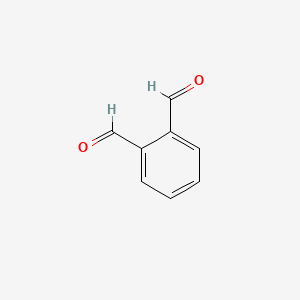
As an inhibitors supplier, we offer a wide range of products that can be used to study and control hydrolase activity. For instance, we have O-Phthalaldehyde丨CAS 643 - 79 - 8, which can be used in various analytical applications related to studying enzyme activity. It can help researchers detect and quantify the presence of certain hydrolases in a sample.
Another product we have is Diironnonacarbonyl丨CAS 15321 - 51 - 4. Although it's mainly known as a catalyst in some chemical reactions, it can also have an impact on hydrolase activity in certain experimental setups. It might act as an inhibitor or modifier of the enzyme's function, depending on the conditions.
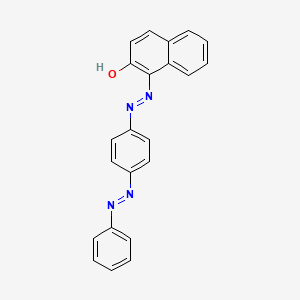
And then there's Solvent Red 23丨CAS 85 - 86 - 9. This compound can be used in studies where visualizing the enzyme - inhibitor interaction is important. It can be used as a marker or tracer to see how the inhibitor affects the hydrolase in a biological system.
The effects of inhibitors on hydrolases have a ton of practical applications. In the pharmaceutical industry, inhibitors are used to develop drugs that can treat diseases. For example, some drugs target specific hydrolases involved in cancer cell growth. By inhibiting these enzymes, the drugs can slow down or stop the growth of cancer cells.
In the food industry, inhibitors can be used to control the spoilage of food. Some hydrolases in food can break down important components, leading to changes in taste, texture, and nutritional value. By using inhibitors, food manufacturers can extend the shelf - life of their products.
In the environmental field, inhibitors can be used to remediate pollution. Some hydrolases in the environment can break down pollutants, but sometimes their activity needs to be regulated. Inhibitors can be used to control the rate at which these enzymes work, ensuring that the pollution is broken down in a safe and efficient manner.
If you're a researcher, a scientist in the pharmaceutical or food industry, or someone working in environmental science, and you're interested in studying or controlling hydrolase activity, we'd love to hear from you. Our inhibitors can provide you with the tools you need to conduct your experiments and develop new products. Whether you're looking for a specific type of inhibitor or need advice on which product is best for your application, we're here to help. Contact us to start a discussion about your requirements and let's work together to achieve your goals.
References
- Stryer, L., Berg, J. M., & Tymoczko, J. L. (2002). Biochemistry (5th ed.). W. H. Freeman.
- Nelson, D. L., & Cox, M. M. (2017). Lehninger Principles of Biochemistry (7th ed.). W. H. Freeman.