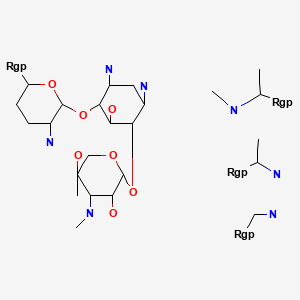

Hangzhou Leap Chem Co., Ltd. is one of the most professional manufacturers and suppliers of colistin sulfate丨cas 1264-72-8 in China. Welcome to wholesale custom made chemical products at competitive price from our factory. For more cheap products, contact us now.
Specifications of Colistin sulfate丨CAS 1264-72-8
|
Grade |
CPV2020 |
|
Appearance |
White to light yellow powder |
|
Identification |
With phosphate buffer, ninhydrin reaction: the solution looks purple Add copper sulfate solution: the solution becomes reddish purple Apparent sulfate identification reaction |
|
pH value |
4.0 to 6.5 |
|
Loss on drying |
6.0% max |
|
Activity (on dried basis) |
19500 u/mg |
Transport Information of Colistin sulfate丨CAS 1264-72-8
|
Parameter |
Specification |
|
UN Number |
2811 |
|
Class |
6 |
|
Packing Group |
III |
|
H.S. Code |
2941909099 |
|
Stability & Reactivity |
The product is chemically stable under standard ambient conditions (room temperature). |
|
Storage |
Tightly closed. Keep away from heat and sources of ignition. Never allow product to get in contact with water during storage. Air and moisture sensitive. Handle and store under inert gas |
|
Condition to Avoid |
Water, air and high temperature |
|
Package |
Manufacturing Information of Colistin sulfate丨CAS 1264-72-8
|
Parameter |
Specification |
|
Capacity |
20,000MT/year |
|
Frequency |
|
|
Main Export Countries |
|
|
Capacity/Batch |
|
|
Experience |
Production since 2001 |
|
Stock |
Colistin sulfate丨CAS 1264-72-8 is an antibiotic from the polymyxin class, specifically used to combat gram-negative bacterial infections. It is a sulfate salt of colistin (also known as polymyxin E), which is produced by Bacillus polymyxa var. colistinus. It has strong bactericidal activity, especially against multi-drug-resistant (MDR) pathogens, making it a critical last-resort antibiotic in both human and veterinary medicine.
Key Applications of Colistin sulfate丨CAS 1264-72-8
1. Human Medicine
● Treatment of MDR Infections: Colistin sulfate is used to treat severe infections caused by carbapenem-resistant or extensively drug-resistant (XDR) Gram-negative bacteria such as:
o Pseudomonas aeruginosa
o Acinetobacter baumannii
o Klebsiella pneumoniae
● Forms of Administration: Mostly administered orally or topically (in contrast to colistin methanesulfonate, which is commonly used intravenously or via inhalation).
2. Veterinary Medicine
● Prevention and Treatment: Used extensively in veterinary medicine (particularly in pigs, poultry, and calves) for:
o Enteric infections caused by Escherichia coli
o Bacterial diarrhea or septicemia
● Administration: Often administered via feed or drinking water.
3. Topical and Local Use
● Used in ointments, creams, or eye/ear drops to treat:
o Skin infections
o Otitis externa
o Conjunctivitis
Especially in combination with other antibiotics or corticosteroids.
Benefits of Colistin sulfate丨CAS 1264-72-8
1. Effective Against Drug-Resistant Bacteria
● Colistin sulfate丨CAS 1264-72-8 is one of the few antibiotics that remains effective against MDR and XDR pathogens, making it essential in hospital infection control.
2. Broad Gram-Negative Activity
● Exhibits potent activity against a broad range of gram-negative bacteria, especially non-fermenting species like P. aeruginosa and A. baumannii, which are common in ICU infections.
3. Useful in Topical and Oral Infections
● When systemic exposure needs to be limited (e.g., in GI infections), colistin sulfate's local action in the gastrointestinal tract makes it highly valuable.
● Its poor GI absorption when administered orally ensures local antimicrobial activity without significant systemic toxicity.
4. Low Resistance Rates (Historically)
● Resistance to colistin has historically been low, although increasing due to overuse in agriculture and inappropriate prescribing.
Conclusion
Colistin sulfate丨CAS 1264-72-8 remains a critically important antibiotic, particularly in the fight against multidrug-resistant gram-negative bacteria. It serves essential roles in both human health care and veterinary medicine, especially for infections where few alternatives exist. However, growing concerns about resistance and toxicity necessitate careful, controlled use under clinical guidance.