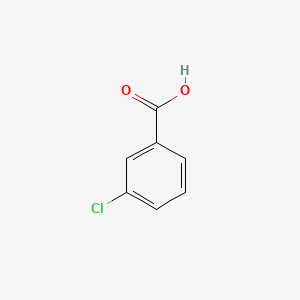

Hangzhou Leap Chem Co., Ltd. is one of the most professional manufacturers and suppliers of thidiazuron丨cas 51707-55-2 in China. Welcome to wholesale bulk high quality chemical products at competitive price from our factory. If you have any enquiry about custom service, please feel free to email us.
Specifications
|
Appearance |
Yellow to light yellow powder |
|
Assay |
95% min |
|
Water |
0.5% max |
|
Solid insoluble |
0.3% max |
Transport Information
|
Parameter |
Specification |
|
UN Number |
3077 |
|
Class |
9 |
|
Packing Group |
III |
|
H.S. Code |
2932999099304 |
|
Stability & Reactivity |
The product is chemically stable under standard ambient conditions. |
|
Storage |
Tightly closed. Store in a closed, dry, ventilated place |
|
Condition to Avoid |
|
|
Package |
Introduction
Thidiazuron丨CAS 51707-55-2, is a synthetic plant growth regulator belonging to the phenylurea class. Structurally, it contains a thiadiazole ring and a substituted urea group. Originally developed for use in agriculture, TDZ has become widely recognized for its potent cytokinin-like activity, making it a valuable compound in plant tissue culture, defoliation, and crop management. It is used at low concentrations due to its high biological activity, impacting plant growth, morphogenesis, and stress response.
Applications of Thidiazuron
A. Plant Tissue Culture and Micropropagation
Thidiazuron丨CAS 51707-55-2 is extensively used in plant biotechnology as a growth regulator:
Callus Induction and Shoot Regeneration: TDZ is highly effective in inducing shoot organogenesis from explants (e.g., leaves, cotyledons, stems) in a wide variety of plant species, including both monocots and dicots.
Cytokinin Substitute: TDZ mimics the activity of natural cytokinins like benzylaminopurine (BAP) but is often more potent and effective at lower concentrations.
Somatic Embryogenesis: Promotes somatic embryo development in crops such as cotton, soybean, and ornamentals.
Rooting Support: While not a primary rooting agent, TDZ-treated tissues can often root better when transferred to auxin-rich media.
Key species where TDZ is successfully used: apple, banana, grapevine, rose, carnation, cotton, soybean, potato, and many others.
B. Defoliant in Cotton Production
TDZ is used commercially as a defoliant and boll opener in cotton farming:
Defoliation: Promotes leaf abscission before mechanical harvesting, improving fiber quality and reducing leaf contamination.
Harvest Aid: Applied prior to harvest to synchronize leaf drop and open cotton bolls for easier collection.
Reduced Residues: Effective at low doses, leaving minimal chemical residue on the plant or soil.
C. Delaying Senescence in Floriculture and Horticulture
Postharvest Treatments: TDZ can delay leaf yellowing and petal wilting in ornamental plants and cut flowers by maintaining chlorophyll levels.
Shelf-Life Extension: Used in sprays or vase solutions to prolong the visual quality of cut flowers like roses, chrysanthemums, and lilies.
D. Dormancy Regulation and Bud Break
Breaking Dormancy: In certain crops, such as apple and grapevine, TDZ has been explored for stimulating bud break and breaking dormancy, potentially as a substitute for chilling in controlled environments.
Orchard Management: Experimental applications for improving uniform flowering and reducing irregular growth cycles.
Benefits of Thidiazuron
A. High Potency at Low Concentrations
Thidiazuron丨CAS 51707-55-2 is biologically active at concentrations as low as 0.01–1.0 mg/L in tissue culture media, reducing cost and chemical use.
It often induces stronger morphogenetic responses than traditional cytokinins like kinetin or BAP.
B. Broad Spectrum Activity Across Plant Species
Applicable to a wide range of plant taxa, including difficult-to-propagate species and recalcitrant genotypes.
Facilitates rapid micropropagation, especially in commercial horticulture and conservation programs.
C. Non-Mutagenic and Stable
TDZ is chemically stable in aqueous solutions and does not degrade rapidly, ensuring consistent results in culture systems.
Considered non-mutagenic, making it suitable for propagation of genetically uniform plantlets.
D. Enhances Secondary Metabolite Production
In some medicinal and aromatic plants, TDZ has been reported to stimulate the production of valuable secondary metabolites such as phenolics, flavonoids, and alkaloids.
This is useful for plant-based pharmaceutical research and industrial biotechnology.
E. Agricultural Efficiency and Quality Improvement
In cotton, TDZ improves mechanical harvesting efficiency, fiber cleanliness, and boll opening uniformity.
Enhances labor productivity by synchronizing harvest timing and reducing manual leaf removal.
Conclusion
Thidiazuron丨CAS 51707-55-2 is a powerful and versatile plant growth regulator with broad applications in tissue culture, agriculture, and floriculture. Its potent cytokinin-like effects, ability to induce morphogenesis, and role in cotton defoliation make it a valuable tool in both scientific research and commercial crop production. Despite certain limitations, careful dosage management and continued innovation are expanding TDZ's utility in plant biotechnology, sustainable farming, and horticultural development.